
Quote Analysis
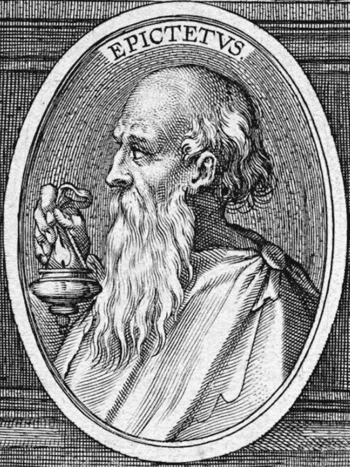
Why do people suffer so much over things they cannot change? This question stands at the heart of Stoic philosophy, and few thinkers expressed it more clearly than Epictetus. In one of his most famous ideas, he says:
“Some things are in our control and others not.”
This short sentence carries enormous philosophical weight. It is not just advice for staying calm, but a practical rule for living with greater clarity, responsibility, and inner freedom. To understand this quote fully, we need to explore what Epictetus believed truly belongs to us—and what never did.
What This Quote Means in the Most Basic Sense
At first glance, Epictetus’ sentence seems simple: “Some things are in our control and others not.” But this short line contains one of the deepest ideas in Stoic philosophy. Epictetus is telling us that human suffering often begins when we confuse these two areas. We try to control outcomes, people, opinions, and events that do not belong to us. Then, when life does not follow our wishes, we become frustrated, anxious, disappointed, or angry.
The central meaning of the quote is not that we should stop caring about life. It is also not a call to laziness or emotional coldness. Epictetus is teaching something much more practical: we must learn to place our effort where it can truly matter. A person becomes exhausted when trying to control everything. A person becomes wiser when learning what deserves effort and what must be accepted.
This idea is powerful because it changes how we look at everyday problems. For example, someone may spend hours worrying about whether others approve of them. Another person may become restless because a message has not been answered quickly. Someone else may feel miserable because a plan did not work out exactly as expected. In each of these cases, the person is emotionally tied to something outside their full control.
Epictetus wants us to pause and ask a basic but life-changing question: What actually belongs to me here? Is it the other person’s reaction? No. Is it the final outcome? Not fully. Is it my attitude, judgment, and response? Yes. That is where peace begins.
So the basic meaning of the quote is this: life becomes clearer when we stop demanding control over everything and start taking responsibility for what is truly ours. This is why the sentence feels both strict and liberating. It removes illusion, but it also gives back inner strength.
What Is Truly in Our Control According to Epictetus
To understand the quote properly, we have to be very precise about what Epictetus means by “our control.” He does not mean money, status, reputation, or success. He is talking about the inner part of human life. According to him, what truly belongs to us is not the outside world, but the way we think, choose, judge, and respond.
In Stoic thought, the most important human freedom is inner freedom. A person may face difficulty, loss, criticism, or uncertainty, and still remain inwardly steady. Why? Because although outside events may be hard, the inner response still belongs to that person. This is exactly where Epictetus places responsibility.
What is in our control includes things such as:
- Our judgments
We decide how to interpret what happens. The same event can destroy one person and strengthen another, depending on how it is understood. - Our choices
We choose whether to act with honesty, patience, courage, or self-respect. - Our reactions
We may not control what happens first, but we can learn to control how we answer it. - Our attitudes
We decide whether we will meet difficulty with bitterness or dignity.
This is why the quote is not passive. In fact, it demands serious inner work. It is easier to complain about the world than to govern one’s own mind. It is easier to blame others than to examine one’s own reactions. Epictetus shifts the focus away from the unstable outside world and brings it back to character.
A modern example makes this clear. Imagine that someone criticizes your work unfairly. You cannot fully control their opinion. You cannot force them to understand you. But you can control whether you react with panic, rage, self-pity, or calm strength. You can ask: Is this criticism useful? Is it false? What is the most honorable way to respond? That inner space is where freedom lives.
So when Epictetus speaks about control, he is not shrinking human power. He is defining it correctly. He is saying: you may not command the world, but you are still responsible for the ruler within.
What Is Not in Our Control and Why It Causes Suffering
Just as important as knowing what belongs to us is knowing what does not. Epictetus is very direct on this point. Many of the things people chase, fear, or obsess over are not truly under their command. This includes the opinions of others, public reputation, many outcomes, the behavior of other people, and even parts of health, success, and fortune.
This is where much human suffering begins. People often attach their peace to unstable things. They want certainty where life offers no guarantee. They want approval from everyone. They want perfect results from imperfect conditions. They want other people to behave according to their wishes. When these expectations fail, emotional pain follows.
Epictetus is not saying these things are unimportant. Health matters. Relationships matter. Work matters. Outcomes matter. But they are not fully ours. We can influence them, but we cannot own them completely. That difference is crucial.
Here are common examples of things not fully in our control:
- What other people think of us
We can act well, but we cannot force admiration or agreement. - The final outcome of our efforts
We may prepare seriously and still fail because other factors are involved. - Other people’s behavior
We can communicate, ask, encourage, and set boundaries, but we cannot govern another person’s will. - Reputation and public image
A person may live honestly and still be misunderstood. - External events
Delays, accidents, illness, change, and loss often arrive without our permission.
The pain comes when we mistake influence for control. For example, someone may do everything possible to save a relationship, yet the other person may still walk away. Someone may work hard for a job and still not get it. Someone may try to explain themselves clearly and still be judged unfairly. In these moments, suffering becomes much heavier when a person thinks, “I should have been able to control this.”
Epictetus cuts through that illusion. He teaches that bondage begins when we hand our peace over to things that are not ours to rule. The more our self-worth depends on outside responses, the more fragile we become. The more our peace depends on events obeying our wishes, the more often we will be shaken.
This is why his teaching can feel severe but also deeply healing. It does not promise that life will become easy. It teaches that suffering grows worse when we cling to false control.
Why This Division Is the Foundation of Stoicism
This distinction between what is “up to us” and what is “not up to us” is not just one Stoic idea among many. It is the foundation on which the rest of Stoicism stands. Without this division, the whole Stoic way of life loses its structure. With it, the philosophy becomes practical, disciplined, and deeply human.
Stoicism is often misunderstood as a philosophy of emotional suppression, as if it teaches people to feel nothing. That is not the heart of it. The real aim of Stoicism is to help a person live with reason, self-command, moral clarity, and inner steadiness. But none of that is possible unless one first learns where effort should go. This is exactly why Epictetus begins here.
If a person does not understand this division, they waste strength in the wrong place. They become angry at what cannot be changed, afraid of what cannot be guaranteed, and dependent on what cannot be secured forever. Their energy is scattered. Their peace becomes accidental. Their dignity rises and falls with outside events.
But when this Stoic distinction is understood, life becomes more ordered. A person begins to say:
- I will act well, even if the outcome is uncertain.
- I will speak honestly, even if others disagree.
- I will do my duty, even if I am not praised.
- I will protect my character, even when circumstances are difficult.
This is why the idea is central. It teaches where human greatness actually lies. Not in controlling history, other people, or fortune, but in governing oneself well.
The historical importance of this is also worth noting. Stoic philosophy developed in a world full of political instability, exile, illness, slavery, and sudden change. It was not built for comfort. It was built for reality. Epictetus himself knew hardship directly, which makes his teaching even stronger. He was not speaking from luxury, but from experience. His point was not abstract. He knew that outer life can be unstable, and for that reason inner freedom becomes even more precious.
How This Quote Puts Responsibility Back in the Right Place
One of the greatest strengths of this quote is that it does not simply comfort a person — it corrects a person. Many people read Epictetus and think he is only teaching calmness, but that is only part of the picture. He is also teaching responsibility. He wants us to stop placing blame, hope, fear, and emotional dependence in the wrong places. In simple terms, he is saying: stop trying to rule the world outside you, and start learning to rule yourself.
This matters because people often confuse responsibility with control over results. For example, a person may think, “If I am good enough, everyone will respect me,” or “If I try hard enough, nothing will go wrong.” But that is not true responsibility. True responsibility means doing what is right within your own sphere: speaking honestly, acting carefully, choosing wisely, and responding with dignity. The final result may still go against you. Other people may still disappoint you. Life may still remain uncertain. Yet your responsibility has not failed if your character has remained sound.
This is a very important Stoic lesson. Epictetus is not saying, “Nothing is your fault.” He is saying something more demanding: your inner life is your task. Your judgment is your task. Your reaction is your task. Your integrity is your task. That is where maturity begins.
A clear modern example can help here. Suppose you apply for a position, prepare seriously, and still do not get selected. A careless person may either collapse into bitterness or blame everyone else. A Stoic approach is different. It asks:
- Did I prepare honestly and seriously?
- Did I act with discipline and self-respect?
- Can I accept the result without losing my balance?
- What remains in my hands now?
This way of thinking places responsibility where it belongs. It does not burden a person with impossible control, but it also does not allow excuses. That is why this quote is so powerful: it frees a person from false burdens while also calling them to true inner discipline.
The Relevance of This Quote in Modern Life
Although Epictetus lived in the ancient world, this quote speaks directly to modern life. In some ways, it may even be more needed today than before. Modern people are constantly pulled into emotional dependence on things they cannot control. Social media, instant communication, public image, competition, and constant comparison all intensify the same mistake Epictetus warned about long ago: attaching peace to external factors.
Think about how often people suffer because they want certainty from uncertain things. Someone sends a message and becomes anxious because the reply does not come immediately. Someone posts something online and starts checking how others react. Someone becomes emotionally exhausted because they want everyone to understand them, approve of them, or behave according to their expectations. In all these cases, the person is handing over inner peace to something outside their authority.
This is where Epictetus becomes extremely practical. His quote teaches that much of modern anxiety comes not only from difficult events, but from the habit of mentally clinging to what is unstable. That is why his words remain useful in work, relationships, family life, and personal growth.
A few modern examples show this clearly:
- At work
You can control preparation, effort, punctuality, honesty, and professionalism. You cannot fully control promotions, office politics, or how every colleague sees you. - In relationships
You can control sincerity, kindness, clear communication, and boundaries. You cannot control whether someone will love you in the same way or remain consistent. - On social media
You can control what you post, why you post it, and whether you keep your dignity. You cannot control public reaction, algorithms, or how strangers judge you. - In personal plans
You can control discipline and thoughtful action. You cannot control every obstacle, delay, or unexpected event.
What makes the quote so modern is that it teaches emotional economy. It shows a person where not to waste mental energy. In a time when people are overstimulated, constantly comparing themselves, and often trapped in reaction, Epictetus offers a sober and useful path: protect your mind by understanding the limits of your power. That is not outdated wisdom. It is one of the clearest answers to modern restlessness.
How Distinguishing Control Leads to Inner Freedom
Many people think freedom means being able to do whatever one wants or shape life exactly as one wishes. The Stoics had a deeper understanding. For them, freedom was not unlimited outer power. Freedom was inner independence. A person is free not when everything obeys them, but when their peace does not collapse every time life refuses to obey.
This is why the distinction in Epictetus’ quote is so important. Once a person clearly sees what belongs to them and what does not, something begins to change inside. They stop fighting every part of reality. They stop expecting the world to remove all discomfort. They stop tying their value to applause, success, or perfect outcomes. In that shift, a new kind of freedom appears.
That freedom is powerful because it is stable. Outer conditions may change suddenly. Health may weaken. Plans may fail. People may leave. Circumstances may become unfair. But a person who has trained themselves to focus on judgments, choices, and moral direction still possesses something essential. They still possess themselves.
This does not mean such a person feels nothing. Stoicism does not erase pain. Rather, it prevents pain from becoming total inner collapse. A free person can feel sadness, disappointment, or loss, yet still remain grounded because they know their deepest value was never meant to rest on unstable externals.
A simple example can make this clear. Imagine two people facing criticism. One immediately falls apart because their self-worth depends on being admired. The other listens carefully, examines whether the criticism is true, corrects what is useful, and lets the rest go. The second person is freer, not because life is easier for them, but because they are less ruled by outside voices.
Inner freedom grows when a person understands:
- Not every event deserves full emotional surrender.
- Not every opinion deserves authority over the mind.
- Not every failure is a destruction of the self.
- Peace comes from right relation to reality, not from control over reality.
This is one of the deepest philosophical meanings of the quote. By accepting the limits of control, a person does not become smaller. They become steadier, clearer, and less enslaved by chance.
The Main Life Lesson of the Quote
The central life lesson of Epictetus’ words is both simple and demanding: do not waste your life trying to possess what was never fully yours. Instead, direct your attention toward the one field where true human greatness is possible — your own character, judgment, and response. This is the practical wisdom at the heart of the quote.
Many people spend years in inner conflict because they are fighting the wrong battle. They want complete security, complete approval, complete predictability, and complete control over how others behave. But life does not offer these things in a permanent form. When a person builds hope on them, disappointment becomes almost certain. Epictetus does not teach hopelessness. He teaches correct focus. He tells us where to stand if we want to live with strength.
The life lesson here is not “stop caring.” It is “care wisely.” Care about your conduct. Care about truthfulness. Care about courage. Care about self-command. Care about how you meet difficulty. Those are worthy concerns because they remain yours even when circumstances become unstable.
This lesson can be summed up through a few clear principles:
- You do not control everything that happens, but you do shape the meaning you give to it.
- You cannot force the world to be fair, but you can choose not to become unjust yourself.
- You cannot guarantee success, but you can refuse laziness, panic, and dishonor.
- You cannot command life, but you can discipline your own mind within life.
That is why this quote has lasted so long. It does not belong only to ancient philosophy books. It belongs to every difficult day, every disappointment, every strained relationship, every uncertainty about the future, and every moment when a person must decide whether to live reactively or wisely.
In the end, Epictetus teaches that strength is not found in mastering the world. Strength is found in not losing yourself within it. That is the real lesson of the quote, and it remains just as important now as it was in the ancient Stoic world.
You might be interested in…
- What Epictetus Meant by “Some Things Are in Our Control and Others Not”
- Why Epictetus Said “If You Want to Improve, Be Content to Be Thought Foolish and Stupid” — A Stoic Lesson on Ego and Growth
- “Never Say ‘I Have Lost It’; Say ‘I Have Returned It’” – The Meaning of Epictetus’ Quote on Loss and Detachment
- “First Say to Yourself Who You Wish to Be” by Epictetus – Why Identity Must Come Before Action
- What Epictetus Really Meant by “Men Are Disturbed, Not by Things”