
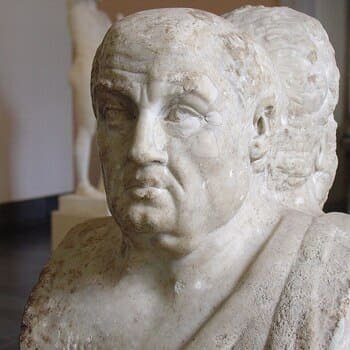
Quote Analysis
Many people assume that living is something we naturally know how to do. We learn a profession, build routines, and move through the years as if experience alone will make us wise. But Seneca challenges that illusion with a deeper truth:
“As long as you live, keep learning how to live.”
This quote reminds us that life is not a skill we master once and for all. It is an ongoing practice of learning how to face loss, handle success, endure pain, and grow in character. Seneca’s words still matter because they teach humility, self-discipline, and the lifelong pursuit of wisdom.
What Does “As Long as You Live, Keep Learning How to Live” Mean?
At first glance, this quote may sound simple, but Seneca is making a very serious point. He is telling us that living is not just something that happens automatically. A person may grow older, earn money, build a career, marry, raise children, or gain respect, and still not truly know how to live well. In Seneca’s view, real living is not the same as merely existing. It means learning how to think clearly, how to respond to pain, how to control impulses, and how to remain steady in both success and failure.
This is why the quote is so powerful. It destroys the common illusion that age alone creates wisdom. Many people think that the passing of time naturally makes a person mature, but Seneca would disagree. Time can make a person older, but only reflection and practice can make that person wiser. A human being does not become complete at twenty, thirty, or even seventy. Every stage of life brings new tests, and each test asks for a new kind of inner strength.
An important part of this quote is the phrase “keep learning.” Seneca is not speaking about school subjects, degrees, or formal education. He is speaking about moral and emotional education. He means that a person must continue learning:
- how to deal with disappointment without becoming bitter,
- how to face success without becoming arrogant,
- how to suffer loss without falling apart,
- how to use freedom without wasting life,
- how to live among other people without becoming ruled by their praise or blame.
This gives the quote a deeply practical meaning. Seneca is not offering decoration for a wall or a clever sentence for social media. He is giving instruction. He is saying that life itself is a discipline. It must be studied, practiced, corrected, and improved. A person who understands mathematics, business, law, or technology may still fail in the art of living if they do not know how to remain calm, fair, self-controlled, and thoughtful.
A modern example makes this clearer. Someone may be excellent at earning money but terrible at handling stress. Another person may know how to impress others but not how to be at peace when alone. Someone else may look successful from the outside but be emotionally immature, unable to accept criticism or endure failure. In each case, Seneca’s message applies: such a person still has to learn how to live.
So the meaning of the quote is not vague or abstract. It is direct. Seneca teaches that life is a lifelong lesson, and no one graduates from it. As long as we are alive, we are still in the classroom of character.
Why Does Seneca See Life as a Continuous School?
Seneca sees life as a continuous school because human beings are never finished. We are always being shaped by new experiences, new losses, new desires, new fears, and new responsibilities. A child must learn obedience and patience. A young adult must learn judgment and self-control. An older person must learn how to deal with regret, weakness, change, and the passing of time. In other words, life keeps presenting lessons, whether we welcome them or not.
This idea is central to Stoic philosophy. The Stoics believed that wisdom is not something a person simply possesses once and forever. It must be practiced daily. A person may understand a principle in theory and still fail to live by it in reality. For example, many people know they should not be ruled by anger, but knowing this is not the same as mastering anger when insulted. Many understand that wealth does not guarantee happiness, but they still panic when money becomes uncertain. Seneca knows that knowledge becomes real only when it is tested by life.
That is why life functions like a school. It keeps examining us. Not through written tests, but through real situations. Seneca would say that every difficult event asks a question. Loss asks whether we can endure. Success asks whether we can remain modest. Free time asks whether we know how to use it well. Criticism asks whether we are stable enough not to collapse under the opinion of others. Even pleasure asks whether we can enjoy something without becoming dependent on it.
This school has several special features:
- the lessons do not stop with age,
- the exams come without warning,
- the subjects are moral rather than academic,
- the results are shown in behavior, not in certificates,
- the goal is not appearance, but character.
This is what makes Seneca’s view so realistic. He understands that people are often highly trained in practical matters and poorly trained in inner life. A person may spend years learning how to compete, produce, manage, and succeed, while spending almost no time learning how to remain calm, honest, and balanced. Seneca believes this is a serious failure of human priorities.
The quote also carries a warning. If life is a school, then refusing to learn has consequences. A person who does not learn from experience may repeat the same moral mistakes again and again. They may remain childish in their reactions even while becoming older in years. They may become more skilled in controlling outer circumstances while remaining weak in controlling themselves.
In this sense, Seneca’s teaching is both humble and demanding. It is humble because it reminds us that no one is above learning. It is demanding because it tells us that growth is our responsibility. Life teaches, but we must be willing to become its serious learners.
The Difference Between External Knowledge and the Art of Living
One of the most important ideas behind this quote is the difference between external knowledge and the art of living. External knowledge helps a person function in the world. It includes professional skills, technical ability, academic learning, and practical expertise. These things are valuable. Seneca does not say they are useless. But he does say that they are not enough. A person can know many things and still not know how to live.
This distinction is very important because people often confuse competence with wisdom. They assume that someone who is intelligent, educated, or successful must also be mature, balanced, and morally developed. But life shows us again and again that this is not true. A person may be brilliant in business and foolish in relationships. Someone may speak beautifully in public and yet be unable to govern envy, fear, or vanity in private. Another may understand how to lead others but not how to lead their own mind.
Seneca would say that external knowledge teaches you how to do something, but the art of living teaches you how to be someone. That is a much deeper task. It concerns the condition of the soul, the habits of thought, and the discipline of character. External knowledge can help you build a career. The art of living helps you bear disappointment when the career does not satisfy you. External knowledge may help you gain status. The art of living helps you avoid becoming a servant of status.
This difference can be explained clearly through contrast:
- external knowledge teaches performance; the art of living teaches judgment,
- external knowledge brings efficiency; the art of living brings balance,
- external knowledge may win applause; the art of living builds inner peace,
- external knowledge helps with success; the art of living helps with suffering,
- external knowledge can fill the mind; the art of living forms character.
A modern example makes the point easy to see. Imagine a person who has an impressive job, a strong income, and public respect. On paper, this person seems accomplished. But if that same person cannot handle loneliness, cannot forgive, cannot control anger, and cannot rest without anxiety, then something essential is missing. That person has knowledge, but not yet the wisdom of living. Seneca’s quote speaks exactly to this gap.
This is why his words remain so relevant today. Our age strongly rewards measurable achievement. People are praised for productivity, visibility, speed, and results. But the art of living deals with quieter questions: Can you stay steady under pressure? Can you accept limits? Can you remain decent when no one is watching? Can you live without being owned by ambition, fear, or praise?
Seneca teaches that the art of living is higher than external success because it decides whether success will help us or corrupt us. Without this deeper wisdom, knowledge may make life more powerful, but not more meaningful.
Learning How to Live as the Work of Character
When Seneca says we must keep learning how to live, he is really speaking about the work of character. He is not telling people to collect information. He is telling them to shape themselves. Character, in this sense, means the stable qualities that guide a person’s actions: patience, moderation, courage, honesty, self-control, and sound judgment. These qualities do not appear automatically. They must be trained, corrected, and strengthened over time.
This is why the quote is so practical. It directs attention away from image and toward formation. Many people work very hard on what others can see. They work on appearance, reputation, achievement, and outward success. Seneca asks a harder question: what kind of person are you becoming underneath all that? That is the real work of living.
The work of character shows itself most clearly in ordinary situations. It is easy to speak about virtue when life is calm. The real question is what happens when things go wrong. Character is revealed in moments such as these:
- when someone insults you and you choose not to explode,
- when you are disappointed and still remain fair,
- when you succeed and do not become proud,
- when you are afraid and still act with dignity,
- when you are free and choose not to waste yourself.
This is exactly the kind of education Seneca has in mind. He wants a person to become capable of governing their inner life. That means learning how to pause before reacting, how to question destructive thoughts, how to bear discomfort without panic, and how to separate what truly matters from what only seems urgent. In Stoic philosophy, this is not coldness or emotional emptiness. It is discipline. It means not letting every event, every opinion, or every impulse control the direction of your life.
A historical layer adds even more meaning here. Seneca lived in a world of political danger, instability, ambition, and public pressure. He knew that fortune could rise and fall quickly. That is one reason he cared so deeply about character. External conditions are never fully secure. Wealth can vanish. Power can change hands. Health can weaken. Public opinion can turn. If a person builds life only on external things, that person becomes fragile. But if they build character, they gain something more durable.
The quote also has a modern lesson. Today many people work on self-improvement, but often in a narrow way. They want to become more productive, more confident, more successful, or more influential. Seneca would not reject improvement, but he would ask whether it is making the person wiser. Is it making them calmer, more honest, more measured, more humane? If not, then the improvement may be shallow.
Wisdom as Practice, Not a Diploma
One of the deepest ideas in this quote is that wisdom is not something a person simply receives and keeps forever. Seneca is warning against a very common mistake: many people treat wisdom as if it were a finished achievement. They imagine that once a person reaches a certain age, gains experience, or learns a few important lessons, the work is done. But Seneca teaches the opposite. In his view, wisdom is not a diploma hanging on the wall. It is a daily practice. It must be exercised again and again in real life.
This is a very important distinction. A diploma proves that someone completed a course of study. Wisdom does not work that way. A person may understand many good principles and still fail to live by them when tested. Someone may know that anger is destructive, yet still become ruled by anger during conflict. Another may know that wealth does not bring peace, yet still live in constant anxiety about money and status. Seneca’s point is simple and strong: true wisdom is not measured by what a person can repeat, but by how a person lives.
This idea fits the Stoic way of thinking. The Stoics did not see philosophy as decoration or as a clever game of ideas. For them, philosophy was training for life. Its purpose was to make a person steadier, clearer, braver, and more disciplined. That is why Seneca speaks in such a practical way. He wants the reader to understand that every day presents fresh opportunities to practice wisdom:
- when disappointment comes, wisdom teaches endurance,
- when success comes, wisdom teaches moderation,
- when fear comes, wisdom teaches perspective,
- when pleasure comes, wisdom teaches self-control,
- when confusion comes, wisdom teaches careful judgment.
A helpful modern example is this: a person may be excellent at giving advice to others and still be poor at governing their own inner life. They may speak about balance, but live in chaos. They may talk about patience, but react impulsively when frustrated. That is the difference between possessing ideas and practicing wisdom. Seneca is interested in the second, not merely the first.
This is why his quote remains so relevant. It reminds us that the most important lessons are not completed once and for all. They must be lived repeatedly. A person does not graduate from the work of becoming calm, fair, courageous, and mature. In Seneca’s eyes, wisdom is alive only when it is in use. That is why it is not a diploma, but a discipline.
Humility as One of the Greatest Lessons in the Quote
This quote also teaches something very important about humility. Seneca is telling us that no human being is ever completely finished. That is a difficult lesson, because people often want the opposite. They want to feel that they have arrived, that they already understand life well enough, that there is nothing essential left to learn. But Seneca cuts through that pride. He reminds us that as long as we are alive, there is still room for correction, growth, and deeper understanding.
Humility here does not mean weakness or low self-worth. It means seeing oneself truthfully. A humble person does not say, “I know nothing.” Rather, such a person says, “I still have more to learn.” That is a much healthier attitude. It keeps the mind open and the character flexible. A proud person resists instruction because they believe they have already mastered life. A humble person remains teachable. Seneca clearly values the second attitude.
This lesson becomes even stronger when we think about aging. Many cultures assume that older age automatically means wisdom. Seneca is more careful. He knows that a person can become old without becoming wise. Years alone do not guarantee maturity. A person may grow older while keeping the same rash reactions, the same vanity, the same fears, and the same lack of self-control. That is why humility is so necessary. Without it, a person mistakes age for growth and habit for wisdom.
The quote encourages this kind of inner honesty:
- to admit that experience alone is not enough,
- to recognize that new situations reveal new weaknesses,
- to accept correction without feeling humiliated,
- to keep examining one’s own conduct,
- to remain open to improvement at every age.
This humility also protects a person from a dangerous illusion: the illusion of completion. Once someone believes they are “done,” they stop paying attention. They stop reflecting. They stop refining their responses. They stop learning from mistakes. In that state, growth becomes very difficult.
There is also a beautiful moral side to this lesson. Humility makes a person gentler toward others. Someone who understands that they, too, are still learning how to live will often become more patient with the weaknesses of other people. They will judge less harshly and understand more deeply. Seneca’s quote does not flatter the ego. It softens it. It teaches that the truly serious person is not the one who claims mastery, but the one who remains a lifelong learner in the school of character.
How This Quote Applies to Modern Life
Although Seneca lived in ancient Rome, this quote speaks very directly to modern life. In some ways, it may be even more necessary today. We live in a world that strongly rewards speed, image, productivity, and outward achievement. People are often taught how to perform, compete, market themselves, and reach visible success. But many are not taught how to handle disappointment, how to live with limits, how to remain inwardly steady, or how to use freedom in a meaningful way. This is exactly where Seneca’s words become powerful.
Modern life gives people many tools, but not always guidance. A person may know how to build a career, yet not know how to rest. They may know how to stay busy, yet not know how to be alone without anxiety. They may know how to gain approval, yet not know how to endure criticism without falling apart. In this sense, modern society often develops outer ability faster than inner maturity. Seneca’s quote pushes us to notice that imbalance.
Consider a few clear examples. Someone may be professionally successful but emotionally fragile. Another may be highly educated but unable to manage envy or anger. A third person may have endless entertainment available and still not know how to use free time in a healthy way. Seneca would say that all of these people, regardless of status or intelligence, are still learning how to live.
His message can be applied to modern problems in very practical ways:
- in a culture of constant comparison, it teaches inner independence,
- in a culture of stress, it teaches self-command,
- in a culture of distraction, it teaches deliberate living,
- in a culture of image, it teaches concern for character,
- in a culture of endless desire, it teaches moderation.
This is where another of Seneca’s insights becomes meaningful: “Life, if you know how to use it, is long.” That idea fits naturally with the present quote. Seneca is not merely saying that life continues; he is saying that the value of life depends on how it is used. A person may fill years with motion and still waste life inwardly. Another may live more thoughtfully, more deliberately, and therefore live more deeply. In both cases, the question is not only how long one lives, but how well one learns to live.
So this quote matters today because it corrects modern confusion. It reminds people that success without maturity is unstable, freedom without discipline becomes waste, and experience without reflection does not become wisdom. Seneca brings attention back to the central work that never goes out of date: forming a life that is inwardly sound.
Why Seneca’s Quote Still Matters Today
This quote still matters because it addresses a permanent human problem. People often focus on learning how to survive, succeed, impress, and advance, but they neglect the deeper question of how to live well. Seneca brings that forgotten question back to the center. He reminds us that human life is not only about external movement. It is also about inner formation. A person may gain many things and still lose balance, purpose, and peace. That is why this quote continues to feel fresh and necessary.
Its value also lies in its realism. Seneca does not speak as if life becomes simple once a person reaches adulthood. He understands that every stage of life has its own difficulties. Youth brings impulsiveness and confusion. Midlife often brings pressure, ambition, and disappointment. Old age may bring regret, decline, and dependence. Because life keeps changing, the need to keep learning never disappears. This makes the quote permanently relevant, not limited to one generation or one historical period.
There is also something hopeful in the quote. It does not shame people for being unfinished. Instead, it gives them permission to continue growing. That is a very important lesson. Many people become discouraged by their own weaknesses. They feel that by a certain age they should already have complete control over fear, anger, grief, or uncertainty. Seneca offers a wiser and kinder view. He suggests that the work of becoming mature belongs to the whole of life.
The lasting importance of the quote can be seen in several ways:
- it teaches that growth does not end with youth,
- it reminds us that experience must be examined to become useful,
- it challenges the belief that success equals wisdom,
- it encourages lifelong moral development,
- it restores dignity to the patient work of self-improvement.
This quote also matters because it resists superficial living. It does not ask, “How can you appear accomplished?” It asks, “How can you become more capable of living wisely?” That is a much better question. It reaches beneath fashion, status, and public approval and moves toward character, judgment, and depth.
In the end, Seneca’s words remain valuable because they are both demanding and humane. They demand effort, because they insist that living well requires practice. But they are humane because they recognize that no one is finished. Every person, no matter how young or old, strong or weak, successful or struggling, is still in the process of learning how to live. That truth gives the quote its lasting power.
You might be interested in…
- Why “It Is Not That We Have a Short Space of Time, but That We Waste Much of It” Still Matters Today
- As Long as You Live, Keep Learning How to Live — Seneca’s Timeless Lesson on Wisdom and Character
- Why Seneca’s “Nothing, Lucilius, Is Ours, Except Time” Still Matters Today
- Why Seneca’s “We Suffer More Often in Imagination Than in Reality” Still Matters Today
- “Life, If You Know How to Use It, Is Long” – Seneca on Time, Discipline, and a Meaningful Life