
Quote Analysis
Loss is one of the hardest human experiences because we rarely suffer only from the event itself—we also suffer from the belief that what we had was ours forever. In the quote:
“Never say of anything, ‘I have lost it’; but, ‘I have returned it,’”
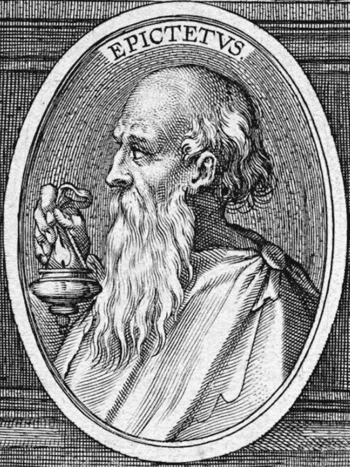
Epictetus challenges that deeply rooted assumption. His words are not meant to deny pain or affection, but to remind us that people, possessions, and circumstances are often entrusted to us only for a time. This Stoic idea transforms loss into something more thoughtful: not pure deprivation, but the return of something we were never meant to own absolutely.
What Does the Quote “Never Say of Anything, ‘I Have Lost It’; but, ‘I Have Returned It’” Mean?
At first glance, this quote may sound strange, even severe. Most people naturally say, “I lost it,” when something important is gone from their life. That could be a possession, a job, a relationship, or a period of stability. Epictetus deliberately changes that language. He tells us not to speak as if we were permanent owners of what we had, but as if we were temporary caretakers. This small change in wording carries a very deep philosophical message.
The heart of the quote is this: many things we call “ours” were never fully ours in an absolute sense. We were allowed to experience them, enjoy them, use them, or love them for a time. Then, at some point, life asked for them back. Epictetus wants us to see that loss often becomes unbearable not only because something is gone, but because we were convinced it belonged to us permanently. His language corrects that illusion.
This does not mean he is telling people not to care. He is not saying that a person should become cold, distant, or unemotional. The point is not to deny affection, but to purify attachment. You may love deeply and still understand that nothing in life comes with a permanent guarantee. That is the difference. A person can be grateful for what they have without turning that gratitude into a claim of ownership.
A simple example makes this easier to understand. Imagine someone who loses a meaningful friendship. One way to think is: “This was mine, and now life unfairly took it from me.” Another way, closer to Epictetus, is: “I was given the chance to have this friendship for a season of life, and now that season has ended.” The pain may still exist, but the bitterness changes. The second view contains sadness, but also maturity.
This is why the quote is so powerful. It teaches that suffering is often intensified by the words and ideas we attach to events. Epictetus is not merely adjusting vocabulary. He is training the mind. He is showing that the way we describe reality shapes the way we endure it. In that sense, this quote is not only about loss. It is about learning how to think more truthfully about everything we receive in life.
Epictetus and the Stoic Philosophy of Impermanence
To understand this quote fully, it helps to place it inside Stoic philosophy. The Stoics believed that one of the greatest causes of human misery is confusion about what is truly under our control and what is not. Our choices, judgments, and attitudes belong to us. External things do not. Wealth, health, reputation, status, relationships, and even the length of our life can change without asking our permission. Epictetus repeats this lesson again and again because he sees it as the foundation of inner stability.
This quote reflects that Stoic way of thinking very clearly. When Epictetus says we should speak of “returning” rather than “losing,” he is reminding us that everything outside our moral character is temporary by nature. In Stoicism, impermanence is not a tragic exception. It is the normal condition of life. The mistake is not that things change. The mistake is that people expect them not to.
That is why Stoicism often sounds demanding. It asks a person to live without illusions. Many people want emotional peace while still insisting that life should remain predictable, fair, and stable according to their wishes. The Stoics reject that expectation. They argue that peace does not come from controlling events. It comes from understanding their nature correctly.
A useful way to explain this is through the image of a traveler staying in an inn. The traveler may rest there, enjoy the room, eat the food, and be grateful for comfort, but the traveler does not mistake the inn for a permanent home. In the same way, Stoicism teaches that we move through life receiving things for a while, not possessing them forever. This includes material comfort, social roles, and even cherished circumstances.
In modern life, this lesson remains deeply relevant. People often build their identity around unstable things. They define themselves by career success, social approval, romantic security, or financial progress. When one of these collapses, they do not feel only disappointment. They feel as if reality itself has betrayed them. Epictetus would say the true problem began earlier, when they treated something temporary as if it were permanent.
So the Stoic philosophy of impermanence is not pessimistic. It is realistic. It teaches a disciplined form of gratitude. Enjoy what is here. Care for it well. Do not cling to it as though the universe signed a contract promising it would remain forever. That is the spirit behind this quote, and that is why it still speaks so clearly across centuries.
Why People Suffer More from Attachment Than from the Loss Itself
One of the deepest insights in this quote is psychological. Epictetus understands that an event and our interpretation of that event are not the same thing. The event may be painful, but our mental response often multiplies the pain. In many cases, people suffer not only because something ended, but because they had built a hidden belief around it: “This is mine. This should remain. This ought not to be taken away.”
That hidden belief creates a second wound. The first wound is the loss itself. The second wound is the collapse of our expectation. Often, the second one hurts even more. For example, a person may lose a job. Of course that is difficult in practical ways. But what often destroys them emotionally is not only unemployment. It is the shattered belief that their position made them secure, valuable, or protected from uncertainty.
The same pattern appears in relationships. A breakup is painful because affection, habit, trust, and shared plans are suddenly disrupted. But the suffering becomes heavier when the person thinks, “This was supposed to stay. I gave my heart, so permanence should have followed.” Epictetus exposes that assumption. He reminds us that love does not create ownership. Closeness does not cancel change. Human beings often act as though emotional investment should guarantee permanence, but life does not work that way.
This is not a cynical view. It is a sober one. It helps explain why two people can go through similar losses and yet respond very differently. One collapses completely, while the other grieves but remains inwardly intact. The difference is often found in the inner story each one tells. The first says, “Something that belonged to me was taken.” The second says, “Something precious came into my life, and now it has passed.” The facts may be similar, but the psychological burden is not.
This is why attachment, in the unhealthy sense, becomes dangerous. Healthy love appreciates. Unhealthy attachment claims. Healthy gratitude says, “I am thankful this was part of my life.” Unhealthy attachment says, “I cannot accept life unless this remains exactly as I want it.” Epictetus is not attacking love or commitment. He is attacking the illusion that emotional need gives us authority over reality.
A teacher-like way to summarize this would be:
- The event causes pain.
- The illusion of ownership adds extra pain.
- The expectation of permanence deepens disappointment.
- The refusal to accept change turns grief into inner chaos.
That is why this quote is so important. It helps a person separate natural sorrow from exaggerated suffering. It does not erase pain, but it removes the false beliefs that make pain harder to bear.
From Ownership to Gratitude
One of the most beautiful ideas in this quote is the movement from ownership to gratitude. Epictetus is teaching that life becomes wiser and more peaceful when we stop relating to people and things as permanent possessions. Ownership says, “This is mine.” Gratitude says, “This has been given to me for a time.” Those two attitudes may look similar on the surface, but inwardly they produce very different kinds of character.
The attitude of ownership often leads to pride, entitlement, and fear. A person who thinks in terms of possession begins to assume that what they have is secured by right. Once that happens, they easily become arrogant when things go well and resentful when things change. Gratitude works differently. A grateful person enjoys what is present without turning it into a guarantee. That makes the soul softer, humbler, and more prepared for reality.
Think of a parent watching a child grow. A parent may say “my child,” and that is natural language, but the wiser understanding is deeper. The child is not a possession like an object on a shelf. The parent has been entrusted with care, guidance, and love for a season of responsibility. If the parent forgets this and treats the child as an extension of personal control, suffering and conflict grow. Gratitude produces a healthier attitude: “I am thankful for the privilege of caring for this life.”
The same applies to success. A person may gain respect, influence, or a strong position in society. If they think, “I earned this, therefore it is fully mine and should remain,” they become fragile in ways they do not notice. But if they think, “I have been allowed to hold this role for a time, and I must use it well,” they become steadier. Gratitude makes responsibility more serious and ego less swollen.
This teaching also gives dignity to ordinary life. A meal, a home, a friendship, a healthy body, a peaceful year, a meaningful conversation, all of these become more valuable when seen as gifts rather than guarantees. People often appreciate things only after they disappear. Epictetus wants appreciation to begin earlier, while the thing is still present.
That is why gratitude is not a decorative moral lesson here. It is a philosophical discipline. It changes how we live in the present. Instead of clinging, we pay attention. Instead of claiming, we receive. Instead of acting as masters of reality, we become careful stewards of what passes through our hands. This attitude does not weaken love. It deepens it, because it removes pride and replaces it with reverence for the limited time we actually have.
How This Quote Applies to People, Relationships, and Life Circumstances
It is important not to reduce this quote to the loss of objects. Epictetus is speaking much more broadly. His idea applies to almost everything human beings become attached to: relationships, social standing, health, opportunities, security, and even certain versions of themselves. That is why the quote feels so difficult. It reaches far beyond material possessions and touches the areas people care about most deeply.
When applied to relationships, the quote becomes especially challenging. Most people understand, at least intellectually, that objects can be lost. But when it comes to loved ones, the emotional instinct is stronger. People want to believe that deep love should protect them from change. Epictetus does not insult that desire, but he corrects it. He teaches that even the most precious human bonds exist within the wider law of impermanence. That does not make them less meaningful. It makes them more serious.
A strong relationship, then, should not be built on hidden ownership. It should be built on care, respect, and gratitude. If one person begins to think, “You are mine in a final and unquestionable way,” love becomes possessive. It becomes mixed with fear, control, and false certainty. But if the person understands, “I am grateful to share life with you, and I do not own your existence,” then love becomes more mature. It becomes more attentive and less controlling.
The quote also applies to life roles. A person may say, “I am a successful professional,” “I am admired,” or “I am secure because my situation is stable.” But positions can change. Public opinion can change. Institutions can fail. Health can decline. Entire plans can collapse within a year. Modern life gives countless examples of this. A person may feel safe because of a stable income, a respected title, or a long-term plan, only to discover that none of these were guaranteed. Epictetus would say that the pain becomes worse when identity has been chained to what is temporary.
This lesson can be explained clearly through a few common modern situations:
- A breakup teaches that love is real, but permanence is not guaranteed.
- Losing a job teaches that usefulness and dignity must not depend only on position.
- Illness teaches that the body is precious, but not fully under our command.
- Social decline teaches that reputation is unstable and should never be the center of self-worth.
- Major life change teaches that certainty is often more imagined than real.
What makes this quote enduring is that it does not speak only to ancient hardship. It speaks directly to modern anxiety. Many people today live as if security can be built from planning, possession, and emotional certainty. Epictetus offers a harder but stronger foundation. Care deeply, but do not claim absolutely. Love fully, but do not imagine ownership. Receive life sincerely, but remember that much of it comes only for a time.
The Modern Meaning of the Quote: Breakups, Job Loss, and the Collapse of Security
One reason Epictetus still feels so relevant today is that modern people suffer from the same illusion as ancient people, only in updated forms. We may no longer speak about fate in the language of antiquity, but many still live as if certain things are guaranteed: a stable relationship, a secure job, financial growth, health, or a predictable future. When one of these collapses, the pain is often not limited to the event itself. The deeper crisis comes from the broken belief that this part of life was “supposed” to remain.
Take the example of a breakup. The emotional wound is real because affection, memory, and habit are involved. But many people also experience something else: humiliation, disbelief, and inner collapse. Why? Because they were not only loving the relationship. They were treating it as a permanent structure of meaning. The same can happen with work. A person may lose a job and feel not only financial pressure, but also a loss of identity. In that moment, what hurts is not just unemployment. It is the sudden discovery that what seemed stable was never fully under personal control.
This is exactly why Stoic thought remains useful. Epictetus teaches that human beings often build their peace on unstable foundations. A person says, “I will be fine as long as this remains.” But life rarely makes such promises. The more completely someone ties inner stability to external conditions, the more violently they suffer when those conditions change.
Modern life actually intensifies this problem. People are encouraged to build identity around visible success, romantic certainty, social approval, and long-term planning. None of these are evil in themselves. The danger begins when they are treated as permanent possessions. That is why a person may appear successful and still be inwardly fragile. Their peace depends on things that can disappear.
Epictetus offers a different kind of strength. He does not promise that pain will vanish. He teaches that the mind becomes steadier when it stops demanding permanence from a changing world. In practical terms, this means a person can grieve a loss without being mentally destroyed by it. That is a much harder lesson than simple optimism, but it is also far more durable.
Does This Quote Mean We Should Be Without Emotion?
This is one of the most important questions to answer, because Stoic philosophy is often misunderstood. Some people hear a quote like this and assume Epictetus is telling us to become cold, emotionally distant, or indifferent to human life. That is not the point. He is not teaching emotional emptiness. He is teaching emotional discipline.
There is a major difference between feeling pain and being ruled by pain. A wise person can experience sadness, grief, disappointment, and even shock, while still refusing to let those emotions destroy judgment. Epictetus does not expect human beings to turn into stone. He knows that loss hurts. What he challenges is the exaggerated form of suffering that comes from false beliefs, especially the belief that life owes us permanence.
This distinction matters. For example, if someone loses a loved one, Stoicism does not say, “Feel nothing.” That would be unnatural and even inhuman. What Stoicism says is closer to this: mourn honestly, but do not add rebellion against reality to your sorrow. In other words, pain may be unavoidable, but despair built on illusion can sometimes be reduced.
A teacher-like way to explain this is to separate three levels of response:
- Natural feeling, such as sadness or grief.
- Personal interpretation, such as “This should never have happened.”
- Total inner collapse, where the person feels life has become impossible.
Epictetus accepts the first level as part of being human. He pays special attention to the second level, because that is where judgment shapes suffering. If the judgment is false, suffering becomes heavier than it needs to be. This is closely connected with another famous Stoic teaching: “Some things are in our control and others not“. Once a person understands that distinction, emotions are no longer denied, but they are placed into a clearer framework.
So the quote does not teach emotional numbness. It teaches proportion. It calls a person to feel deeply without surrendering to illusion. That is not emotional weakness. It is a disciplined form of strength.
The Deepest Message of the Quote: Peace Comes from Acceptance, Not Control
At its deepest level, this quote teaches that inner peace does not come from securing everything we love, but from accepting the true nature of life. This is a difficult lesson because most people instinctively search for peace through control. They want to arrange the future, protect what they value, and reduce uncertainty as much as possible. There is nothing strange about that desire. It is deeply human. But Epictetus shows that this desire becomes dangerous when a person begins to believe that peace depends on success in controlling what is ultimately unstable.
That is why the quote is so radical. It does not merely comfort people after loss. It challenges the whole strategy by which many people try to live. Instead of saying, “You will be peaceful when nothing leaves you,” Epictetus says something much stronger: “You will be peaceful when you stop expecting the world to behave as permanent property.”
Acceptance here does not mean passivity. It does not mean that a person should stop working, loving, building, planning, or caring. It means that these activities should be done without the illusion of total control. A person may cultivate a career, but cannot fully control how institutions, markets, or other people behave. A person may nurture love, but cannot guarantee another person’s choices forever. A person may care for health, but cannot command the body never to weaken. Acceptance begins when we face these limits honestly.
This is why acceptance is not defeat. It is clarity. In fact, acceptance often gives a person more steadiness than control ever could. Someone obsessed with controlling outcomes becomes anxious, rigid, and easily broken. Someone who understands limits becomes more adaptable. That person still works seriously, but no longer imagines that effort gives them ownership over every result.
A good way to explain the difference is this:
- Control tries to force reality into our preferred shape.
- Acceptance learns the shape of reality and lives wisely within it.
- Control becomes fearful when change comes.
- Acceptance remains grounded even when change is painful.
This is the hidden freedom inside the quote. When a person stops clinging to the impossible dream of total possession, the mind becomes lighter. Peace does not come from freezing life in place. It comes from meeting life without illusions.
What Can We Learn from Epictetus Today?
Although Epictetus lived in the ancient world, his lesson speaks directly to modern life because modern people are surrounded by attachment, speed, and anxiety. Society often teaches the opposite of what he teaches. It tells people to measure themselves by what they own, what they achieve, how others see them, and how secure their future appears. As a result, many live in constant tension. They are not only trying to enjoy life. They are trying to make it unbreakable.
Epictetus reminds us that such a project will always fail. Life cannot be made unbreakable. What can become stronger is the human response to change. That is why his lesson remains valuable. He shifts attention away from possession and toward character. He asks a person to examine not only what they have, but how they relate to what they have.
There are several practical lessons that modern readers can take from this quote. First, it teaches gratitude in the present. People often delay appreciation because they assume what they enjoy will still be there tomorrow. Epictetus interrupts that habit. Second, it teaches humility. When a person sees everything as temporarily entrusted rather than permanently owned, pride becomes harder to maintain. Third, it teaches resilience. If you do not build your entire identity on unstable things, you are less likely to collapse when those things change.
This wisdom can be applied in daily life in very concrete ways:
- Appreciate people while they are with you instead of acting as though their presence is guaranteed.
- Use success responsibly without turning it into personal arrogance.
- Build plans, but do not worship plans.
- Care for your body, while remembering that health is a gift, not a contract.
- Let gratitude become stronger than entitlement.
In this sense, Epictetus offers more than abstract philosophy. He offers training for everyday life. He teaches how to live in a changing world without being naïve, bitter, or emotionally shattered by every disruption. That is why his voice still sounds surprisingly current.
Conclusion
This quote by Epictetus is difficult because it touches one of the hardest truths in human life: much of what we love is not ours in an absolute sense. People naturally want permanence. They want to feel that what brings meaning, joy, or security into life will remain there by right. Epictetus refuses that comfort. Yet his refusal is not cruel. In fact, it may be one of the most honest forms of wisdom.
By telling us to say “I have returned it” instead of “I have lost it,” he changes the moral and emotional shape of the experience. Loss is no longer viewed only as theft or deprivation. It becomes the end of a temporary stewardship. This does not erase grief, but it gives grief a more truthful frame. It allows sadness without turning sadness into rebellion against reality.
The real power of the quote lies in the way it transforms our relationship to everything we receive. Possessions become less intoxicating. Relationships become more precious. Success becomes less arrogant. Time itself becomes more meaningful. Instead of assuming permanence, the person begins to live with alert gratitude. That attitude does not make life smaller. It makes it clearer.
A strong final lesson can be stated very simply. Human beings do not suffer only because life changes. They often suffer because they demand that life should not change. Epictetus teaches a harder but wiser path: care deeply, receive gratefully, and release with dignity when the time comes. That is not emotional poverty. It is spiritual maturity. And for that reason, this short quote remains one of the clearest and most demanding lessons in Stoic philosophy.
You might be interested in…
- “First Say to Yourself Who You Wish to Be” by Epictetus – Why Identity Must Come Before Action
- What Epictetus Really Meant by “Men Are Disturbed, Not by Things”
- “Never Say ‘I Have Lost It’; Say ‘I Have Returned It’” – The Meaning of Epictetus’ Quote on Loss and Detachment
- What Epictetus Meant by “Some Things Are in Our Control and Others Not”
- Why Epictetus Said “If You Want to Improve, Be Content to Be Thought Foolish and Stupid” — A Stoic Lesson on Ego and Growth