
Quote Analysis
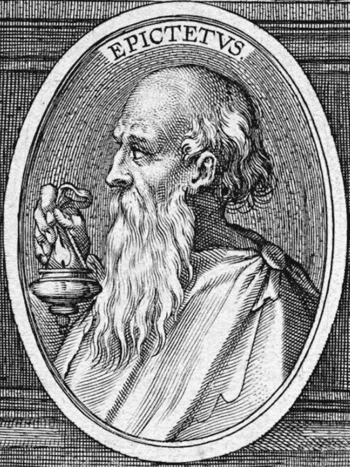
Many people want better results in life, but they rarely stop to ask what kind of person those results require them to become. Success, peace, respect, and dignity are not only outcomes; they are connected to character. When Epictetus wrote:
“First say to yourself who you wish to be, then do accordingly what you are doing.”
He was pointing to a powerful Stoic idea: before we act, we must define the principles and identity that should guide our actions.
First Decide What Kind of Person You Want to Become
Epictetus begins with a simple but demanding idea: before you ask what you want to achieve, you should ask who you want to become. This is important because many people focus only on results. They want success, respect, peace, influence, or happiness, but they do not clearly define the kind of character that should stand behind those things. A person may want to be respected, but if he is dishonest, impatient, or unreliable, his actions will slowly destroy the very respect he desires.
In a Stoic sense, identity is not about appearance, social status, or the image we present to others. It is about the inner direction of the soul. Epictetus is teaching that a meaningful life must be guided by a chosen standard. You must first say to yourself: Do I want to be wise? Do I want to be disciplined? Do I want to be fair? Do I want to be calm under pressure? Only after that can your daily behavior have a clear direction.
A useful classroom example would be this: imagine a student who says, “I want to be excellent.” That is a good wish, but it is still too vague. The more important question is: What kind of person studies, prepares, listens, corrects mistakes, and keeps going when the work becomes difficult? Excellence requires a certain identity. It requires patience, responsibility, and consistency. Epictetus is not asking us to invent a fantasy version of ourselves. He is asking us to define a moral and practical model that can guide our choices.
This is why the quote is not just motivational. It is philosophical. Epictetus places character before ambition. He reminds us that the question “Who do I wish to be?” is deeper than “What do I want to get?” When a person answers that question honestly, life becomes less random. Actions begin to follow principles, not only moods, fears, or social pressure.
Identity Is Not Just a Thought, but a Responsibility
When Epictetus says that we should first decide who we wish to be, he does not mean that identity is only a private dream or a pleasant idea. In his philosophy, identity carries responsibility. To say “I want to be a brave person” means that you must prepare yourself to act bravely when fear appears. To say “I want to be honest” means that honesty must matter even when lying would be easier. To say “I want to be calm” means that you cannot justify every angry reaction as if it were unavoidable.
This is a very practical lesson. Many people enjoy describing themselves with noble words. They may say they value truth, loyalty, discipline, kindness, or dignity. But Epictetus would ask a sharper question: Where can these values be seen in your behavior? A value that never appears in action is not yet a real value. It is only an attractive description.
For example, a person may say, “I want to be mature.” But maturity is not proven by saying that sentence. It is proven in ordinary moments:
- When someone criticizes you and you do not immediately become defensive.
- When you make a mistake and accept responsibility instead of blaming others.
- When you continue doing what is right even if nobody praises you.
- When you control your reaction instead of letting every emotion become an action.
This is the teacherly core of Epictetus’ message: identity must become visible in conduct. If there is no connection between who we claim to be and how we behave, then our identity is incomplete. Stoic philosophy is strict about this because it does not separate thinking from living. A person is not shaped only by what he believes in theory, but by what he repeatedly does in practice.
In the modern world, this lesson is especially important because people often build an image before they build character. They want to look confident before they become disciplined. They want to appear wise before they learn to listen. Epictetus reverses this order. First become clear about your inner standard, then accept the responsibility of living according to it.
Act According to the Principles You Have Chosen
The second part of the quote — “then do accordingly what you are doing” — gives the first part its real weight. It is not enough to choose an ideal identity; your actions must match it. Epictetus is teaching that every ordinary action is a test of the person you are trying to become. Character is not built only in dramatic moments. It is built in small decisions, repeated every day.
If you wish to be patient, then patience must appear when someone delays you, misunderstands you, or irritates you. If you wish to be disciplined, then discipline must appear when you are tired, bored, or tempted to postpone important work. If you wish to be just, then justice must appear when treating others fairly is inconvenient. This is the Stoic connection between principle and practice.
A good way to explain this is to imagine that your chosen identity is like a compass. A compass does not walk the road for you, but it shows the direction. In the same way, your principles do not automatically make you better, but they help you decide what kind of action is appropriate. Without principles, people are often pulled in different directions by mood, fear, desire, pride, or public opinion. With principles, they have something stable to return to.
For example, suppose someone says, “I want to live peacefully.” That sounds admirable. But if the same person constantly enters pointless arguments, reacts aggressively to every disagreement, and keeps reopening old conflicts, then his actions are not moving toward peace. Epictetus would not simply criticize the person; he would teach him to observe the contradiction. If peace is truly the chosen direction, then daily behavior must change accordingly.
This is why the quote has strong practical value. It can be used almost like a daily question: Does this action fit the person I say I want to become? If the answer is no, then the action needs correction. In Stoicism, progress is not about pretending to be perfect. It is about noticing when behavior has moved away from principle and then returning to the chosen path.
The Desire to Change Is Not Enough
Epictetus also warns us about a common human weakness: we often confuse wanting to change with actually changing. A person may sincerely want to become wiser, calmer, stronger, or more responsible, but desire alone does not create character. Desire is only the beginning. The real test is whether the person is willing to train his behavior.
This point is central to Stoic philosophy. The Stoics did not treat virtue as a decoration or a beautiful idea. They treated it as a discipline. Just as the body becomes stronger through repeated exercise, character becomes stronger through repeated action. You do not become self-controlled only by admiring self-control. You become self-controlled by practicing restraint when you want to react impulsively. You do not become courageous only by liking the idea of courage. You become courageous by doing what is right in the presence of fear.
A modern example is easy to see. Someone may say, “I want to stop being controlled by other people’s opinions.” But if that person still checks every reaction, fears every criticism, and changes behavior only to gain approval, then the wish has not yet become a practice. The Stoic answer would not be harsh, but it would be clear: begin acting in small ways like a person who values inner freedom more than applause.
The process can be understood in three steps:
- Name the quality you want to develop.
- Identify the situations where that quality is tested.
- Practice the matching action when the test appears.
For instance, if you want to become more disciplined, do not only repeat the sentence “I want discipline.” Look at where discipline is actually tested: waking up on time, finishing difficult tasks, avoiding distractions, keeping promises, and doing necessary work before comfort. That is where the desired identity becomes real.
Epictetus’ message is demanding because it removes excuses. It tells us that improvement is not only a matter of emotion, inspiration, or intention. It is a matter of alignment. If you want to be better, you must act in ways that train you to become better. The quote therefore teaches that the path to self-improvement begins with a clear identity, but it is completed only through consistent action.
Modern Examples of the Gap Between Desired Identity and Real Behavior
Epictetus’ quote becomes very clear when we look at modern life. Many people have a strong idea of what they want to become, but their daily behavior often moves in the opposite direction. This is not always because they are dishonest. Very often, it is because they have never carefully compared their wishes with their habits. A person may say, “I want peace,” but spend every day arguing online, reacting emotionally to small comments, and turning every disagreement into a personal battle. In that case, the desire for peace exists, but the behavior is training the opposite quality.
Another person may say, “I want to be respected.” But respect is not created only by wanting it. Respect usually grows from reliability, fairness, self-control, and the ability to treat others with dignity. If someone demands respect while constantly interrupting others, avoiding responsibility, or reacting with anger whenever challenged, there is a contradiction between the desired identity and actual conduct.
A useful way to explain this is to separate the image from the practice:
- The image is what a person wants to believe about himself.
- The practice is what the person repeatedly does.
- Character is formed more by practice than by image.
This is why Epictetus is so practical. He does not ask us to make impressive statements about our values. He asks us to examine whether our actions are consistent with those values. In a modern context, this can apply to work, family, study, friendships, and public life. Someone who wants to be serious must be careful with promises. Someone who wants to be independent must stop being ruled by every opinion. Someone who wants dignity must learn not to trade self-respect for cheap approval.
The philosophical lesson is simple but demanding: every day gives evidence about who we are becoming. Our identity is not proven in a single dramatic moment, but in repeated ordinary choices. Epictetus teaches that self-knowledge is not only asking, “What do I want?” It is also asking, “What kind of person do my actions slowly create?”
Stoicism as a Philosophy of Self-Formation
Stoicism is often misunderstood as a philosophy of emotional coldness, but that is not its real meaning. The Stoics did not teach people to become unfeeling or distant. They taught them how to live with reason, self-control, moral seriousness, and inner freedom. For Epictetus, the central question is not how to control the whole world, because that is impossible. The central question is how to govern yourself in the part of life that belongs to you: your judgments, choices, intentions, and actions.
This is why the quote fits so well into Stoic philosophy. When Epictetus says that you should first decide who you wish to be and then act accordingly, he is describing a process of self-formation. A person is not only a collection of reactions. A person can be shaped by discipline, reflection, and repeated moral effort. In this sense, Stoicism is a school of character.
Historically, this idea was very important because Stoicism developed in a world full of uncertainty, political instability, social hierarchy, illness, loss, and sudden changes of fortune. Epictetus himself had lived as an enslaved person before becoming one of the most influential Stoic teachers. His philosophy was therefore not abstract decoration. It was a practical method for preserving dignity even when external circumstances were difficult.
This also explains another important Epictetus quote: “If you want to improve, be content to be thought foolish and stupid with regard to external things.” The meaning is that real improvement may require us to stop chasing applause, status, and approval. A person who seriously wants to form his character must sometimes accept that others will not immediately understand his choices. He may look less ambitious in the shallow sense, less fashionable, or less eager to impress. But from a Stoic point of view, that may be exactly the price of inner progress.
In modern terms, Stoicism teaches us to build life from the inside outward. First comes the question of principle. Then comes behavior. Only after that should we think about reputation, success, or external recognition. Epictetus reminds us that if the inner person is confused, the outer life will also become confused.
The Quote as a Call to Consistency
At its deepest level, this quote is a call to consistency. Epictetus is not saying that a person must become perfect overnight. He is saying that a person should stop living in contradiction with his own chosen values. This is an important distinction. Stoicism does not deny that people make mistakes. It teaches that progress begins when we notice those mistakes and return to the path we have chosen.
Consistency means that your actions are connected to your principles even when circumstances change. It is easy to be calm when nothing irritates you. It is easy to be honest when honesty costs nothing. It is easy to be disciplined when you feel motivated. But character is tested when the opposite pressure appears. The patient person is tested by delay. The brave person is tested by fear. The just person is tested when unfairness would bring personal advantage. The dignified person is tested when approval could be gained by lowering his standards.
A teacher might explain it this way: do not measure your character only by what you admire, but by what you practice when life becomes uncomfortable. A person who wants to be wise must practice wise judgment when emotions are strong. A person who wants to be responsible must act responsibly even when nobody is watching. A person who wants self-respect must protect that self-respect in small choices, not only in large speeches.
The practical value of the quote can be turned into a simple daily exercise:
- Ask yourself what kind of person you are trying to become.
- Look at the action you are about to take.
- Ask whether that action supports or weakens that identity.
- Correct the action if it does not match the principle.
This is why Epictetus’ message remains relevant today. Many people live by impulse, comparison, fear, or the need for approval. Epictetus offers a different model: live by a clear inner standard. First define the person you wish to become, then let your decisions slowly build that person. The result is not instant transformation, but moral direction. And for the Stoics, moral direction is already the beginning of freedom.
You might be interested in…
- What Epictetus Really Meant by “Men Are Disturbed, Not by Things”
- Why Epictetus Said “If You Want to Improve, Be Content to Be Thought Foolish and Stupid” — A Stoic Lesson on Ego and Growth
- “First Say to Yourself Who You Wish to Be” by Epictetus – Why Identity Must Come Before Action
- “Never Say ‘I Have Lost It’; Say ‘I Have Returned It’” – The Meaning of Epictetus’ Quote on Loss and Detachment
- What Epictetus Meant by “Some Things Are in Our Control and Others Not”