
Quote Analysis
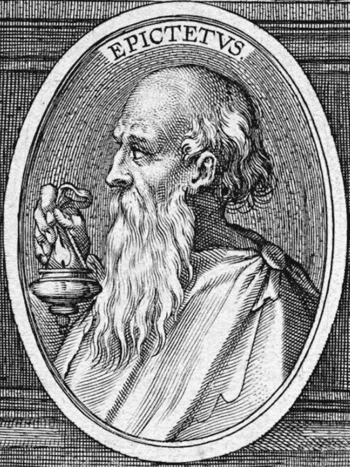
Real personal growth often begins at the exact point where our ego feels most uncomfortable. Many people want to improve, but very few are willing to look uncertain, inexperienced, or unimpressive while doing it. Epictetus captures this challenge in the powerful Stoic quote:
“If you want to improve, be content to be thought foolish and stupid with regard to external things.”
These words are not an invitation to ignorance, but a warning against vanity. To become wiser, stronger, and more disciplined, we must stop treating other people’s opinions as the measure of our worth.
What Does This Quote by Epictetus Mean?
Epictetus is teaching a very practical lesson: if a person truly wants to improve, they must be willing to lose the need to look impressive in front of others. This does not mean that a person should behave foolishly on purpose, reject knowledge, or pretend not to understand things. The point is much deeper. Epictetus is saying that real growth often requires humility, and humility can look unattractive to people who only judge by appearances.
For example, imagine someone who is learning a difficult subject. A proud person may avoid asking questions because they do not want others to think they are confused. But a serious learner will ask even simple questions if those questions help them understand better. In the short term, this person may look less clever. In the long term, however, they will become stronger because they are more interested in truth than in appearance.
The phrase “external things” is very important here. Epictetus is not speaking about wisdom, virtue, self-control, or moral character. He is speaking about things outside the soul: reputation, public image, social status, praise, criticism, wealth, and the opinions of others. These things may influence daily life, but they should not control the direction of a person’s inner development.
A useful way to understand the quote is this: if you are always trying to protect your image, you will have very little energy left for real improvement. Growth requires correction, patience, and the courage to admit weakness. A person who cannot bear to seem wrong will struggle to become right. A person who cannot bear to seem ordinary will struggle to become truly wise.
Epictetus is asking us to choose between two lives. One life is built around looking intelligent, important, and successful. The other life is built around becoming disciplined, honest, and free. The first life depends on applause. The second depends on character.
Epictetus and Stoicism: Why External Things Matter Less Than Character
To understand this quote properly, we must place it inside the wider philosophy of Stoicism. Epictetus was one of the most important Stoic philosophers, and his teaching often begins with a simple distinction: some things are within our control, and some things are not. Our judgments, choices, intentions, discipline, and moral attitude are within our control. Other people’s opinions, social reputation, wealth, beauty, status, and many external events are not fully within our control.
This distinction is not just a theory. It is the foundation of Stoic freedom. Epictetus believed that a person becomes emotionally weak when they build their happiness on things that can easily be taken away. If your peace depends on being admired, then anyone who criticizes you can disturb you. If your confidence depends on status, then losing status will damage your sense of self. If your value depends on always looking intelligent, then every mistake becomes a threat.
The Stoic answer is not to hate external things, but to put them in their proper place. Reputation may be pleasant, but it is not virtue. Wealth may be useful, but it is not wisdom. Praise may feel good, but it is not proof of character. A person can be admired and still be morally weak. Another person can be misunderstood and still be deeply disciplined.
This is why Epictetus tells us to be content to be thought foolish with regard to external things. He is training the reader not to overvalue the judgment of the crowd. In ancient society, just as today, people often measured worth by visible signs: public honor, social position, influence, possessions, and rhetorical cleverness. Epictetus challenges that entire system. He says that the real question is not, “How do I appear to others?” but “What kind of person am I becoming?”
A modern example makes this very clear. Someone may refuse to enter a pointless argument online. To others, this may look like weakness or lack of knowledge. But from a Stoic point of view, it may be an act of discipline. The person has chosen inner control over public victory. That is exactly the kind of lesson Epictetus wants us to understand.
Why the Need to Look Smart Can Block Real Improvement
One of the strongest psychological lessons in this quote is that the desire to appear intelligent can become an obstacle to becoming intelligent. Many people do not fail because they lack ability. They fail because their ego prevents them from learning. They are afraid to ask questions, afraid to admit confusion, afraid to be corrected, and afraid to start as beginners.
In a classroom, workplace, or public discussion, this problem appears often. A person may pretend to understand something because they do not want to look slow. Another person may defend a wrong opinion because admitting a mistake feels humiliating. Someone else may avoid trying a new skill because the first attempts would look awkward. In all these cases, the problem is not lack of potential. The problem is attachment to image.
Epictetus would say that this is a form of slavery. The person is not guided by reason, but by fear of judgment. Instead of asking, “What is true?” or “What can I learn?” the person silently asks, “How do I look right now?” That question can become a prison. It makes honest learning almost impossible.
Real improvement has certain stages, and some of them are uncomfortable:
- First, a person must recognize that they do not know something.
- Then, they must accept correction without becoming defensive.
- After that, they must practice patiently, even when progress is slow.
- Finally, they must allow themselves to look imperfect while they are still learning.
This is why Epictetus connects improvement with the willingness to be thought foolish. The beginner often looks clumsy. The honest student sometimes asks basic questions. The person who changes their mind may appear inconsistent to others. But these are not signs of weakness. They are often signs that growth is actually happening.
The person who always needs to look smart usually chooses safety over development. They stay within the limits of what they already know. They avoid situations where they might be exposed. They protect their pride, but they do not expand their understanding. Epictetus teaches the opposite: let the ego suffer a little, so the character can grow.
The Wound to the Ego as the Beginning of Wisdom
This quote is also a direct lesson about the ego. The ego wants to be seen, praised, defended, and confirmed. It wants to win arguments, protect reputation, and avoid embarrassment. But wisdom does not grow well in a mind ruled by ego. Wisdom requires the ability to step back and ask: “Am I actually becoming better, or am I only trying to look better?”
For Epictetus, the beginning of wisdom is not a dramatic public achievement. It is often a quiet inner decision. A person stops chasing every compliment. They stop answering every insult. They stop pretending to know what they do not know. They begin to care more about self-command than applause. To people who judge only from the outside, this may not look impressive. But philosophically, it is a major step.
The ego experiences correction as an attack, but wisdom sees correction as useful. The ego experiences silence in an argument as defeat, but wisdom may see it as self-control. The ego wants to be admired immediately, while wisdom is willing to grow slowly. This difference is central to understanding Epictetus.
Consider a person who refuses to boast about their achievements. Some may think they lack confidence. But perhaps they simply do not need constant validation. Consider someone who says, “I was wrong.” Some may think this makes them weaker. But in reality, it shows a stronger relationship with truth than with pride. Consider someone who avoids status games at work or in society. Others may call them naive. Yet they may be the one who is least controlled by vanity.
This is why the wound to the ego can become the beginning of wisdom. When a person can tolerate not looking superior, they become freer. When they can accept being misunderstood, they become steadier. When they can allow others to underestimate them, they stop living as prisoners of public opinion.
Epictetus is not asking us to enjoy humiliation. He is asking us not to fear it so much that we betray our own growth. If the price of becoming wiser is that some people temporarily think less of us, then that price is worth paying. The person who cannot bear to look small will often remain inwardly small. But the person who can endure that discomfort may begin to build a much deeper strength.
How This Quote Applies to Everyday Life
Epictetus’ quote becomes especially clear when we move it from philosophy into ordinary life. He is not speaking only to monks, philosophers, or people living far away from society. He is speaking to anyone who has ever felt the pressure to look clever, successful, strong, or important in front of others. In daily life, this pressure appears in many small situations, and those situations often reveal our real character.
For example, imagine a person in a meeting who does not understand something. One option is to stay silent and pretend everything is clear. That protects the person’s image for a moment, but it does not help them learn. Another option is to ask a simple question, even if someone in the room may think, “How does this person not know that?” From the Stoic point of view, the second option is often wiser. It may feel uncomfortable, but it serves improvement.
The same principle appears in arguments. Many people enter discussions not to discover the truth, but to defend their pride. They want to win, to appear informed, or to make the other person look weaker. Epictetus would ask us to examine this carefully. Are we speaking because something true and useful needs to be said, or because our ego wants victory? Sometimes the more disciplined action is to remain calm, stop defending ourselves, and allow others to misunderstand us.
In modern life, this can happen in several ways:
- Someone refuses to answer an insult online, even though others may think they have “lost” the argument.
- Someone admits, “I don’t know,” even though they could pretend to be more knowledgeable.
- Someone chooses a simple lifestyle, even though society may value luxury and status.
- Someone avoids gossip, showing off, or social competition, even if this makes them appear less influential.
These examples show that inner strength does not always look dramatic from the outside. A person who is calm may be called passive. A person who is humble may be called weak. A person who does not chase attention may be seen as unambitious. But Epictetus teaches that the judgment of others is not the final measure of a human being. What matters is whether the person is becoming more honest, more disciplined, and more free from the need for constant approval.
The Difference Between Real Progress and External Success
One of the most important lessons in this quote is the difference between real progress and external success. These two things can sometimes go together, but they are not the same. External success is what other people can easily see: money, reputation, titles, appearance, popularity, influence, social status, and public recognition. Real progress is quieter. It concerns the development of judgment, patience, self-control, courage, honesty, and inner freedom.
A person can look successful and still be inwardly unstable. They may receive praise, but still depend on praise. They may have status, but still fear losing it. They may appear intelligent, but still be unable to admit error. Epictetus wants us to notice this difference because many people confuse admiration with wisdom. Being admired does not automatically mean that a person has character. Being respected by a crowd does not prove that a person has mastered themselves.
This is where Stoic philosophy becomes very practical. Epictetus’ wider teaching begins with the distinction between what belongs to us and what does not. As he famously says, “Some things are in our control and others not”. Our choices, values, judgments, and moral effort are closer to us. Public opinion, applause, reputation, and the changing reactions of others are unstable. If we build our identity on unstable things, we will become unstable too.
Real progress often looks modest because it happens inside the person before it appears outside. A person may become more patient, but no one applauds patience immediately. A person may stop reacting angrily, but others may not notice the effort behind that restraint. A person may choose truth over popularity, but this choice may even cost them social approval. Yet from the Stoic point of view, these are examples of genuine improvement.
The key lesson is this: external success asks, “How am I seen?” Real progress asks, “What kind of person am I becoming?” Epictetus does not say that reputation, success, or recognition are evil. He warns that they become dangerous when they take the place of character. If a person sacrifices honesty in order to look impressive, they have not advanced. They have merely decorated their ego.
Why This Quote Matters So Much Today
This quote is especially relevant in the modern world because we live in an age of constant display. People are not only living their lives; they are often presenting their lives. Social media, professional networking, personal branding, and public visibility have made image more powerful than ever. Many people feel pressure to appear confident, informed, attractive, successful, and emotionally strong at all times. In such a culture, Epictetus’ advice sounds almost revolutionary.
Today, appearing foolish can feel more dangerous than ever because mistakes can be seen, shared, saved, and judged by many people. A person may hesitate to express a developing idea because it is not yet perfect. Someone may avoid learning publicly because the beginner stage looks awkward. Others may follow trends they do not believe in because they fear being excluded. In this way, the fear of looking foolish becomes a barrier to authentic life.
Epictetus helps us understand that the real problem is not technology itself, but dependence on external validation. If a person checks every action against the imagined opinion of others, they slowly lose contact with their own judgment. They stop asking, “Is this right?” and begin asking, “Will this make me look good?” That is a dangerous exchange. It replaces conscience with performance.
A simple modern example is the fear of changing one’s mind. In a healthy intellectual life, changing your mind after better evidence should be a sign of growth. But in public culture, it can be interpreted as weakness or inconsistency. Because of this, many people defend positions they no longer fully believe. They protect their image at the cost of truth. Epictetus would see this as a failure of inner freedom.
This quote matters today because it gives us permission to grow without performing perfection. It reminds us that learning requires awkwardness. Moral development requires correction. Wisdom requires the courage to look incomplete. A person who wants to improve must not be ruled by the fear of screenshots, comments, criticism, or temporary embarrassment. The Stoic path asks for a deeper measure: not how loudly the world approves of you, but how faithfully you are training your own character.
The Main Lesson: You Do Not Have to Look Great in Order to Grow
The central lesson of Epictetus’ quote is simple but demanding: you do not have to look great in order to become better. In fact, the obsession with looking great can prevent growth. Many of the most important changes in a person’s life are not immediately impressive. Learning self-control, correcting bad habits, becoming more honest, admitting ignorance, listening more carefully, and reducing vanity are not always visible achievements. Yet they are among the deepest forms of progress.
Epictetus is teaching us to accept the temporary discomfort that comes with genuine improvement. When a person begins to change, others may misunderstand them. If they stop arguing, people may think they have become weaker. If they stop showing off, people may think they have lost ambition. If they admit mistakes, people may think they are less competent. But these judgments are not the truth of the situation. They are only appearances.
A useful way to explain this to students is to compare growth with training. In physical training, the body becomes stronger through effort, repetition, and discomfort. In moral training, the character becomes stronger through patience, correction, and humility. No one becomes wise by protecting their pride at every moment. Wisdom grows when a person can endure the small humiliation of learning.
This does not mean that we should invite disrespect or allow others to treat us badly. Epictetus is not asking us to become passive or careless. He is asking us to stop making public approval the ruler of our soul. There is a great difference between being genuinely foolish and being willing to be thought foolish while doing what is right.
The final message is that true growth often has a quiet form. It may not attract applause. It may not impress superficial people. It may even make us look less powerful for a time. But if we become more honest, more disciplined, less vain, and less dependent on the crowd, then we are moving in the direction Epictetus recommends. The person who can bear not to look superior is often the person most ready to become truly free.
You might be interested in…
- What Epictetus Really Meant by “Men Are Disturbed, Not by Things”
- “First Say to Yourself Who You Wish to Be” by Epictetus – Why Identity Must Come Before Action
- Why Epictetus Said “If You Want to Improve, Be Content to Be Thought Foolish and Stupid” — A Stoic Lesson on Ego and Growth
- What Epictetus Meant by “Some Things Are in Our Control and Others Not”
- “Never Say ‘I Have Lost It’; Say ‘I Have Returned It’” – The Meaning of Epictetus’ Quote on Loss and Detachment