
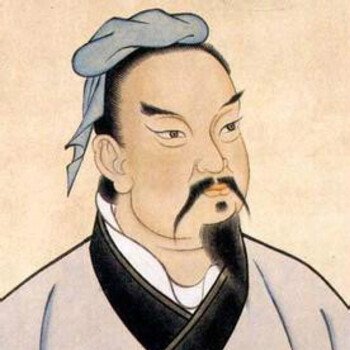
Quote Analysis
Most conflicts don’t start with fists—they start with pride, panic, or a need to “win” in public. That’s why Sun Tzu’s strategy feels surprisingly modern: it’s not about craving a fight, but about achieving the outcome with the smallest possible cost. In his famous line:
“Supreme excellence consists in breaking the enemy’s resistance without fighting.”
Sun Tzu isn’t praising passivity; he’s teaching a smarter kind of strength—one that saves time, energy, resources, and reputation by preventing collision in the first place. But how do you “win” without a direct clash, and where is the line between wisdom and manipulation?
What the Quote Literally Means
When Sun Tzu says that “supreme excellence” is breaking the enemy’s resistance without fighting, he is drawing a clear line between winning a battle and winning the outcome. A fight is only one method, and it is usually the most expensive one. In simple teacher-like terms: the highest skill is to get what you need before the situation turns into a direct collision. Why? Because every fight creates damage—sometimes visible (injuries, losses), sometimes invisible (fear, resentment, reputational harm, wasted time).
The key word is resistance. Sun Tzu is not saying “destroy the enemy.” He is saying “remove their ability or desire to keep opposing you.” That can happen in many ways that do not require force. For example, if two companies compete, one does not have to “attack” the other publicly. It can win by building a better supply chain, forming stronger partnerships, or offering a product that makes the rival’s strategy irrelevant. The rival’s resistance weakens because the environment changes.
Historically, this thinking fits a world where wars were costly and uncertain. A general who could secure surrender through diplomacy, fear of defeat, or cutting off resources was considered more skilled than one who won only through bloodshed. Philosophically, the quote teaches control over ego: the ego wants a dramatic victory; strategy wants a clean result with minimal waste.
Why “Without Fighting” Is the Highest Form of Strategy
Many people misunderstand “without fighting” as softness. Sun Tzu means the opposite. It is harder to avoid a fight than to start one, because avoiding conflict demands planning, patience, and self-control. A fight is often an emotional shortcut: it feels decisive, it looks strong, and it gives instant satisfaction. But strategy is not about looking strong—it is about being effective.
Think of conflict like fire. If you wait until the room is burning, you must fight the flames directly. But the best firefighter prevents the fire: checks wiring, removes fuel, builds safe systems. Sun Tzu’s idea is similar: the best strategist prevents the “fire” of conflict by shaping conditions early.
In modern life, you see this in negotiations. A skilled negotiator does not “attack” the other side with pressure from the start. Instead, they adjust incentives so agreement becomes the easiest option. They clarify goals, reduce uncertainty, and offer a path that lets the other side say yes without losing face.
Here’s a useful way to think about the logic:
- Fighting increases uncertainty (anything can go wrong).
- Fighting increases cost (time, money, damage, stress).
- Fighting creates future enemies (even after you “win”).
- Preventing the fight keeps your resources intact for the next challenge.
Philosophically, the quote promotes economy of force: true excellence is not maximum aggression, but maximum control. The “highest” win is the one that solves the problem and leaves the least destruction behind.
Attacking Plans, Logistics, and Motivation Before Strength
Sun Tzu’s method is often summarized like this: do not strike the strongest wall first—first remove what holds the wall up. In practical terms, human resistance is rarely just physical strength. It is supported by a structure: plans, resources, morale, and coordination. If you weaken those supports, strength becomes irrelevant.
A teacher-style explanation could sound like this: imagine a chess game. If you only chase pieces, you might win a fight on the board but still lose the match. A better player attacks the opponent’s position, not just the pieces. Sun Tzu is doing the same: he targets the system behind the enemy’s power.
In many real situations, resistance relies on:
- A plan (what they intend to do next)
- Logistics (money, supply, time, connections)
- Motivation (belief, confidence, willingness to continue)
- Unity (agreement inside their own group)
If you disrupt these, the opponent may stop resisting without a direct clash. Historically, armies that lost supply lines often collapsed even if their soldiers were strong. Modern example: in business, a competitor can look powerful, but if it relies on one supplier or one key market, you can outmaneuver it by changing the market conditions or securing that supply chain first.
In everyday communication, this is also true. If someone argues aggressively, their “strength” is often just confidence and momentum. If you calmly ask for definitions, evidence, or clear criteria, you attack the plan of the argument. If their logic is weak, resistance collapses on its own. Sun Tzu is teaching: do not fight the muscles—remove the leverage.
Modern Examples in Communication and Argument
In discussions, many people believe the goal is to “defeat” the other person. Sun Tzu would say: that is a beginner’s mindset. The goal is to reduce resistance so truth, agreement, or cooperation becomes possible. The best result is not a dramatic verbal victory—it is a solution that prevents future conflict.
A strong modern example is the difference between humiliating someone with arguments and guiding them into seeing a contradiction. If you crush a person publicly, they will often resist harder later—even if you were correct. But if you ask one calm, precise question, they may revise their position without feeling attacked.
Here are teacher-like examples of “winning without fighting” in conversation:
- If someone makes a big claim, ask: “What evidence would change your mind?”
- If their logic is messy, ask: “Can we define the key term first?”
- If they jump between points, ask: “Which single point matters most to you?”
- If they rely on emotion, ask: “What specific outcome are you trying to protect?”
Notice what these questions do: they do not attack the person. They attack confusion, exaggeration, or inconsistency. That’s why resistance drops. Historically, this fits classical philosophy too: Socrates often used questions to expose contradictions rather than direct confrontation. The philosophical layer is important: true strength in dialogue is not dominance—it is clarity.
Also, “without fighting” can mean choosing the right moment. Some debates are not worth having. If the relationship, timing, or context is wrong, walking away can be the best strategic move. Sun Tzu would call that discipline, not weakness.
Leadership and Authority Without Constant Threats
Sun Tzu’s quote translates beautifully into leadership: the best leader does not need to shout, intimidate, or constantly “prove” power. If a leader relies on threats all the time, it means the system is weak. People obey only under pressure, and resistance grows underneath the surface.
A teacher-style rule is simple: good leadership designs conditions where cooperation is the natural choice. That means clear expectations, fair rules, and predictable consequences. When people understand what is required—and trust that the system is consistent—there is less need for conflict.
In real workplaces, resistance often comes from confusion or perceived unfairness, not from “bad employees.” A leader practicing Sun Tzu’s principle would focus on prevention:
- Clarify roles and responsibilities early.
- Remove contradictions in rules (people hate double standards).
- Make feedback regular, small, and calm—so it doesn’t explode later.
- Reward cooperation visibly, not only punish mistakes.
- Build processes that reduce stress and chaos (stress creates resistance).
Modern example: if a manager waits until deadlines are missed and then “fights” with pressure, the team becomes defensive. But if the manager builds a clear schedule, checks progress early, and removes obstacles, the team rarely reaches open conflict. Resistance dissolves because the environment supports success.
Philosophically, this also attacks the ego. The ego wants to be seen as “the boss.” Strategy wants the work to flow. Sun Tzu’s lesson is that the most impressive authority is the one that rarely needs to be displayed—because the system itself makes conflict unnecessary.
The Philosophical Layer: Ego vs. Strategy
Sun Tzu’s sentence is not only military advice; it is also a lesson about the human mind. The biggest reason people choose “fighting” is often not necessity, but ego. Ego wants a public victory. Ego wants to be seen as strong, right, or dominant. Strategy, on the other hand, wants a result with the smallest possible cost. If you think like a teacher for a moment: ego is like a loud student who wants attention; strategy is like a calm student who wants the correct answer and moves on.
This is why “without fighting” can feel uncomfortable. It requires self-control. It asks you to tolerate the fact that you might win quietly, without applause. Historically, wise rulers and commanders understood this. They valued stability more than spectacle. A dramatic victory might look heroic, but it can also plant the seeds of future rebellion, revenge, and chaos.
In modern life, you see ego-driven “fighting” in arguments, workplace politics, and social media. People attack not because the issue is serious, but because they want to protect their identity. Strategy asks a different question: “What outcome actually matters?” If the goal is cooperation, then humiliating someone is a poor method, even if you are correct.
Philosophically, Sun Tzu is teaching a kind of humility: real power does not need constant proof. When you must always display strength, you are spending strength. Supreme excellence is the opposite—quiet control, clear thinking, and minimal damage.
“The Enemy” as a Problem, Not a Person
To understand this quote correctly in modern terms, you must broaden the meaning of “enemy.” In everyday life, the “enemy” is often not a person you hate. It can be a problem that blocks progress: confusion, fear, bad habits, a flawed system, misinformation, or a shortage of resources. When you label a person as the enemy, your brain prepares for a fight. When you label the situation as the enemy, your brain prepares for a solution.
Here is a simple teacher-style distinction:
- Person-focused conflict: “You are the problem.” (This triggers defensiveness.)
- Problem-focused conflict: “This obstacle is the problem.” (This invites cooperation.)
Historically, this mindset also explains why strong strategists tried to isolate the true source of resistance. Sometimes the source was not the soldiers, but hunger. Not the opponent’s courage, but their unstable alliances. When you treat resistance like a structure, you stop punching people and start moving levers.
Modern example: in a team, if deadlines are missed, the “enemy” might be unclear priorities, not lazy colleagues. If a relationship feels tense, the “enemy” might be stress and miscommunication, not the other person’s character. Once you aim at the real obstacle, you can reduce resistance without dramatic conflict. That is how you “win” without fighting: you remove the cause, not just the symptoms.
Where People Go Wrong: Wisdom vs. Manipulation
There is an important ethical line here. Some people hear Sun Tzu and think it gives them permission to manipulate others. That is not “supreme excellence.” That is short-term trickery. Real strategy can be intelligent and firm without being dishonest or cruel.
A useful way to teach this is to separate three approaches:
- Avoidance: refusing to address problems (conflict returns later, often worse).
- Manipulation: controlling others through hidden pressure (trust breaks, resistance grows).
- Strategic prevention: shaping conditions so conflict becomes unnecessary (stable, sustainable).
This is where Sun Tzu’s broader philosophy can be misunderstood. He does write about deception, but strategy is not the same as lying in daily life. In many modern contexts—leadership, relationships, business—trust is a valuable resource. If you destroy trust, you may “win” today and lose tomorrow.
Here is the key idea: reducing resistance should not mean breaking a person. It should mean reducing unnecessary friction. For example, if you want someone to cooperate, you can do it ethically by clarifying goals, offering fair incentives, and removing obstacles. You do not need to play games.
Still, Sun Tzu reminds us that perception matters in conflict. “All warfare is based on deception”. Read that carefully: it describes how conflict often works, not how every human interaction should be conducted. The lesson is to be aware that people may hide intentions—and to protect yourself by thinking clearly, not by becoming deceptive yourself.
Practical Lessons: How to Apply This Today
To apply this quote, you need concrete habits, not inspirational words. The core habit is to prepare the environment so resistance has fewer places to grow. Think of resistance like weeds: if you only cut the visible parts, they return. If you change the soil and remove the causes, the weeds stop appearing.
Here are practical strategies you can use in real life:
- Define the real goal: Do you want to be right, or do you want a good outcome?
- Identify the true obstacle: Is resistance coming from fear, misunderstanding, or competing interests?
- Choose the best lever: Often the lever is information, timing, or incentives—not pressure.
- Lower emotional temperature: Calm tone reduces resistance faster than louder arguments.
- Offer a “face-saving” path: People resist less when they can agree without humiliation.
- Build redundancy: In projects, have backups. In negotiation, have alternatives. Dependence creates conflict.
Modern example: if you want a colleague to change behavior, don’t start with accusation. Start with clarity: “Here’s what we need, here’s why it matters, and here’s how we can make it easier.” You are not fighting them; you are reducing the conditions that produce resistance.
Historically, this is how stable empires lasted: not by constant battles, but by systems that reduced rebellion. Philosophically, it is self-mastery: controlling yourself so you don’t create unnecessary enemies.
Winning With Minimal Damage
Sun Tzu’s line is a reminder that conflict is a tool, not a lifestyle. If you treat every problem as a battle, your life becomes one long emergency. But if you treat conflict as a last resort, you gain something rare: long-term stability.
The “supreme” part of the quote is important. It implies a hierarchy of skill. At the lowest level, people rely on raw force—shouting, pressure, threats, escalation. At a higher level, they rely on planning—clear goals, better preparation, smarter timing. At the highest level, they rely on shaping conditions so the fight becomes unnecessary. That is why Sun Tzu calls it excellence: it is not just about victory, but about the quality of victory.
A victory that destroys relationships, reputation, or future cooperation is often not a real victory. It is a trade: you gained one moment and lost tomorrow. The best outcomes are the ones that reduce future resistance, not just current opposition.
In modern life, this quote teaches a simple, teacher-like lesson: do not confuse noise with power. Quiet solutions often require more intelligence than loud confrontations. If you can solve the problem before it becomes a war—through clarity, preparation, and calm influence—you have practiced Sun Tzu’s highest skill.
You might be interested in…
- Why “Supreme excellence consists in breaking the enemy’s resistance without fighting” Still Matters Today — Sun Tzu Explained
- The Meaning Behind “If You Know the Enemy and Know Yourself” – Sun Tzu’s Practical Formula for Winning
- Why “All Warfare Is Based on Deception” Still Wins — Sun Tzu on Perception, Strategy, and Information