
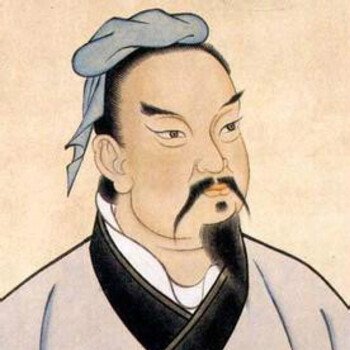
Quote Analysis
When people quote Sun Tzu, it’s often treated like motivation—but this line is closer to a checklist than a pep talk. The real question isn’t “How do I feel going into a challenge?” but “How accurate is my preparation?” Sun Tzu compresses that idea into one sentence:
“If you know the enemy and know yourself, you need not fear the result of a hundred battles.”
It’s a reminder that most defeats don’t come from bad luck—they come from bad estimates: underestimating the other side, overestimating your own discipline, or walking into pressure without clear boundaries. Read this quote as a method, and it becomes surprisingly modern.
What Sun Tzu Is Really Saying: A Method, Not Motivation
This quote is often posted like a confidence slogan, but that reading is too shallow. Sun Tzu is not teaching you to “feel brave.” He is teaching you to reduce uncertainty until the outcome becomes predictable. Think like an engineer for a moment: fear grows when you don’t know what will happen. Preparation works because it turns unknowns into knowns, and knowns into plans.
Historically, The Art of War was written for leaders who could not afford emotional decision-making. A battlefield is not a place where “good vibes” win—it’s where good estimates win. That is why Sun Tzu frames success as a result of knowledge, not courage. If your evaluation is accurate, you don’t need dramatic heroism. You need discipline.
In modern life, “a hundred battles” can mean repeated high-pressure moments: weekly negotiations, monthly deadlines, competitive exams, or running a business where every quarter feels like a new round. The point is consistency: if your approach is built on clear knowledge, you don’t panic each time you face pressure.
Here is the core logic Sun Tzu is teaching:
- Fear often comes from guessing.
- Knowledge replaces guessing with clarity.
- Clarity allows planning.
- Planning makes outcomes less dependent on luck.
So the quote is not promising that you will always win. It is saying: you will stop being surprised by outcomes—and that is how fear loses its power.
Knowing the Enemy: How to Read the Outside World Accurately
In Sun Tzu’s language, “the enemy” is not necessarily someone you hate. It is any force that can block your goal: a competitor, a difficult client, an exam format, a market trend, a strict evaluator, or even a recurring problem that keeps defeating your plans. To “know the enemy” means you stop describing the situation with vague labels (“they’re tough,” “the test is hard”) and instead you study it like a map.
A teacher-style way to understand this is: you cannot prepare for a fog. You can prepare for a shape. Your job is to give the obstacle a clear shape.
What does that look like in practice?
- Style and behavior – How does the other side act under pressure? Aggressive? Patient? Chaotic?
- Resources – What do they have that you may not? Time, money, allies, information, authority?
- Patterns – What do they repeat? Predictable habits are strategic gold.
- Weak points – Where do they lose control? Where do they rush? Where do they get emotional?
Modern example: imagine you are entering a salary negotiation with someone known for being pushy. If you don’t “know the enemy,” you show up with hope and improvisation. If you do, you arrive with clear boundaries, your market data, and a prepared response to pressure tactics. You also decide in advance your “walk-away point.” That is exactly Sun Tzu’s mindset: prepare for reality, not for the version you wish were true.
Philosophically, this is about respecting facts. Sun Tzu is training you to see the world as it is, not as your ego wants it to be.
Knowing Yourself: The Harder Half of the Equation
Many people think self-knowledge means knowing their “strengths.” Sun Tzu means something more practical and, honestly, more uncomfortable: knowing your limits, triggers, and discipline gaps before the situation tests them. If you misread yourself, you build plans that collapse under real pressure.
Here is a simple teacher’s rule: a plan is only as good as the person who must execute it. So “knowing yourself” means you plan according to your real behavior, not your ideal image.
You should be able to answer questions like these with honesty:
- Where do I lose time? (procrastination, distractions, perfectionism)
- How do I react under stress? (panic, anger, impulsive decisions, avoidance)
- What is my true capacity? (focus hours, energy levels, recovery time)
- What mistakes do I repeat? (same excuses, same blind spots)
Modern example: if you know you procrastinate, then a plan that depends on “the last day” is not ambitious—it is unrealistic. A smarter plan is built around your weakness: smaller deadlines, earlier starts, accountability, and a buffer for bad days. This is not self-criticism; it is self-management.
Historically, commanders who ignored their army’s real condition—fatigue, morale, supply limits—lost battles they “should have won.” Sun Tzu is saying the same thing to you: your inner state is part of the terrain.
Philosophically, this is a call to sobriety. Not pessimism—sobriety. When you know yourself clearly, you stop gambling with your own habits. You start designing strategy that you can actually carry out.
Why Most People Lose: Misjudgment (Underestimating Others vs. Overestimating Yourself)
Sun Tzu’s quote sounds confident, but the hidden lesson is a warning: defeat is often a math error. Not a moral failure. Not a lack of talent. A miscalculation. And it usually happens in one of two directions.
The first error is underestimating the other side. This is when someone thinks, “They’re not that prepared,” “They won’t push back,” or “They don’t have real resources.” Historically, this is how armies walked into traps—because they assumed the enemy would behave the way they wanted them to behave. In modern life, this shows up when you underestimate a competitor’s speed, a client’s demands, an exam’s difficulty, or a market’s volatility. You treat the challenge like it will stay polite. It won’t.
The second error is overestimating yourself. This one is quieter and more common. People confuse intention with capacity. They say, “I’ll manage it somehow,” but they ignore the actual constraints: time, fatigue, attention, habits, and stress reactions. This is how good plans fail—not because the plan is “bad,” but because it was designed for a person who does not exist in real life.
A teacher-style summary:
- Underestimating others leads to weak defense and late preparation.
- Overestimating yourself leads to fragile plans and broken discipline.
- The result looks like “bad luck,” but it is usually predictable.
Sun Tzu’s realism is sharp here: the goal is not to feel strong. The goal is to estimate correctly, because correct estimates reduce surprises—and surprises are what turn pressure into chaos.
How the Quote Works Today: Deadlines, Negotiations, and Competitive Situations
To understand this quote in a modern way, replace “battle” with any situation where pressure meets consequences. Sun Tzu is teaching preparation for real life: deadlines that do not move, negotiations where the other side tests your limits, and environments where performance is measured—sometimes harshly.
Take deadlines. Many people build plans as if time is elastic. They assume the last two days will be productive, focused, and calm. But if you know yourself, you don’t gamble on a fantasy version of your future energy. You design your schedule as if you are teaching a class: structured, realistic, repeatable.
Now look at negotiations. If you know the other side is aggressive, you don’t enter the room “open-minded” in the naive sense. You enter with a framework:
- Your non-negotiables (what you will not accept).
- Your ideal outcome (what you want).
- Your minimum acceptable outcome (what you can live with).
- Your walk-away point (when you stop the conversation).
This is the practical meaning of “knowing the enemy and yourself.” You anticipate tactics, and you anticipate your own weak reactions—such as agreeing too quickly to avoid conflict, or reacting emotionally to pressure.
Here is the key: modern battles are often psychological, not physical. The person who prepares calmly usually wins—not because they are “stronger,” but because they are less surprised, less reactive, and better structured.
The Philosophical Layer: Sobriety, Realism, and Turning Drama Into Probability
Sun Tzu’s worldview is not romantic. He does not praise conflict as heroic. He treats conflict as a situation where outcomes follow patterns. That is the philosophical core of this quote: reality rewards clarity.
In many traditions, people think courage means acting despite uncertainty. Sun Tzu shifts the focus: reduce the uncertainty first. This is not cowardice. It is a different kind of strength—discipline and honest perception. He is basically saying: stop relying on emotional peaks; rely on accurate reading.
Historically, this fits the strategic mindset of classical military thinking in China, where commanders were expected to study terrain, weather, supply lines, morale, and timing. Winning was not mainly about brave speeches. It was about reducing randomness. In that sense, Sun Tzu is closer to a mathematician than to a poet.
Philosophically, this also connects to a deeper lesson about the self: your inner world is part of the battlefield. Your pride, your fear of failure, your impatience—these are forces that can ruin strategy. When you know yourself, you stop being ruled by them. You still feel emotions, but you do not let emotions write the plan.
This is why the quote feels “cold,” but useful. It replaces drama with probability. It teaches that life is not always fair—but it is often predictable enough if you stop lying to yourself and start measuring correctly.
A Simple Pre-Battle Checklist: A Mini Protocol You Can Actually Use
A good quote becomes valuable when it turns into a method. Here is a simple protocol, explained in a teacher’s way, that you can use before any “battle”: an exam, a job interview, a difficult conversation, a business decision, or a big project.
Start by forcing clarity. Do not let your brain hide behind vague words like “hard” or “stressful.” Define the situation.
- Define the objective
- What exactly is a “win” here? Be specific. “Do well” is not specific. “Score 85%+” is specific. “Get a signed contract at X terms” is specific.
- Map the outside reality (the ‘enemy’)
- What are the rules of this situation?
- What patterns does the other side show?
- Where are the risk points?
- Map the inside reality (yourself)
- What is your weakest moment under pressure?
- Where do you usually lose discipline?
- How much time/energy do you truly have?
- Create two backup plans
- Plan A is your ideal route.
- Plan B is your realistic route when things go wrong.
- Plan C is your emergency exit (what you do if the situation becomes unacceptable).
This checklist looks simple, but it does something powerful: it prevents you from entering important situations on hope alone. Sun Tzu’s message is not “be fearless.” It is: be prepared enough that fear has less room to grow.
You might be interested in…
- Why “Supreme excellence consists in breaking the enemy’s resistance without fighting” Still Matters Today — Sun Tzu Explained
- Why “All Warfare Is Based on Deception” Still Wins — Sun Tzu on Perception, Strategy, and Information
- The Meaning Behind “If You Know the Enemy and Know Yourself” – Sun Tzu’s Practical Formula for Winning