
Quote Analysis
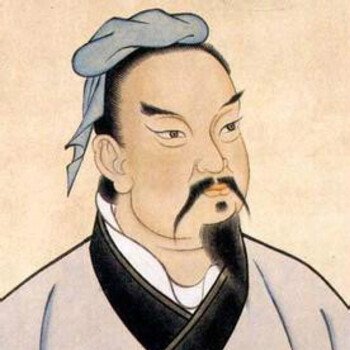
Most conflicts aren’t decided by raw strength—they’re decided by what each side believes about the other. That’s why strategy often starts long before any open confrontation: with signals, timing, and the careful control of information. Sun Tzu captured this uncomfortable truth in one blunt line:
“All warfare is based on deception.”
But he wasn’t praising chaos or dishonesty for its own sake. He was explaining how perception shapes decisions—and how a wrong assumption can make an opponent defeat themselves.
What Sun Tzu Really Means by “Deception” (It’s Not Just Lying)
When Sun Tzu says “deception,” he is not telling you to become a habitual liar. In a teacher-like way, think of deception as managing what the other side thinks they know. In conflict, the opponent is constantly trying to measure you: How strong are you? How ready are you? What do you want? If you answer all of those questions clearly—through words, behavior, timing, or visible preparation—you make their job easy. Sun Tzu’s point is simple: don’t make it easy.
Deception can be as basic as controlling visibility. You don’t need to invent fake stories; often it’s enough to hide your true priorities or delay revealing your capacity. The goal is to push the other side into a wrong calculation. Once they miscalculate, their next move becomes predictable and weak.
Here are common forms of “deception” in Sun Tzu’s sense:
- Concealment: not showing your full strength, plan, or urgency.
- Misdirection: drawing attention to one thing while preparing another.
- Timing control: acting later or earlier than expected to break prediction.
- Signal management: choosing carefully what you communicate and what you don’t.
So, the core lesson is not “be dishonest,” but don’t be transparent in situations where transparency becomes a vulnerability. Be clear about your purpose internally, but smart about what picture you present externally.
Warfare as an Information Game, Not a Strength Contest
Many people imagine warfare as a competition of weapons and numbers. Sun Tzu flips that picture. He treats conflict as a contest of information and decision-making. Why? Because in real life, people act under uncertainty. They don’t have perfect data, so they rely on estimates. If you can shape the opponent’s estimate, you can shape their choices.
Think of it like chess: the strongest piece is useless if moved at the wrong time. Similarly, the strongest army—or the strongest negotiator—can lose if their actions are based on a false picture. Sun Tzu teaches that a good strategist tries to create conditions where the opponent is forced to choose between bad options.
Historically, this idea was very practical. Armies used scouts, decoys, feints, and controlled rumors because knowledge of movement and intention often mattered more than bravery. Even today, modern conflict still depends heavily on intelligence, surveillance, misinformation, and psychological operations—because belief drives behavior.
A useful way to see it:
- Information creates prediction.
- Prediction shapes planning.
- Planning determines action.
- Action decides outcomes.
If you disrupt step 1, everything after it becomes unstable. That is why Sun Tzu’s sentence is so hard and so useful: it reminds you that the real battleground is often the opponent’s model of reality, not the physical field.
Controlling Expectations: Make the Opponent Plan for the Wrong World
A key reason deception works is that it attacks the opponent’s expectations. An expectation is like a mental script: “They will do X, so we should do Y.” If you can change their expectation, you can change their plan. And if they commit to a plan based on a wrong assumption, they create their own disadvantage.
Sun Tzu’s method is not random trickery. It is structured: you present signals that lead the opponent to a conclusion you want them to reach. For example, if they believe you are weak, they may rush and overextend. If they believe you are strong, they may hesitate, waste resources, or retreat from a position that was actually defensible.
This is not only military. You see it clearly in negotiation and business. If you reveal that you must reach an agreement quickly, you lose leverage because the other side now knows your pressure point. In competition, if you announce your next move too early, you give the other side time to counter it.
Expectation control often works through small choices:
- What you show first: early signals anchor the opponent’s story.
- What you keep ambiguous: uncertainty forces cautious or costly planning.
- What you repeat: repeated signals feel “true” because they become familiar.
- What you never reveal: hidden constraints keep your real options protected.
The teaching is sharp: people do not react to reality—they react to their interpretation of reality. If you guide that interpretation, you guide their next move.
Modern Examples of “Deception” That Don’t Require Dirty Tricks
Many readers get uncomfortable here because “deception” sounds immoral. But in everyday life, Sun Tzu’s principle often looks like discipline and privacy, not cheating. It can be as simple as not broadcasting your weaknesses to people who might use them against you.
Consider negotiation. If you walk into a deal and immediately say, “I really need this today,” you are handing the other person a lever. A more strategic approach is to remain calm, ask questions, and keep your urgency private. That is not lying—it is not exposing your pressure points.
In business, imagine a company publicly announcing a big plan before securing the budget, the team, and the supply chain. Competitors can react: hire the needed talent first, lock key partnerships, or copy the idea faster. A wiser strategy is to prepare quietly, then act when execution is ready. Again, not deceitful in a childish way—just smart timing and controlled communication.
Even in personal life, you see the same logic. Oversharing can create problems because it gives others a map of your triggers and insecurities. Healthy boundaries are a form of strategic clarity: you can be honest without being fully exposed.
Practical versions of this principle include:
- Keep urgency private. Don’t advertise what pressures you.
- Reveal information in stages. Let trust and context justify disclosure.
- Avoid predictable patterns. Predictability invites exploitation.
- Be clear in goals, careful in details. Purpose stays firm; tactics stay flexible.
The Philosophical Layer: People React to Beliefs, Not to Reality
Sun Tzu’s sentence sounds military, but its deepest message is psychological. In a conflict, the opponent does not respond to “the truth” in some pure, objective sense. They respond to what they think is true—and that belief is built from incomplete information. This is why perception becomes a battlefield. If you understand how beliefs form, you understand why deception is so effective.
A helpful way to see this is through a simple teacher-style idea: the mind hates uncertainty. When people lack data, they fill gaps with assumptions, rumors, past experiences, and emotions. Historically, commanders exploited this by manipulating what the enemy could see: smoke, noise, decoys, false retreats. The enemy’s brain then produced a story: “They are weak,” or “They are preparing an ambush.” Once the story is accepted, decisions follow automatically.
Modern examples are everywhere. In negotiations, a confident tone can be mistaken for strength. In business, a calm press release can create the impression of stability even when the situation is fragile. In everyday life, people often trust the “most coherent explanation,” not the most accurate one.
So the philosophical point is not “reality doesn’t matter.” Reality matters—but we access it through perception. Sun Tzu is teaching you to treat perception as a force: manage it wisely, because other people’s actions are driven by it.
Ethics and Limits: Strategy, Self-Protection, and When It Turns Toxic
A serious analysis has to address the moral question: is deception always acceptable? Sun Tzu describes how conflict works; he does not automatically give moral approval to every trick. The ethical line depends on context and relationship. In war, deception is often considered part of legitimate strategy. In personal relationships built on trust, deception can quickly become betrayal.
To keep it concrete, think in three levels:
- Discretion (healthy): You do not reveal everything. You protect sensitive details.
- Strategic misdirection (situational): You guide the opponent toward a wrong guess to prevent harm or protect your position in a real conflict.
- Exploitation (harmful): You deceive to take advantage of someone’s vulnerability, especially when they are not in a fair “conflict” with you.
Modern life gives clear examples. It is reasonable to keep your salary expectations private in an early job interview. It is often wise not to reveal your full negotiating ceiling. But if you knowingly promise something you will not deliver to trap someone into dependence, that becomes manipulative and damaging.
Historically, communities survive by trust. If deception becomes a default habit, it destroys reputation and cooperation. A teacher-like rule is simple: use strategy to protect, not to prey. The sharper your tactics, the more responsibility you carry for how you apply them.
How to Be “Not Transparent” While Staying Honest About Your Core
Many people misunderstand this quote and think it requires constant trickery. It doesn’t. Sun Tzu’s practical wisdom can be summarized as: be clear about your goal, but careful about your exposure. You can be honest without being fully readable.
Here is the difference:
- Being honest means you do not build your life on falsehood.
- Being strategic means you do not reveal your timing, limits, or vulnerabilities to people who can weaponize them.
In a teacher’s language: think of your personal or professional plan as an exam answer sheet. You don’t need to hide the fact that you are studying, but you also don’t hand your full sheet to someone who competes against you.
Practical methods that do not require lying:
- Control the pace of disclosure: share information step by step, not all at once.
- Separate “goal” from “method”: you can state what you want without explaining exactly how you will get it.
- Keep urgency private: urgency is often the easiest pressure point for others to exploit.
- Use questions more than statements: questions gather information without giving much away.
In business, this might mean developing quietly and launching only when prepared. In negotiation, it might mean staying calm and not revealing your “final” offer too early. The key is discipline: you are not performing a trick—you are managing your position.
Common Mistakes: When Deception Becomes a Boomerang
Deception is powerful, but it is also risky. When used poorly, it backfires and damages the user more than the target. Historically, failed feints and unreliable signals have destroyed alliances and morale. In modern settings, the same happens: once people suspect you are always “playing games,” they stop trusting anything you say—even when you are finally sincere.
A major mistake is overuse. If every move is hidden, people assume you are unsafe. Another mistake is inconsistency: sending mixed signals can confuse not only the opponent but also your own team. In war, this can cause miscoordination. In business, it can create chaos inside the organization. In relationships, it produces insecurity and distance.
Typical ways deception backfires:
- Loss of credibility: once exposed, your future signals lose value.
- Escalation: if the other side feels tricked, they may respond more aggressively.
- Internal confusion: your own side may not know what is real and what is theatre.
- Short-term win, long-term damage: you gain an advantage now but pay through reputation later.
A teacher-like conclusion: deception is a tool, not a lifestyle. Use it with precision, because the “cost of being caught” is often larger than the benefit of the trick.
The Core Takeaway: Victory Often Starts Before the First Move
Sun Tzu’s line is ultimately about preparation and control. The most effective strategy is not the one that fights hardest—it is the one that shapes the situation so the opponent makes bad choices. In that sense, “warfare” is not only a battlefield event; it is a broader model of conflict: competition, negotiation, reputation, timing, and information.
Historically, great commanders tried to win without direct collision: isolate the opponent, cut supplies, mislead scouts, force errors, break morale. The physical clash was only the final step of a longer psychological and informational process.
In modern life, the same pattern appears. The person who manages information well enters negotiations with leverage. The company that controls timing avoids unnecessary reactions. The individual who maintains boundaries avoids being exploited. None of this requires cruelty. It requires understanding how people decide.
A clean final lesson is this:
- Perception shapes decisions.
- Decisions shape actions.
- Actions shape outcomes.
So when Sun Tzu says “All warfare is based on deception,” he is teaching you that conflict is often decided in the invisible layer—before anyone openly fights. Be clear in purpose, disciplined in disclosure, and smart about the picture you allow others to see.
You might be interested in…
- Why “All Warfare Is Based on Deception” Still Wins — Sun Tzu on Perception, Strategy, and Information
- The Meaning Behind “If You Know the Enemy and Know Yourself” – Sun Tzu’s Practical Formula for Winning
- Why “Supreme excellence consists in breaking the enemy’s resistance without fighting” Still Matters Today — Sun Tzu Explained