
Quote Analysis
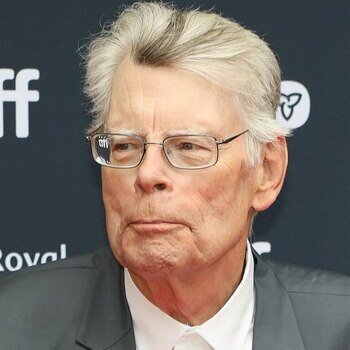
Most people don’t quit because they’re incapable — they quit because the beginning feels unbearable. Right before you take action, your mind has unlimited space to invent worst-case scenarios: rejection, embarrassment, failure, disappointment. That’s why the first step often feels heavier than the entire journey. Stephen King captures this psychological bottleneck with a simple line:
“The scariest moment is always just before you start.”
Once you begin, reality replaces imagination, and fear often shrinks into something manageable. But why does that “pre-start” moment feel so intense — and how can you move through it?
What the Quote Really Means (Core Idea)
Stephen King is pointing to a very specific psychological “peak”: the moment right before you begin. That moment feels scarier than the activity itself because your mind is working with guesses, not facts. When you have not started yet, you don’t have feedback from reality. You only have imagined outcomes, and imagination often prefers dramatic extremes. In simple terms, the quote teaches that fear grows in the space where nothing is happening.
Think about what changes once you start. The task becomes concrete: you see what is difficult, what is easy, what you need to learn, and what the next step should be. Even if the start is messy, it produces information. That information reduces uncertainty, and uncertainty is one of the main fuels of fear.
You can observe this in everyday situations:
- Writing: the blank page feels intimidating, but after two sentences you have something to shape.
- Exercise: the hardest part is often putting on your shoes and stepping outside.
- Honest conversation: the fear is strongest before the first sentence, not during the talk itself.
So the core meaning is not “starting is easy.” The core meaning is: fear is loudest when you are still standing at the door.
Why the “Pre-Start” Moment Feels So Terrifying
Right before you start, your brain tries to protect you. It scans for danger—social danger (embarrassment), emotional danger (disappointment), and identity danger (“What if this proves I’m not good enough?”). In modern life, these are not physical threats, but your nervous system can react as if they were. That is why the body can feel restless, tense, or even nauseous before a presentation, a new habit, or a creative project.
There are a few common reasons this moment feels so intense:
- Uncertainty is unlimited. Before you begin, anything could happen. Your mind fills that gap.
- The ego feels exposed. Starting creates a visible attempt. If you never start, you never “fail” publicly.
- Perfectionism blocks motion. You want the first step to be flawless, which is impossible.
- The cost feels immediate. Effort, time, and discomfort are guaranteed; success is not.
A useful historical parallel is how many artists and writers describe their first minutes of work as the most painful. Even experienced creators face resistance before they begin, because each new start is a small leap into uncertainty. The difference is not that they feel less fear; it’s that they treat fear as a normal entrance fee, not a stop sign.
The Philosophical Lesson: Courage as a Decision, Not a Feeling
Philosophically, this quote carries a strong idea about courage. Many people assume courage means being fearless. In reality, courage is closer to disciplined action. You feel fear, you recognize it, and you move anyway. That makes courage a choice, not a mood.
This matters because waiting for the “right” emotional state often becomes a trap. If you tell yourself, “I’ll start when I feel confident,” you are handing control to a feeling that may never fully arrive. Stephen King’s message suggests a different order:
- Start first.
- Let action create evidence.
- Let evidence build confidence.
This is also a lesson about freedom. Fear before starting can feel like a locked gate. When you act, even in a small way, you regain agency. You are no longer only imagining your life—you are shaping it.
A modern example is learning a new skill. The first lesson feels humiliating because you are not good yet. Philosophically, that is the point: the beginner stage is where ego learns humility, and character learns patience. Starting is not just a practical step. It is a statement: “I accept discomfort in exchange for growth.”
Real-Life Examples Where This Quote Is Most Accurate
The quote is powerful because it applies to ordinary moments, not just big life decisions. In fact, it often shows up in small daily situations where people quietly lose momentum. The “scariest moment” is not always dramatic. Sometimes it looks like staring at a laptop, delaying a message, or postponing a workout.
Here are clear examples that match King’s idea:
- Writing or creating: The first line feels like a verdict on your talent. After you write something, it becomes a draft, not a judgment.
- Returning after a break: The first day back at the gym, the first day back to studying, the first day back to a project—this is where fear and shame can mix.
- Difficult conversations: You rehearse a conflict in your head for days, but once you speak, the situation becomes real and workable.
- Public exposure: Posting your work, applying for a job, speaking in a meeting—the fear is strongest before you click “send” or open your mouth.
From a practical angle, this is why small “starter actions” are so effective. If you lower the entry barrier, you bypass the peak fear. For example: open the document and write a rough outline, not a perfect paragraph. Put on workout clothes and do five minutes, not an hour. The goal is not to prove yourself in the first step. The goal is simply to cross the threshold where fear is at its loudest.
How to Apply the Quote in Practice (Simple Tools That Work)
If the “scariest moment” is right before you start, then the practical solution is not to fight fear with big motivation speeches. The solution is to make starting smaller and clearer. A teacher’s way to explain it is this: fear likes vague situations. When a task is undefined, your mind cannot measure it, so it treats it like a threat. Your job is to turn “a scary start” into “a clear first action.”
Here are tools that do exactly that:
- The Two-Minute Entry: Choose a first step that takes two minutes. Open the document and write three bullet points. Put on workout shoes and walk to the door. The purpose is to cross the threshold, not to finish the whole job.
- The “Bad First Draft” Rule: Allow the first attempt to be imperfect by design. Writers have used this mindset for decades because it breaks perfectionism. A rough start gives you material to improve.
- Time-Limited Start: Set a short timer (10–15 minutes). This removes the feeling of being trapped. Many people continue once they are moving, but even if they stop, they built consistency.
- Pre-Commitment: Prepare the environment in advance: document opened, clothes ready, equipment visible. Historically, athletes and performers have relied on rituals for this reason—rituals reduce decision fatigue.
The key idea is simple: you do not need courage for the whole journey; you need courage for the first minute.
Common Misreadings (What the Quote Does Not Say)
This quote can be helpful, but only if you understand what it is not claiming. People sometimes interpret it as “starting will magically fix everything,” or “fear disappears once you begin.” That is not accurate. King is describing a common pattern, not promising a perfect outcome.
Here are the most common misreadings:
- “If I start, I will immediately feel confident.” Confidence usually comes later, after you collect evidence that you can handle the task. Starting reduces uncertainty, but it does not erase discomfort.
- “Fear means I should stop.” Fear often means the opposite: that something matters. Historically, even experienced leaders and artists described fear as part of responsibility, not proof of weakness.
- “Starting is the hardest part for everyone, always.” Sometimes the middle is hardest (when progress is slow), or the end is hardest (when you must deliver). The quote highlights a frequent peak, not a universal rule.
- “This is about ignoring planning.” Planning is useful. The problem is endless planning that replaces action. Good planning supports the start; it should not become a hiding place.
A balanced interpretation is: expect resistance at the door, and don’t treat it as a verdict. Treat it as a normal signal that you are stepping into something real.
The Hidden Role of Identity and Ego (Why Starting Feels Personal)
One reason the pre-start moment feels terrifying is that it attacks your identity. When you start, you are not just doing a task—you are risking a statement about who you are. A blank page becomes “proof” you might not be a writer. A gym session becomes “proof” you might be out of shape. A job application becomes “proof” you might not be good enough. This is why fear can feel irrational: it is not about the task; it is about the story you attach to the task.
This is a very old human pattern. Historically, reputation and belonging mattered for survival. Social failure had real consequences. Modern life is safer physically, but psychologically we still react strongly to anything that could bring shame or rejection. Starting makes you visible, and visibility feels risky.
A helpful philosophical angle is to separate your worth from your performance. You can teach yourself to think like this:
- “This attempt is information, not identity.”
- “My first version is not my final value.”
- “Failure is a result, not a definition.”
Modern example: sending a portfolio or publishing a post. The fear is not just “What if people dislike it?” The deeper fear is “What if this shows I’m not the person I want to be?” Once you see this clearly, you can respond wisely: start anyway, and let identity grow through practice, not through perfect beginnings.
Why the Quote Still Matters Today (A Modern World Built to Delay Starts)
This quote is especially relevant now because modern life is full of tools that encourage delay. You can scroll, research, compare, optimize, and “prepare” endlessly. This creates a dangerous illusion: that you are moving forward, while you are actually avoiding the start. In earlier periods, people had fewer distractions. If you wanted to write, you wrote. If you wanted to build, you built. Today, your attention is constantly invited elsewhere, and the pre-start fear easily hides behind “one more check.”
The quote is also relevant because many modern goals are abstract. You are not hunting food; you are building a career, a skill, a body, a relationship, a project. Abstract goals have no immediate reward, so the mind resists them. That is why the start feels heavy: it costs energy now, while the reward arrives later.
Philosophically, this is a lesson in agency. Your life changes less from your intentions and more from your starts. A person who starts imperfectly often outgrows a person who plans perfectly.
A clear takeaway is this:
- Do not negotiate with the pre-start fear for too long.
- Create a small, visible first action.
- Let reality teach you, not imagination.
That is why King’s sentence remains a modern reminder: the doorway will feel scary, but on the other side is movement—and movement is where progress lives.
You might be interested in…
- The Meaning Behind “Amateurs Sit and Wait for Inspiration” — Stephen King on Discipline and Real Creative Work
- The Meaning Behind “Books Are a Uniquely Portable Magic” — Why Stephen King’s Line Still Matters Today
- “Get Busy Living or Get Busy Dying” Meaning Explained — What Stephen King’s Quote Really Demands From You
- Why “The Scariest Moment Is Always Just Before You Start” Hits So Hard — Stephen King on Fear, Action, and Momentum
- Why Stephen King’s “We Make Up Horrors to Cope With the Real Ones” Explains Our Love of Horror