
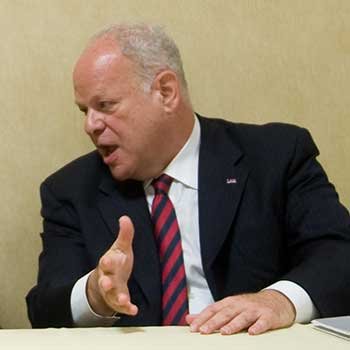
When it comes to human behavior, few forces are as invisible—and as powerful—as the labels we accept or reject. In his groundbreaking work on learned helplessness and positive psychology, Martin E.P. Seligman famously said:
“Pessimistic labels lead to passivity, whereas optimistic ones lead to attempts to change.”
This quote captures a central idea in modern psychology: the way we describe ourselves can either trap us in inertia or empower us to transform. But what exactly did Seligman mean by this? Why do words carry such weight in shaping action, motivation, and hope? Let’s explore the deeper meaning and real-world impact behind this compelling insight.
Introduction to Martin Seligman’s Thought
Martin E.P. Seligman is one of the most influential figures in modern psychology. Often referred to as the “father of positive psychology,” Seligman dedicated his career to studying what makes life worth living—not just what makes it dysfunctional. His work shifted psychology’s focus from merely diagnosing mental illness to also nurturing human strengths such as resilience, optimism, and personal growth.
The quote “Pessimistic labels lead to passivity, whereas optimistic ones lead to attempts to change” reflects one of Seligman’s key findings: the language we use to describe ourselves and our experiences can deeply influence our behavior and mental health.
This insight emerged from his early research on learned helplessness, a phenomenon he discovered through experiments with animals. In those studies, subjects that were repeatedly exposed to uncontrollable negative events eventually stopped trying to escape—even when escape was possible. The same pattern, Seligman observed, could be found in humans. People who internalize negative labels or believe that their efforts don’t matter often fall into a state of passivity or despair.
Seligman’s later work in positive psychology offered an antidote: optimism. By changing how people interpret events—by shifting their internal narrative—he found that individuals could regain motivation, resilience, and hope. So, when he talks about “pessimistic labels” and “optimistic ones,” he’s not just referring to empty words. He’s talking about a deeper psychological mechanism that can either hinder or propel our growth.
Understanding this quote means understanding how powerfully our self-perceptions can shape our reality.
The Power of Labels: How Words Shape Our Inner World
In everyday life, we use labels constantly—both for others and for ourselves. Words like “lazy,” “talented,” “hopeless,” or “resilient” are more than just descriptions. They act like filters through which we view behavior, potential, and even identity. In psychology, this is known as labeling theory, and it teaches us that the way people are described often becomes the way they behave.
Let’s break this down.
When someone hears a pessimistic label applied to them—whether it’s “you’re just not smart enough” or “you’ll never change”—they may begin to internalize that message. Over time, that label can become a self-fulfilling prophecy. The person begins to believe that no effort will make a difference. Why try, if failure is inevitable? This mindset naturally leads to passivity.
On the other hand, an optimistic label like “you’re a hard worker” or “you have the ability to overcome this” can have the opposite effect. It encourages the individual to take action, to believe that their choices matter, and to keep going even in the face of setbacks.
Here’s how labels influence our internal world:
- They shape identity – People often act according to the labels they adopt.
- They affect motivation – Optimistic labels can energize us, while pessimistic ones drain our drive.
- They influence self-talk – Our inner dialogue is often an echo of the labels we’ve heard.
- They reinforce beliefs – Over time, repeated labels form core beliefs about who we are and what we can (or cannot) do.
It’s important to understand that labeling doesn’t have to be explicit to be powerful. Sometimes, a person grows up in an environment that constantly implies “you’re not good enough,” even without saying it out loud. The result is the same: reduced self-worth and decreased initiative.
As educators, parents, leaders—or simply as individuals—we carry great responsibility in the words we choose. A single encouraging statement can change the course of someone’s mindset. Likewise, a careless or harsh label can have long-lasting negative effects.
So when Seligman emphasizes the difference between pessimistic and optimistic labels, he is not talking about vague motivational slogans. He is pointing to a deep truth about how language interacts with the human mind—and how the words we use can either build or break the will to act.
Pessimism as a Source of Passivity
To understand why pessimistic labels can lead to passivity, we first need to understand what pessimism really means in psychology. A pessimist isn’t just someone who expects bad outcomes—they are someone who explains failure or hardship in a way that feels permanent, personal, and out of their control.
For example, let’s say a student fails a math test. A pessimistic interpretation might sound like this:
“I’m just bad at math. I’ll never get better. I’m not smart enough.”
This student has labeled themselves with defeat. And once that label is in place, what’s the point of trying again?
Martin Seligman’s early research on learned helplessness showed that when individuals are repeatedly exposed to failure and start to believe that they have no control, they often stop trying altogether. This is passivity—not because people are lazy, but because they genuinely believe their actions won’t make a difference.
Here’s what typically happens when pessimism takes root:
- The person stops putting in effort, assuming the outcome won’t change.
- They become anxious or even depressed, seeing no way out of their situation.
- They begin to generalize the failure, applying the negative label to other areas of life.
- They often reject help or support, believing it’s useless.
One of the dangers of pessimistic labels is that they are sticky—they tend to stay with us longer than we realize. Especially when given during childhood or by people we trust (parents, teachers, peers), these labels can shape our entire sense of identity.
As a result, people labeled in a negative light might:
- Avoid challenges or new opportunities
- Blame themselves excessively
- Settle for less than they’re capable of
- Dismiss praise or encouragement as “not true”
In short, pessimism closes doors before we even try to walk through them. And the more we hear and accept pessimistic labels, the more likely we are to stop moving forward.
Optimism and the Willingness to Change
On the other side of the spectrum is optimism—but not in the sense of wishful thinking or naive positivity. In psychology, optimism refers to a mindset where people believe that challenges are temporary, specific, and changeable. It’s the belief that effort matters and that improvement is possible.
Let’s go back to the student who failed a math test. An optimistic response might be:
“I didn’t study the right way for this one. Next time I’ll try a different method and ask for help.”
This doesn’t deny the failure—but it opens the door to growth. It sees the situation as a problem to solve, not a permanent condition.
Here’s how optimism encourages people to take action:
- It builds a sense of control over one’s future.
- It motivates people to seek solutions instead of giving up.
- It encourages persistence after setbacks.
- It supports healthier mental and emotional resilience.
Optimistic labels like “capable,” “determined,” or “quick learner” help people frame their identity in terms of potential, not just present circumstances. And when people believe they can change, they are much more likely to actually try.
Think about it this way: If someone tells you, “You’re the kind of person who always finds a way,” you’re more inclined to start looking for that way—even in hard times. These labels don’t just describe; they inspire.
In educational settings, in therapy, even in everyday conversations—optimistic labeling has the power to create momentum. It says to the person:
“You are not defined by this moment. You have the ability to improve.”
That belief, more than anything, fuels the willingness to try again—and trying again is the first step toward change.
Labels in a Social Context: The Systemic Impact of Naming
Up to this point, we’ve discussed how labels affect individuals. But what happens when entire systems—like schools, workplaces, or governments—consistently assign certain labels to groups of people? That’s when the power of labeling becomes not only personal but structural.
Labels in society can create invisible walls between people, often shaping their opportunities, social roles, and even how others treat them. When institutions use labels to sort, judge, or categorize people, those labels start to feel like destiny, not description.
Let’s look at a few real-life examples:
- A student repeatedly called a “troublemaker” may be disciplined more harshly, even when their behavior is mild.
- A young girl labeled “quiet” might be overlooked for leadership roles, even if she has strong ideas.
- A community labeled as “lazy” or “dangerous” might receive less funding, fewer resources, or limited support.
What makes this dangerous is that society often treats labels as facts. When enough people believe a label, they start acting as if it’s true—whether it is or not. This is known in psychology as the self-fulfilling prophecy: if someone is treated as if they are incapable, they might eventually act that way—not because they are, but because the system gave them little room to be anything else.
In this way, pessimistic labeling doesn’t just affect individuals—it can reinforce inequality. It’s not just about the labels we give ourselves, but also the labels others project onto us, especially when those others hold power.
As educators, leaders, and citizens, we need to be mindful not only of the words we use but also of the structures we uphold. When we shift toward optimistic labels—like “potential leader” instead of “problem child”—we start to change not just individuals, but systems.
The Ethics of Labeling: Do We Have the Right to Define Others—or Ourselves?
Here, we come to an important philosophical question: Is it ever right to label another person? And what about labeling ourselves—can even self-chosen labels become harmful?
Labels are powerful tools, but they are also simplifications. No single word or phrase can capture the full depth of a person. When we reduce someone to one label—“addict,” “failure,” “genius,” or “hero”—we risk ignoring the complexity of who they are. And that simplification can lead to judgment, exclusion, or unrealistic expectations.
Here are a few ethical concerns to think about:
- Labels can freeze identity – Once labeled, a person may feel trapped, like they can’t grow beyond that role.
- Labels often lack consent – People are frequently labeled without their agreement, which can feel dehumanizing.
- Labels can distort reality – By focusing only on one trait or moment, labels can hide the fuller picture of a person.
- Self-labeling can be self-limiting – Even positive labels, like “perfectionist” or “overachiever,” can become burdens.
From an ethical standpoint, it’s crucial to ask ourselves:
- Am I labeling this person (or myself) in a way that honors their full humanity?
- Am I using this label to control, dismiss, or judge?
- Does this label help or harm?
Instead of relying on static labels, it’s often better to speak in terms of behaviors, patterns, or potential. For example, instead of saying “He’s lazy,” we might say, “He seems disengaged in this class—let’s find out why.” That shift moves us from judgment to curiosity, from finality to possibility.
In short, labeling carries moral weight. We should use words not just carefully, but respectfully—because how we describe someone can shape not only how we see them, but also how they see themselves.
The Language of Change Begins with Awareness
Martin Seligman’s quote isn’t just a catchy psychological insight—it’s a call to awareness. When he says, “Pessimistic labels lead to passivity, whereas optimistic ones lead to attempts to change,” he’s reminding us of something both simple and profound: Words matter. And the way we use them—especially in moments of struggle—can either reinforce limitations or unlock growth.
What can we take away from this?
- Labels aren’t neutral. They guide behavior, perception, and self-worth.
- Optimistic labels promote action, resilience, and hope.
- Pessimistic labels often shut down possibility before it even begins.
- Systems, not just individuals, contribute to the labeling process—and they can either uphold or dismantle limiting narratives.
- Ethical language means seeing people as more than just a label.
As learners, teachers, parents, and friends, we all have a role to play in shaping the emotional and psychological environment around us. Choosing empowering language isn’t just “nice”—it’s transformational. It helps create a world where people feel seen not for who they were, but for who they can become.
That’s the heart of Seligman’s message: change is possible—but only when we stop calling ourselves stuck.