
Quote Analysis
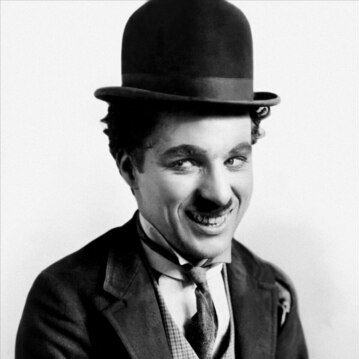
In a world that often feels cruel and unforgiving, we search for meaning in the chaos. Few voices from the past echo as clearly today as that of Charlie Chaplin, who once said:
“Nothing is permanent in this wicked world.”
Known for his silent films and expressive storytelling, Chaplin wasn’t just a comedian—he was a quiet philosopher who spoke through emotion. But what was he really trying to tell us? Was this a cynical reflection, or a hidden message of comfort? In this article, we’ll explore the deeper meaning of this quote and why it still resonates in our uncertain times.
Origin and Context of the Quote
Charlie Chaplin’s quote, “Nothing is permanent in this wicked world,” comes from a man who lived through some of the most turbulent decades of the 20th century. Although not always traceable to a specific film or speech, this statement is often attributed to him as a reflection of his worldview, one shaped by poverty, fame, war, and exile.
Chaplin was born into hardship in late 19th-century London. His father abandoned the family, and his mother suffered from mental illness. He rose from the slums of South London to become one of the most influential figures in cinema. Yet even at the height of his fame, he was not spared from pain—he was exiled from the United States during the McCarthy era, accused of communist sympathies.
This quote reflects more than personal suffering. The phrase “wicked world” should not be taken literally as pure evil—it’s better understood as a description of a world that is often unfair, unpredictable, and indifferent to individual pain. Chaplin saw that even in a world full of injustice, no condition—good or bad—lasts forever. That insight makes the quote both realistic and quietly hopeful.
The Deeper Meaning – A Philosophical Message About Impermanence
The core idea behind this quote is impermanence—the understanding that nothing in life stays the same. This is not just a poetic thought, but a deep philosophical message. Chaplin reminds us that suffering, no matter how heavy it feels, is not eternal. Things change. Wounds heal. Emotions shift. Situations evolve.
Why is this important? Because when people are in pain, they often feel like it will last forever. This quote challenges that illusion. Chaplin isn’t denying that life can be hard; he’s simply saying that its hardness is not fixed. Even in the darkest times, change is always working in the background.
This mirrors some key ideas found in world philosophy:
- In Buddhism, impermanence (anicca) is a central concept—everything arises and passes away.
- In Stoic philosophy, thinkers like Marcus Aurelius accepted that suffering is temporary and tied to how we perceive events.
- In modern psychology, the belief that pain will never end is linked to hopelessness and depression. Challenging this belief can be the first step to recovery.
So, when Chaplin says “Nothing is permanent in this wicked world,” he’s not offering a cold truth—he’s offering a mental shift. He’s telling us that even in chaos, there is movement, and that is where hope lives.
Existential Comfort in an Uncertain World
We live in a time that values control, structure, and certainty. Yet life consistently proves that we can’t predict or manage everything. Chaplin’s quote provides a kind of existential comfort—it gives us permission to stop resisting the inevitable changes of life and start flowing with them.
Existential philosophy asks us to accept the world as it is, not as we wish it to be. Chaplin understood this intuitively. His message is not “give up,” but “let go.” Let go of the illusion that your current state—whether painful or joyful—will last forever. That release can be freeing.
Here’s why this perspective can be comforting:
- If you’re suffering, knowing that the pain will pass gives you strength to endure.
- If you’re happy, understanding its impermanence helps you cherish the moment without clinging to it.
- If you feel lost, recognizing change as constant helps you see that transformation is always possible.
In essence, Chaplin gives us a mental tool. He teaches us to accept the world’s instability not with fear, but with flexibility. He tells us, gently but firmly: “This, too, shall pass.”
Connection to Other Chaplin Quotes and Messages
Charlie Chaplin was not just a filmmaker—he was a thinker who used humor and silence to express deep truths about the human experience. His work is filled with emotional and philosophical reflections, and the quote “Nothing is permanent in this wicked world” fits within a larger pattern of messages that deal with human struggle, resilience, and empathy.
Take, for instance, his famous line: “We think too much and feel too little.” This quote comes from his 1940 film The Great Dictator, where he steps out of character to deliver a rare spoken monologue—an emotional appeal to humanity in the face of violence and hate. Here, he warns us about the dangers of over-rationalizing life while losing touch with basic human feeling.
Now, if we place this quote next to “Nothing is permanent in this wicked world,” we start to see a consistent theme. Chaplin is urging us to reconnect with what truly matters: our shared human vulnerability. He believes that suffering is real, but that compassion is stronger. That no hardship lasts forever, and that our capacity to feel—to hope, to love—is what ultimately saves us.
In short, Chaplin’s quotes are not random one-liners. They form a body of thought, a quiet philosophy of kindness in a world that often forgets it.
Similar Quotes and Universal Truths About Impermanence
Chaplin’s insight into impermanence doesn’t exist in isolation. Across cultures and time periods, thinkers and writers have spoken about the same truth in different ways. Let’s look at a few examples that echo this universal idea:
- Heraclitus, the ancient Greek philosopher, famously said: “You cannot step into the same river twice.” His message was clear: everything is in constant flux.
- In Buddhism, the teaching of anicca (impermanence) is one of the three marks of existence. It tells us that clinging to anything—whether joy or sorrow—is a cause of suffering.
- Seneca, a Roman Stoic, wrote: “No man steps in the same river twice, for it’s not the same river and he’s not the same man.” Like Chaplin, he emphasized that life is made of change.
- In modern psychology, the concept of cognitive reframing encourages people to view difficult experiences as temporary and manageable, rather than permanent and overwhelming.
Why are these ideas so persistent? Because impermanence is not just a poetic idea—it’s an observable reality. Seasons change, people age, feelings shift, societies evolve. By understanding this, we become less fearful of change and more accepting of life’s natural rhythm.
Chaplin’s quote fits into this long tradition of thought. It offers a simple way to remember a deep truth: change is inevitable, and that’s not always a bad thing.
Chaplin’s Ethics and Personal Philosophy
While Chaplin didn’t write philosophical treatises, his films and public statements reflect a clear ethical stance. He believed in dignity, empathy, and the emotional richness of ordinary people. His work often gave voice to the poor, the marginalized, and the misunderstood.
Let’s explore what this quote tells us about his personal philosophy:
- He believed that pain is part of life, but it doesn’t define life.
- He saw humor as a coping tool, a way to survive hardship without becoming bitter.
- He valued emotional depth over intellectual arrogance—hence the warning to feel more.
- He challenged the powerful not with violence, but with irony, storytelling, and art.
In that sense, “Nothing is permanent in this wicked world” is both a warning and an encouragement. It tells us that injustice exists, but also that it won’t last forever. It’s a reminder that no regime, no sorrow, no crisis is immune to time.
This is not passive optimism. It’s active patience—the kind of wisdom that endures.
Why This Quote Still Matters
So why should we care about this quote today?
Because we live in a world that feels increasingly unstable. Political conflict, economic pressure, social isolation—many people are experiencing emotional fatigue. Chaplin’s words speak to that moment. They don’t promise that things will always be good. They simply remind us: they won’t always be bad.
Here’s what makes the quote powerful even now:
- It acknowledges pain without glorifying it.
- It suggests that relief is possible, even if not immediate.
- It invites us to see time as a healing force.
Ultimately, this quote helps us hold on—not by pretending everything is fine, but by reminding us that everything moves. It’s a call for perspective, resilience, and emotional clarity.
Chaplin’s quiet wisdom, wrapped in simple language, continues to offer light in dark moments. And maybe that’s the whole point—not to deny the wickedness of the world, but to outlast it.
You might be interested in…
- “Nothing Is Permanent in This Wicked World” – What Charlie Chaplin Really Meant About Pain, Hope, and the Human Condition
- “A Day Without Laughter Is a Day Wasted” – Why Charlie Chaplin’s Quote Still Speaks to the Soul
- “Life Is a Tragedy in Close-Up, a Comedy in Long-Shot” – Chaplin’s Philosophy of Perspective and Resilience
- Why “We Think Too Much and Feel Too Little” Still Resonates – Charlie Chaplin’s Warning to a Mechanized World
- Why “Imagination Means Nothing Without Doing” Is Charlie Chaplin’s Most Practical Lesson