
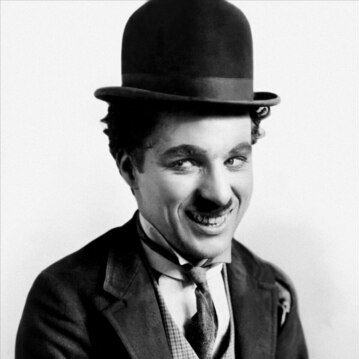
Quote Analysis
We often romanticize imagination—treating it as a magical force behind art, innovation, and progress. But what if imagination, on its own, is meaningless? That’s exactly what Charlie Chaplin suggested when he said:
“Imagination means nothing without doing.”
For a man who built a cinematic empire from silent gestures and bold risk-taking, this statement wasn’t theoretical—it was his daily truth. In a world overflowing with ideas but lacking action, Chaplin’s words remind us that dreams alone don’t change.
Introduction to the Quote and Its Relevance
Before diving into the words themselves, it’s important to understand who said them—and why they carry such weight. Charlie Chaplin, a silent film icon known for blending humor with deep social commentary, wasn’t just an entertainer. He was a creative force who worked relentlessly to bring his visions to life, often under extremely challenging conditions.
When Chaplin said, “Imagination means nothing without doing,” he was making a clear and powerful point: creative ideas are not enough unless they are put into action.
In a world where people love to talk about dreams, plans, and potential, Chaplin reminds us that action—not intention—is what actually moves things forward. His life was a living example of that mindset. He didn’t wait for perfect circumstances. He acted, created, and adapted. And in doing so, he left behind one of the most influential artistic legacies of the 20th century.
This quote is relevant not just to artists and filmmakers, but to anyone who’s ever had an idea and hesitated to act on it. Chaplin invites us to look beyond imagination as a passive quality and to embrace it as a call to action.
The Meaning of the Quote: Imagination Without Action Is Empty
Let’s break this quote down in a way that’s easy to understand. Imagination is your ability to picture something that doesn’t exist yet. It could be a story, a business idea, a better life, or a new invention. But unless you do something with that image in your mind—unless you act—it remains just that: a picture.
Think of it this way:
- A great story idea that’s never written stays invisible.
- A brilliant invention that’s never built helps no one.
- A dream of change that’s never pursued makes no difference.
That’s the essence of what Chaplin is saying. Ideas without action are like seeds never planted. No matter how rich or exciting they seem, they won’t grow into anything real without effort, discipline, and follow-through.
What’s important to realize here is that imagination isn’t being dismissed. Chaplin valued it deeply—it was the foundation of his creativity. But he also knew that value only comes when imagination meets work. That’s the difference between dreaming and creating.
Charlie Chaplin as an Example of Doing, Not Just Dreaming
If anyone had the right to talk about imagination, it was Chaplin. But what made his voice unique was not just that he imagined—it’s that he consistently turned those ideas into tangible, lasting work.
He grew up in poverty, had no formal education, and entered the film industry at a time when there were no rules for what a movie could or should be. Instead of letting these challenges stop him, he used his imagination to visualize stories that connected deeply with audiences—then took the hard steps to bring them to life.
Take his film The Kid (1921), for example. Chaplin wrote, directed, acted in, and edited it during a period of personal and professional instability. It wasn’t enough to imagine a touching story about a poor man caring for an abandoned child—he had to fight to make the film a reality, from finding funding to navigating censorship.
His work ethic and determination are what made his imaginative ideas matter. He didn’t let fear or failure stop him. Instead, he kept producing, refining, and releasing films that challenged norms and changed cinema.
As Chaplin once said in another memorable quote:
“Nothing is permanent in this wicked world.”
This awareness of life’s uncertainty may have pushed him to act quickly, to make the most of what he had, and to never let a good idea sit idle. Through his example, we learn that real creativity isn’t just about thinking differently—it’s about doing something with those thoughts, no matter how difficult the path.
A Universal Message: Don’t Wait for Inspiration—Start Working
One of the most practical takeaways from Chaplin’s quote is this: don’t sit around waiting for the perfect moment, the perfect plan, or the perfect feeling to begin something. That moment may never come. People often delay action because they think they need to feel “ready” or “inspired,” but progress comes when you start—especially when you don’t feel ready.
In simple terms, action leads to momentum, and momentum leads to improvement. Sitting still doesn’t build confidence or skills—doing things does.
Think about these everyday situations:
- A student wants to write a story but keeps waiting for the “right mood.” Months pass. No story.
- Someone dreams of starting a small business but keeps researching endlessly, afraid to launch.
- An artist keeps sketching in their head but never touches the canvas.
In each case, imagination is present—but without action, nothing happens.
Chaplin’s advice applies here: you build your path by walking it. Real creativity often shows up after you begin, not before. Don’t wait for inspiration to knock. Invite it by working.
Philosophical Foundation: Action as the Proof of Thought
Chaplin’s quote also connects with deeper philosophical traditions, especially in existentialism and pragmatism. While he wasn’t a philosopher in the academic sense, his insight matches the ideas of thinkers like Jean-Paul Sartre and William James.
Let’s break it down.
In existentialism, the idea is that you are not your thoughts or your intentions—you are what you do. Sartre argued that people define themselves through their actions. That means a person who imagines being kind, brave, or creative only becomes those things by actually doing them. Not by thinking about them.
In pragmatism, a philosophy rooted in practical outcomes, William James emphasized that ideas have value only when they lead to action or results. If your idea doesn’t lead anywhere—if it doesn’t influence behavior or reality—then it’s just noise.
So, when Chaplin says, “Imagination means nothing without doing,” he’s aligning with this powerful concept: action is the test of meaning.
In classroom terms:
- You don’t become a writer just by loving books. You become one by writing.
- You don’t become compassionate by thinking nice thoughts. You become it by helping others.
- You don’t become a creator by dreaming—you must build, make, and revise.
Philosophy agrees: imagination is the seed, but only action grows the tree.
Imagine Boldly—But Act Even Bolder
To bring it all together, Chaplin’s quote is more than motivational—it’s a challenge. A challenge to every student, artist, professional, and dreamer to stop overthinking and start doing. Imagination is the spark, yes—but without movement, it fades.
The beauty of this idea is that it doesn’t ask for perfection. It doesn’t say, “Do it flawlessly.” It says, “Do it. Begin.” Even imperfect action creates experience, growth, and momentum. Doing is where learning happens.
So here’s the big message:
- Dare to imagine, but don’t stop there.
- Take the next step, however small.
- Make, build, write, draw, teach, learn—do.
Because ultimately, Chaplin reminds us: dreams don’t build worlds. People who act on their dreams do.
You might be interested in…
- Why “We Think Too Much and Feel Too Little” Still Resonates – Charlie Chaplin’s Warning to a Mechanized World
- “A Day Without Laughter Is a Day Wasted” – Why Charlie Chaplin’s Quote Still Speaks to the Soul
- “Nothing Is Permanent in This Wicked World” – What Charlie Chaplin Really Meant About Pain, Hope, and the Human Condition
- Why “Imagination Means Nothing Without Doing” Is Charlie Chaplin’s Most Practical Lesson
- “Life Is a Tragedy in Close-Up, a Comedy in Long-Shot” – Chaplin’s Philosophy of Perspective and Resilience