
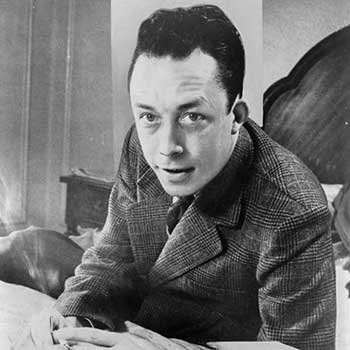
When life deals its inevitable blows—loss, betrayal, failure—how should we respond? With rigidity and resistance, or with flexibility and understanding? Albert Camus, the French philosopher and Nobel laureate, offers a powerful insight:
“Blessed are the hearts that can bend; they shall never be broken.”
This quote doesn’t preach weakness—it celebrates emotional resilience. In a world that often rewards hardness, Camus dares to suggest that the heart’s ability to yield, to empathize and adapt, is its greatest shield. But what did he truly mean? And how can this idea reshape how we view strength in our own lives?
Who Is Albert Camus and How Should We Read This Quote
To understand this quote fully, we need to know a bit about the man behind it. Albert Camus was not just a writer—he was a philosopher, a journalist, and a moral thinker who challenged conventional ideas about meaning, justice, and how to live in a world that often feels chaotic or unfair. He is best known for developing the philosophy of the absurd, which says that human beings constantly seek meaning in a universe that offers none.
Now, this might sound depressing at first—but Camus didn’t stop there. Instead of despair, he proposed rebellion through dignity, empathy, and acceptance. He believed that we should live with full awareness of life’s difficulties, yet still act with kindness and integrity.
When he says, “Blessed are the hearts that can bend; they shall never be broken,” he isn’t speaking as a romantic poet. He is offering a deep philosophical insight: in a harsh and indifferent world, our greatest protection is the ability to adapt without losing who we are. This quote is not about being passive—it’s about being wise enough to stay whole.
Camus invites us to read this quote not as a soft message, but as a strategy for inner survival. Just like a tree that bends in a storm instead of snapping, the heart that can yield without breaking shows the highest form of strength.
What Does “Blessed Are the Hearts That Can Bend” Really Mean
At first glance, this quote might sound like a call to be submissive or overly accommodating. But in truth, it’s saying the opposite. Let’s break it down clearly.
- “Blessed” implies a kind of moral or spiritual reward—not in a religious sense necessarily, but in the sense of peace, resilience, or lasting well-being.
- “Hearts that can bend” refers to people who are emotionally flexible. These are individuals who can:
- adapt to changing situations,
- show empathy instead of judgment,
- forgive instead of holding on to bitterness,
- and remain open even after being hurt.
Notice that Camus doesn’t say “hearts that are soft” or “hearts that break easily.” He specifically chooses bending as the action. Why? Because to bend means to move with pressure, not against it. It means to stay whole by yielding at the right time, instead of snapping.
The final part, “they shall never be broken,” is not about avoiding pain. It’s about avoiding destruction. A person with a rigid heart—someone who refuses to change, to listen, to feel—may seem strong for a while, but when real hardship comes, they can break entirely. The one who bends, however, absorbs the impact and rises again.
So, the real meaning is this: flexibility, humility, and compassion are not signs of weakness—they are survival tools. In the emotional and moral sense, they are what keep us intact.
The Paradox of Strength in Softness
One of the most important lessons in this quote is the idea that real strength doesn’t always look like what we expect. We often think of strong people as tough, unshakable, emotionally closed off—people who “never let anything get to them.” But Camus flips that idea on its head. He tells us: true strength is the ability to stay open, stay human, and stay kind, even in difficult circumstances.
Why is this considered a paradox? Because it seems like the opposite of what we’re taught. In many cultures, showing emotion or bending in a tough situation is seen as weakness. But in reality, it takes much more inner power to remain calm, forgiving, and empathetic when life gets hard than it does to shut down or react with anger.
Let’s make this very concrete. A “soft” heart that bends doesn’t:
- collapse under pressure,
- ignore injustice or pain,
- or say “yes” to everything.
Instead, it:
- chooses carefully how to respond,
- protects its core values while adapting on the surface,
- knows when to stand firm and when to yield.
It’s like bamboo in the wind: flexible but deeply rooted. In fact, Camus’ quote echoes an idea found in Eastern philosophies too, especially in Taoism, which teaches that water is the strongest force—not because it’s hard, but because it can flow around obstacles and still shape mountains.
In short, bending isn’t giving up. It’s a conscious, intelligent form of resilience—one that keeps us whole instead of bitter or broken.
Is a Heart That Never Breaks Even Possible?
This is a fair question—and a very human one. When Camus says “they shall never be broken,” does he mean we’ll never feel pain? Never be hurt? Never cry or feel overwhelmed?
Of course not.
He’s not saying that bending hearts are immune to suffering. He’s saying they survive it without losing themselves. So, the answer is: no, we can’t avoid being wounded in life—but we can avoid being destroyed by those wounds.
To understand this better, we should talk about a concept from psychology: emotional resilience. This is the ability to recover after disappointment, trauma, or failure. Resilience doesn’t mean you don’t feel the pain—it means you go through it, but come out the other side with your identity, values, and hope intact.
Here’s what emotionally resilient people tend to do:
- They allow themselves to feel, but they don’t let emotions control their actions.
- They learn from hardship instead of becoming bitter or numb.
- They seek connection, not isolation.
- They know that asking for help or showing emotion is not weakness, but wisdom.
So, when Camus talks about a heart that “shall never be broken,” he means a heart that chooses growth over stagnation. One that adapts to life’s changes without turning cold or cruel.
In other words, the unbroken heart isn’t untouched by life—it’s tempered by life, like steel forged through fire. It bends, yes—but it never shatters.
The Ethics of Compassion and Flexibility in Today’s World
Let’s bring Camus’ idea into the present moment. We live in a time when many people are under constant pressure—to succeed, to perform, to be strong, to never show weakness. In this environment, emotional flexibility and compassion can seem out of place, or even naive. But in truth, these are the very qualities our world needs more than ever.
When we talk about ethics, we’re referring to the values that guide how we treat others—and ourselves. Flexibility of the heart doesn’t just help us survive emotionally; it shapes how we interact with people around us. It’s not just a personal trait; it becomes a moral choice.
Here’s why compassion and flexibility matter today:
- In relationships, they prevent conflicts from escalating and help build trust.
- In work environments, they allow collaboration instead of competition.
- In politics and society, they encourage understanding instead of division.
A rigid mindset leads to judgment, isolation, and blame. A flexible mindset opens space for dialogue, healing, and shared growth. And let’s be clear: this doesn’t mean agreeing with everything or tolerating abuse. It means being able to listen, adapt, and respond from a place of strength—not fear.
So, when Camus praises hearts that can bend, he’s also challenging us to live ethically: to treat others with kindness, even when we disagree, and to remain human in a world that often encourages hardness.
Philosophical Parallels: Who Else Echoed Camus’ Wisdom?
Camus wasn’t the only thinker who believed that strength lies in flexibility. Many other philosophers—some ancient, some modern—explored similar ideas. Looking at them side by side helps us understand just how universal this concept is.
Here are a few key voices:
- Viktor Frankl, a Holocaust survivor and psychiatrist, wrote that “when we are no longer able to change a situation, we are challenged to change ourselves.” He believed that finding meaning in suffering gives us the inner flexibility to endure it.
- Epictetus, a Stoic philosopher, taught that we cannot control external events—but we can control how we respond. This echoes Camus’ call to internal strength through emotional control and adaptation.
- Rollo May, an existential psychologist, said that “courage is not the absence of despair; it is, rather, the capacity to move ahead in spite of despair.” Again, it’s about moving forward without letting life break us.
- Eastern philosophy, especially Taoism, uses natural imagery like water and wind to describe resilience. Water is soft, but it can wear down stone. The message? Yielding is not surrender—it’s a higher form of strength.
By connecting Camus’ quote to these voices, we see a shared wisdom: those who can bend, survive—not by avoiding difficulty, but by flowing with it.
Why Cultivating a Heart That Bends Matters
Let’s come back to the core message. What does it mean to cultivate a heart that can bend? And why is that something we should all strive for?
First, it means we choose flexibility over rigidity—not out of fear, but out of self-awareness. It means we learn how to:
- manage emotions without suppressing them,
- stay open even after being hurt,
- hold firm to our values while adjusting to life’s unpredictability.
Second, it means we understand that life will test us. We will be disappointed. We will be challenged. But we don’t have to let that break us. Instead, we can respond with compassion—for others and for ourselves.
And finally, it means we stop seeing softness as a weakness. A heart that can bend is not weak—it’s wise. It knows when to stand tall and when to yield. It’s the kind of heart that endures, heals, and ultimately leads.
As Camus reminds us, blessed are those hearts—because in their quiet, steady flexibility, they carry a strength that nothing can truly break.
You might be interested in…
- “In the Depth of Winter, I Finally Learned…” – What Camus’s Quote Really Reveals About Inner Strength
- “Man Is the Only Creature Who Refuses to Be What He Is” – Exploring Camus’s Philosophy of the Absurd
- “There Is No Love of Life Without Despair of Life” – Camus’ Paradox of Passion and Absurdity
- Why “Blessed Are the Hearts That Can Bend” Is Camus’ Ultimate Lesson in Strength and Compassion
- What Camus Meant by “To Be Absolutely Free Is an Act of Rebellion”