
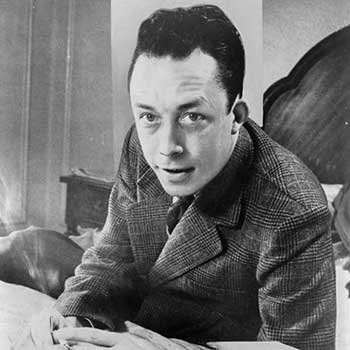
At times when life feels cold, stagnant, and painfully bleak, where do we turn for warmth? French philosopher and writer Albert Camus believed that the answer lies not in the outside world, but within ourselves. In one of his most quoted reflections, he writes:
“In the depth of winter, I finally learned that within me there lay an invincible summer.”
This powerful line is more than poetic—it’s a profound statement about human resilience, existential meaning, and the quiet fire that survives even the harshest winters of the soul. But what exactly did Camus mean, and why does this quote still resonate so deeply today?
Context of the Quote and Its Origin
To truly grasp the meaning of Camus’s quote, it’s essential to understand where it comes from—not just the text itself, but the philosophical and personal background behind it.
Albert Camus was a French-Algerian writer and thinker best known for his contributions to existentialism and his concept of the absurd. The quote “In the depth of winter, I finally learned that within me there lay an invincible summer” appears in his essay “Return to Tipasa,” written after World War II as part of his collection L’été (Summer).
This wasn’t a casual reflection. Camus wrote this line after experiencing profound personal and collective trauma—war, illness, and the moral collapse of Europe. His philosophy of the absurd, which explores the tension between humans’ search for meaning and the indifferent, chaotic nature of the universe, forms the backbone of this reflection. But instead of surrendering to despair, Camus offers a quiet yet firm message of resistance and inner strength.
In this context, the quote becomes not just poetic, but existential. It’s Camus telling us: Yes, the world can be harsh, even meaningless—but within us lies something that refuses to give in. That “invincible summer” is not naïve optimism; it is the capacity to endure, to affirm life even in its darkest moments.
Winter as a Metaphor for Suffering and Crisis
In literature and philosophy, “winter” is rarely just a season—it often symbolizes the cold, difficult periods of life. In Camus’s quote, “the depth of winter” doesn’t refer to the calendar, but to moments of profound suffering, despair, or existential emptiness.
Think of winter as:
- emotional numbness
- loss of meaning
- personal crisis
- depression or grief
When Camus writes about the depth of winter, he’s not talking about surface-level discomfort. He’s pointing to those silent, internal winters where we question everything—when nothing seems to grow, when light feels distant, and when the soul feels frozen.
What’s powerful here is that Camus doesn’t pretend winter won’t come. In fact, he assumes it will. He’s not offering a way around it—he’s showing a way through it. And that’s the key: winter becomes a metaphor not just for hardship, but also for transformation. Because it’s in that depth that something is discovered—not outside, not in circumstances, but within.
Camus invites us to stop fearing those cold seasons of life and instead to recognize that they might reveal something essential. That maybe, paradoxically, it’s in the most desolate times that we uncover the warmest truths about ourselves.
The Summer Within – A Symbol of Inner Strength
When Camus speaks of an “invincible summer,” he isn’t talking about sunshine or vacation time. This is a symbolic summer—a personal force, something steady and alive within us, even when everything around us feels bleak or frozen.
So, what is this “summer” really?
It’s the part of us that:
- holds onto hope without needing external validation
- remains warm even when the world feels cold
- resists despair not by ignoring pain, but by surviving it
Camus isn’t saying that suffering disappears or that life becomes easy. He’s saying that, despite hardship, there is something deep inside us that can’t be broken—a vitality, a sense of self, a belief in life itself. This summer isn’t loud or flashy. It’s quiet, calm, and persistent.
Think of moments when you’ve gone through personal struggles—loss, loneliness, or overwhelming stress—but somehow found the strength to keep going, even if you didn’t fully understand how. That is the “invincible summer.” It’s not a heroic triumph, but a gentle refusal to give up.
For Camus, this inner source of strength is not given from outside forces—no religion, no government, no destiny. It’s found by turning inward and discovering that even in the coldest times, there’s a fire that does not burn out.
Philosophical Message – Resilience and Freedom
This quote carries a philosophical message that goes beyond emotion—it’s deeply connected to Camus’s worldview about human existence and freedom.
Camus believed that life is often absurd: we search for meaning in a world that doesn’t provide clear answers. But instead of falling into despair, he suggested we respond with defiance—not violent rebellion, but personal resilience.
What does this resilience look like?
- Choosing to live even when there are no guarantees
- Staying human in a dehumanized world
- Finding personal meaning instead of waiting for the world to offer one
And this brings us to the idea of freedom. In Camus’s view, true freedom isn’t about doing whatever we want. It’s about choosing our response when faced with hardship. We are free because we can decide how to live, how to endure, and how to make sense of our existence—even when things feel senseless.
The “invincible summer” represents that freedom. It’s not imposed by anyone else—it’s discovered within. And once we recognize it, we become more than just survivors of life’s winters; we become active participants in our own story, responsible for our own courage.
So, Camus isn’t offering comfort in the traditional sense—he’s offering clarity. Life will challenge you. Winter will come. But you are free to respond with integrity, strength, and that quiet, invincible summer that no storm can destroy.
Connection to Existentialism and Stoicism
While Camus is often linked with existentialist thinkers like Sartre or Kierkegaard, he personally rejected the existentialist label. However, there are clear philosophical overlaps, especially in the way he addresses human freedom, meaning, and inner strength.
Existentialism, at its core, deals with the idea that life has no inherent meaning—and it is up to each of us to create that meaning. Camus agreed with this to a point, but instead of embracing despair, he proposed a courageous stance: live fully, even without ultimate answers. That’s where his “invincible summer” fits in—not as denial, but as active acceptance.
Now let’s look at Stoicism. This ancient philosophy, especially through figures like Marcus Aurelius and Epictetus, taught that peace comes from controlling your response to what happens—not from controlling the events themselves. That sounds a lot like Camus’s message, doesn’t it?
Here’s how the two connect:
- Existentialism: We must create our own path in an absurd world. Camus says the strength to do this comes from within.
- Stoicism: We find stability by focusing on what’s in our control—mainly our thoughts, attitudes, and values. Camus’s summer is exactly that internal steadiness.
So, while Camus is unique in his thought, his work resonates with both traditions. He blends existential honesty with stoic resolve, offering us not comfort, but clarity—and that clarity is empowering.
An Ethical Standpoint – Hope Without Illusion
Camus’s quote doesn’t promise that things will get better. It doesn’t rely on faith in fate, divine justice, or even human progress. That might sound bleak at first—but it’s actually a powerful ethical position.
Let’s unpack why.
Many people seek hope by believing that “things happen for a reason” or that “everything will work out in the end.” Camus challenges that. He says: maybe there is no grand plan, and maybe things don’t always work out. And yet—we continue. We keep showing up. We love, act, speak, and resist despair.
This is what philosophers call “hope without illusion.” It means holding on to what is meaningful to us even when there’s no cosmic guarantee it will last.
Camus’s stance teaches us:
- Not to escape into fantasies.
- Not to surrender to cynicism.
- But to choose to live well, even when life is imperfect or uncertain.
The “invincible summer” is not about blind faith. It’s about integrity. About choosing to live with honesty, warmth, and strength, even in a world that can be cold and chaotic. That, in itself, is an ethical act.
Relevance to the Modern Individual
Why does this quote still resonate today, decades after it was written?
Because people are still going through “winters”—not just literal ones, but personal, emotional, and global crises. Whether it’s climate anxiety, political instability, mental health struggles, or feelings of isolation in a hyperconnected world, modern life is full of challenges that can feel overwhelming.
Camus’s message is especially timely for us now. It says:
- You don’t have to wait for external circumstances to improve to feel alive.
- You can carry warmth even when the world feels cold.
- You have value, agency, and strength—right now.
Let’s look at some everyday examples:
- A student facing academic pressure and self-doubt learns to trust their process and continue forward without needing perfect certainty.
- Someone recovering from grief finds moments of peace and joy, not because the pain is gone, but because they’ve made space for both sorrow and hope.
- An activist working for change in a seemingly indifferent world refuses to give in to despair, choosing instead to act with integrity and perseverance.
These aren’t dramatic victories. They’re quiet acts of courage—signs that the “invincible summer” is real, and alive in people every day.
So, when you read Camus’s words, you’re not reading abstract philosophy. You’re reading a personal challenge, a reminder, and maybe even a bit of comfort: no matter how cold life gets, there is something in you that the winter cannot touch.
You might be interested in…
- “In the Depth of Winter, I Finally Learned…” – What Camus’s Quote Really Reveals About Inner Strength
- “Man Is the Only Creature Who Refuses to Be What He Is” – Exploring Camus’s Philosophy of the Absurd
- What Camus Meant by “To Be Absolutely Free Is an Act of Rebellion”
- Why “Blessed Are the Hearts That Can Bend” Is Camus’ Ultimate Lesson in Strength and Compassion
- “There Is No Love of Life Without Despair of Life” – Camus’ Paradox of Passion and Absurdity