
Quote Analysis
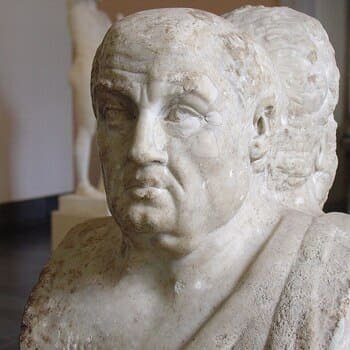
Many people say life is too short, but Seneca challenges that comforting excuse in a direct and uncomfortable way. Instead of blaming fate, he asks us to examine how we actually spend our days. In the quote:
“It is not that we have a short space of time, but that we waste much of it.”
Seneca argues that the real problem is not always the length of life, but the careless use of it. His words remain powerful today because modern life is full of distractions, delays, and empty busyness that make us feel active while slowly stealing what matters most.
What the Quote Means on the Surface and at a Deeper Level
At first glance, Seneca’s quote sounds simple: people often complain that life is short, but the real problem is that they waste a large part of it. This is the basic meaning. Seneca is not saying that human life is endless. He knows very well that time is limited. His point is more precise: many people lose valuable years not because nature gave them too little time, but because they spend their time carelessly, without attention, purpose, or discipline.
This is where the deeper meaning begins. Seneca shifts the focus from fate to responsibility. It is easier to say, “I do not have enough time,” than to admit, “I am not using my time well.” That is why the quote feels uncomfortable. It removes a familiar excuse. Instead of blaming life itself, Seneca asks us to look at our habits, priorities, and daily choices.
A teacher would explain this idea in a very practical way. Think of two people who both have the same twenty-four hours in a day. One person spends the day in constant distraction, empty worry, meaningless arguments, and endless postponement. The other uses at least part of the day for something that truly matters: learning, building character, caring for health, or deepening an important relationship. The number of hours is the same, but the value of those hours is not the same.
This is also the philosophical strength of the quote. Seneca is teaching that time is not only a matter of quantity. It is also a matter of quality. A long life filled with confusion, delay, and inner emptiness may be less meaningful than a shorter life lived with clarity and attention. In that sense, the quote is not only about time management. It is about how a human being should live. Seneca wants us to stop thinking of life as something that happens later. He wants us to see that life is made of the ordinary days we are already spending.
Why People Feel They Never Have Enough Time
One reason this quote still feels so modern is that many people genuinely believe they do not have enough time. They wake up tired, rush through the day, move from one task to another, and go to sleep feeling that nothing important was truly completed. This experience is very common. But Seneca would ask an important question: is the problem always a lack of time, or is it often a lack of order, focus, and inner direction?
In everyday life, people often confuse busyness with meaningful use of time. A person can be active all day and still waste most of the day. This happens because activity is not the same as purpose. It is possible to answer messages, attend meetings, scroll through news, react to notifications, and solve small problems for hours, while neglecting the things that actually shape a life. At the end of such a day, a person feels exhausted, but not fulfilled.
There are several reasons why people feel trapped in this way:
- They allow urgent things to push aside important things.
- They give too much attention to distractions that look harmless in small amounts.
- They spend mental energy on worry, comparison, and irritation.
- They live reactively instead of deciding in advance what deserves their time.
A modern example makes this clear. Someone says, “I had no time to read, exercise, reflect, or call my family today.” But that same person may have spent two hours on the phone, one hour checking unimportant updates, and a large part of the day switching between small tasks without deep concentration. The feeling of “no time” is real, but the cause is often hidden in scattered attention.
From a philosophical point of view, Seneca is reminding us that time is often lost not only in obvious laziness, but also in inner disorder. A person may be constantly moving and still not be truly living with direction. That is why this quote is so important. It teaches that the first step is not simply to ask for more time, but to examine where time is already going. Only then can a person begin to live more deliberately instead of being carried along by noise, pressure, and habit.
Delay as a Quiet Way of Losing Life
One of the most powerful parts of Seneca’s message is his attack on delay. Many people do not waste life in dramatic or shocking ways. They waste it quietly, by postponing what matters. They keep telling themselves that real change will begin later: next month, after this stressful period, when work becomes easier, when they feel more ready, when circumstances finally improve. Seneca sees through this pattern. He understands that a life can disappear not only through obvious mistakes, but also through endless postponement.
This idea is especially important because delay often looks reasonable. A person says, “I will start taking care of my health when things calm down,” or “I will spend more time with my family when I finish this project,” or “I will think about the deeper meaning of my life when I am less busy.” These sentences sound sensible, but they hide a dangerous illusion. Life does not wait politely in the background until we are ready. While we delay living, life is already passing.
A teacher would explain this by showing how delay works in ordinary experience. It usually follows a pattern:
- A person recognizes something important.
- The person decides to do it later.
- New distractions or pressures appear.
- The important thing is postponed again.
- Over time, postponement becomes a habit rather than an exception.
The real danger is not one delayed day. The danger is the repeated habit of moving life to the future. Years can pass in preparation for a better, more serious, more meaningful existence that never fully begins. Seneca wants to break that illusion. He teaches that the right time to begin living wisely is not some perfect future moment. It is now, within the imperfect conditions of ordinary life.
This gives the quote both a moral and practical force. Seneca is not merely criticizing laziness. He is exposing a false way of thinking. A person who constantly delays the important parts of life is not protecting them for later. That person is often losing them entirely. In this sense, delay is one of the quietest and most dangerous forms of wasting time.
Time Is Not Only a Matter of Quantity, but of Quality
One of the deepest ideas behind Seneca’s quote is that time should not be understood only as something we measure in hours, days, and years. Most people naturally think about time in a numerical way. They ask how long they lived, how many years they have left, or how much time they need to finish something. Seneca does not deny that this matters, but he goes further. He teaches that the true value of time depends on how it is used. In simple words, ten years do not automatically equal a meaningful life. A person may live for many decades and still spend most of that life distracted, shallow, or inwardly asleep.
This is where the quote becomes philosophical in a very practical way. Two people may both reach old age, but their lives may be very different in substance. One may live thoughtfully, use hardship to grow stronger, care for the mind, deepen relationships, and act according to clear values. The other may spend year after year chasing approval, reacting to every passing emotion, and filling days with noise that leaves no lasting mark on character. Outwardly, both people had time. Inwardly, only one truly inhabited it.
This idea was central to Stoic thought. The Stoics did not believe that a good life was defined by luxury, fame, or endless activity. They believed that a good life depended on inner order, self-command, and alignment with reason. That is why Seneca is not simply giving advice about productivity. He is asking a more serious question: what kind of life is being built through the way a person spends ordinary days?
A clear modern example helps here. Imagine someone who says, “I have been busy all year.” That may be true. But what does that busyness contain? If the year was filled with stress, compulsive checking of devices, superficial obligations, and constant reaction to outside pressure, then it may have been full in schedule but poor in meaning. By contrast, a quieter life that includes reflection, learning, discipline, and real presence may contain much more actual living.
This is why Seneca’s message remains so strong. He teaches that time cannot be judged only by length. It must also be judged by depth, clarity, and purpose. A life is not made meaningful just because it continues. It becomes meaningful when a person is truly awake inside it.
How This Quote Applies to Modern Life
Seneca wrote in the ancient world, but this quote feels as if it were written for the modern age. In some ways, people today are even more likely to waste time while believing they are using it well. Modern life is full of movement, information, and stimulation. People answer emails, scroll through social media, switch between tasks, consume short bursts of content, and manage endless small demands. Because of this, they often feel active from morning until night. Yet activity and meaningful living are not the same thing.
This is where Seneca’s insight becomes painfully relevant. The modern person often does not lose time through obvious idleness. Time is lost through fragmentation. Attention is broken into small pieces. The day becomes crowded, but not necessarily meaningful. Someone may spend hours being “productive” and still end the day with the strange feeling that nothing essential was done. That feeling is not imaginary. It often comes from spending energy on what is immediate rather than what is important.
Several modern habits show this clearly:
- Constant checking of the phone without real purpose.
- Filling silence with endless entertainment.
- Treating urgency as if it were always importance.
- Leaving no space for reflection, reading, or serious thought.
- Delaying health, relationships, and personal growth in the name of being busy.
Think of a person who spends the whole day responding to small demands but never sits quietly long enough to ask larger questions. Did I strengthen my mind today? Did I improve my character? Did I give real attention to someone I love? Did I care for my body in a serious way? Did I do even one thing that moved my life in the right direction? These are the kinds of questions Seneca would urge us to ask.
This also explains why modern people often feel mentally exhausted. It is not only because they have many tasks. It is because they are rarely fully present in what they are doing. They are pulled in ten directions at once. Seneca’s quote cuts through this condition with great clarity. It reminds us that a crowded day is not automatically a well-used day. Sometimes the most dangerous waste of life is hidden inside routines that society praises as normal.
Seneca’s Criticism Is Not Pessimism, but a Call to Wake Up
At first reading, Seneca can sound severe. His words may seem like a criticism of human weakness, and in one sense they are. He does not flatter people. He does not say, “You are doing your best, so do not think too hard about how you live.” Instead, he confronts the reader. He points directly at waste, delay, illusion, and carelessness. But this should not be misunderstood as pessimism. Seneca is not trying to depress the reader. He is trying to awaken the reader.
That distinction matters. A pessimistic thinker might say that human life is hopelessly empty and that nothing can be done. Seneca says the opposite. He believes much can be done, precisely because the problem is not only outside us. If we waste time, then we can also learn to use it better. If we live carelessly, then we can become more deliberate. His criticism contains hope because it points toward responsibility, and responsibility always means that change is possible.
This is one reason Stoic philosophy has remained influential for so long. It does not teach helplessness. It teaches self-examination. Seneca wants the reader to stop blaming fortune, society, or bad luck for everything. Of course, external circumstances matter. Some people face harder conditions than others. But even within difficult circumstances, there remains the question of inner posture. How will a person think, choose, and live within the time that is given?
This is also the right place to connect another of Seneca’s well-known ideas: “Nothing, Lucilius, is ours, except time.” This sentence deepens the message beautifully. Wealth can disappear. Reputation can change. Health can weaken. Possessions may be lost. But time is the one treasure that is constantly being spent, whether we pay attention to it or not. That is why Seneca speaks so urgently. He is not trying to frighten the reader for effect. He is trying to teach what should be obvious, yet is often forgotten: the most valuable part of life is the part that is always slipping away.
Seen in this light, the quote is not dark. It is clarifying. It tells the truth in a firm tone so that a person may stop drifting and begin to live with intention.
The Main Life Lesson of This Quote
The central lesson of Seneca’s quote is simple, but it is not easy: time should not be treated as something cheap, endless, or easily replaceable. Many people protect money more carefully than they protect their days. They think seriously before spending large amounts of wealth, but they give away hours and years with almost no reflection. Seneca wants to reverse that attitude. He teaches that time is the most precious part of human life because once it passes, it cannot be recovered.
A teacher explaining this lesson would probably say it like this: every day is already a form of spending. Even when you do not decide consciously, you are still spending your life on something. The question is not whether you are using time. The question is how you are using it. Are you spending it on what strengthens you, deepens you, and makes your life more truthful? Or are you spending it on habits, distractions, and postponements that slowly empty it out?
This lesson has several practical consequences:
- A person should learn to distinguish what is important from what only feels urgent.
- A person should not assume that later will be better, calmer, or more suitable for real living.
- A person should examine daily habits, because life is built from repeated actions.
- A person should treat attention as a moral resource, not just a mental one.
There is also a moral seriousness in this quote. Seneca is not saying merely, “Be efficient.” He is saying, in effect, “Do not betray your life by treating it carelessly.” That is a stronger statement. It suggests that wasting time is not only impractical. It can also become a failure to honor the gift and burden of being alive.
In the end, the lesson is not about becoming rigid, joyless, or obsessed with control. It is about becoming awake. A well-used life still includes rest, beauty, friendship, and quiet moments. Seneca is not against pleasure or peace. He is against unconscious drifting. His quote teaches that a meaningful life does not appear by accident. It is shaped day by day, choice by choice, by a person who understands that time is always moving and therefore should never be treated lightly.
You might be interested in…
- As Long as You Live, Keep Learning How to Live — Seneca’s Timeless Lesson on Wisdom and Character
- Why Seneca’s “Nothing, Lucilius, Is Ours, Except Time” Still Matters Today
- Why Seneca’s “We Suffer More Often in Imagination Than in Reality” Still Matters Today
- Why “It Is Not That We Have a Short Space of Time, but That We Waste Much of It” Still Matters Today
- “Life, If You Know How to Use It, Is Long” – Seneca on Time, Discipline, and a Meaningful Life