
Quote Analysis
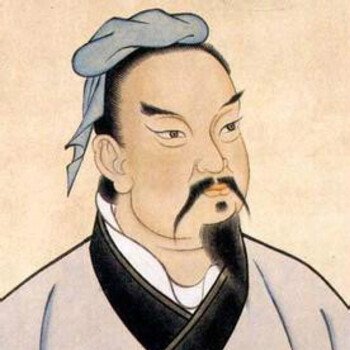
Long conflicts have a strange way of turning “strength” into slow damage. Even when a side believes it’s fighting for the right cause, time quietly drains the very things that make victory meaningful: resources, morale, focus, and public support. Sun Tzu captures this unsentimental truth in one line:
“There is no instance of a country having benefited from prolonged warfare.”
He isn’t glorifying peace for its own sake—he’s pointing to a strategic reality: the longer a conflict lasts, the more it reshapes goals, hardens costs, and opens space for new risks. So what exactly is he warning leaders—and all of us—about?
Time Is a Cost: Why Duration Changes the Outcome
When Sun Tzu talks about “prolonged warfare,” he’s teaching a very practical lesson: time is not neutral. In a conflict, every extra month doesn’t just add more events—it multiplies the cost. Think of it like leaving a leak unfixed in your home. On day one, it’s annoying. After a week, it damages the wall. After a month, it ruins the floor and invites mold. The same logic applies to war: what begins as a calculated effort can slowly turn into a situation where the main goal becomes “just keep going,” not “achieve something valuable.”
Historically, long wars tend to transform societies from the inside. Money that could build roads, schools, and hospitals gets redirected into survival spending. Trade becomes unstable, prices rise, and trust in institutions can weaken as people ask, “How long will this last?” Even if a country wins militarily, the post-war repair bill can swallow the benefits.
In modern life, you can see the same principle in business. A project that drags on endlessly can look heroic from the outside, but inside it becomes a drain: teams burn out, quality slips, and leadership loses clarity. Sun Tzu’s point is not “never fight,” but never let time become your hidden enemy—because once the conflict lasts too long, it starts defeating you from within.
The Exhaustion Machine: Resources, Logistics, Morale, and Support
Sun Tzu’s claim rests on a simple mechanism: a long conflict turns into an exhaustion machine. At first, a country can rely on stored resources, early motivation, and clear direction. But as time goes on, the system starts cracking in predictable places. A helpful way to understand this is to think in layers—what gets depleted first, and what collapses later.
Here is what prolonged conflict typically erodes, step by step:
- Material resources: Equipment wears out, ammunition and fuel must be replaced, and maintenance becomes constant. Replacements are often slower and more expensive than expected.
- Logistics: Supplying people across distance is harder than fighting itself. Transport routes, storage, repairs, and planning become a fragile chain—one weak link can disrupt everything.
- Morale: Early confidence fades when the end is unclear. People can endure hardship when they see a finish line; without one, motivation turns into resignation.
- Public support: Even justified conflicts lose backing when daily life deteriorates. Questions shift from “Why are we fighting?” to “What are we paying—and for how long?”
This is why “prolonged warfare” is so dangerous: it doesn’t just test strength, it rewards the side that can outlast the other, even if neither side is truly gaining. In modern terms, this resembles a company that keeps operating in crisis mode: overtime becomes normal, mistakes increase, and good employees leave. The system still moves, but it’s moving toward depletion. Sun Tzu wants the reader to notice that when exhaustion becomes the main dynamic, nobody really benefits—not in the deep, lasting sense.
The Limits of Force: The Philosophy of Measure and Knowing When “Enough” Is Enough
The philosophical depth of Sun Tzu’s line is about the limits of force. Force can pressure, protect, punish, and deter—but it cannot be used endlessly without consequences for the one who uses it. This is an older wisdom than many people realize: strength without measure becomes self-harm. In teacher-like terms, imagine using caffeine to solve every problem. It works at first. But if you rely on it constantly, your body pays the price—sleep worsens, anxiety rises, performance drops. The tool that helped you becomes the thing that harms you.
Sun Tzu is pointing to a strategic version of that lesson. A long war makes power “expensive.” It ties your attention to one battlefield while other dangers grow elsewhere. It also changes your identity: leaders start defending the war itself (“we can’t stop now”) rather than defending the original purpose. This is where the quote becomes a lesson in wisdom: true mastery is not only starting a conflict, but ending it well.
In modern settings, this applies to relationships and workplaces. A conflict that keeps going—arguments that never resolve, internal team fights that never end—creates a culture where people stop aiming for solutions and start aiming to win moments. Over time, the relationship or the organization becomes weaker, even if one side “wins” the debate. Sun Tzu’s message is calm but strict: force is a tool, not a lifestyle. The wise person knows how to set goals, set limits, and recognize the moment when continuing costs more than changing course.
Not “Never Fight,” but “Choose and Close”: The Strategic Reading of Sun Tzu
A common misunderstanding is to treat Sun Tzu as if he were giving moral advice like “war is always bad.” That’s not his role. He writes as a strategist, which means he looks at conflict the way a skilled engineer looks at a machine: what inputs go in, what outputs come out, and what breaks when you run it too long. When he says no country benefits from prolonged warfare, he is really teaching a principle of decision discipline: if you enter a conflict, you must know what you are trying to achieve and what a “finished” conflict looks like.
In practical terms, this is the difference between a plan and a trap. A plan has a clear purpose and a stopping point. A trap keeps you moving because you’ve already invested too much to stop. This is why Sun Tzu’s thinking often sounds cold: he wants leaders to avoid emotional momentum (“we can’t quit now”) and replace it with clear criteria. Before conflict escalates, you should be able to explain:
- What is the concrete objective?
- What is the minimum acceptable outcome?
- What signals tell us it’s time to stop, pivot, or negotiate?
Historically, many long conflicts became long precisely because leaders stopped asking these questions. The lesson is not that conflict is forbidden, but that endless conflict is a sign of lost strategy.
Prolonged Warfare in Business: When “Heroic Effort” Becomes a Bottomless Pit
To make Sun Tzu’s idea feel modern, imagine a company running a “critical project” that never stops being critical. At first, urgency can be useful: it mobilizes attention and forces decisions. But when urgency lasts for months, it turns into a culture of constant emergency. People begin to work harder just to keep up, not to move forward. This is exactly how prolonged warfare functions: you spend more and more energy for smaller and smaller gains.
In a teacher-like way, you can measure this with three simple signs. If you see them, you are probably in a “prolonged conflict” situation:
- The goal keeps shifting (“just one more feature,” “just one more fix”).
- The team’s energy declines while pressure increases (burnout, irritability, mistakes).
- Quality becomes negotiable (“ship it now, we’ll repair later”).
This is not only about productivity—it’s about strategic cost. The longer the crisis continues, the more likely you are to lose strong people, harm trust, and damage reputation. Even if the project “succeeds,” it can leave the organization weaker than before. Sun Tzu’s warning fits perfectly here: success that drains your capacity is not a real benefit—it is a delayed loss.
And this is also why strategy requires clarity and realism. Bold action is not the same as endless struggle. The wise move is often to reduce scope, set limits, and protect the team as a resource.
Prolonged Warfare in Relationships: When Arguments Become a Slow Erosion of Trust
Now bring the same logic into everyday life. In relationships—romantic, family, or even friendships—prolonged conflict looks like repeated arguments that never reach a conclusion. At first, conflict can be healthy if it leads to understanding and boundaries. But when it becomes circular, it stops being communication and becomes erosion.
Here is the key teaching point: a conflict without an exit condition turns into a habit. People start arguing not to solve, but to defend, punish, or “win.” Over time, three things get damaged:
- Trust (because each new argument adds uncertainty: “Will we ever be okay?”)
- Safety (because conversations feel risky, so people hide feelings or withdraw)
- Goodwill (because the mind starts collecting evidence against the other person)
That’s why endless disputes feel exhausting even when the topic seems small. The cost is not the topic—it is the ongoing emotional taxation. Sun Tzu would say: the longer you stay in that state, the more you lose the ability to cooperate. And without cooperation, even love becomes a battlefield.
A helpful philosophical layer here is the idea of measure: sometimes the wise choice is not to prove a point, but to change the pattern. In practice, that can mean setting a rule: “We argue for 30 minutes and then decide a next step,” or “We pause and return when calm.” The goal is not silence—the goal is to avoid turning life into prolonged warfare.
The Final Lesson: Winning Includes Timing, Not Only Strength
Sun Tzu’s quote teaches that victory is not just about force—it is also about timing, limits, and the ability to end what you start. In many minds, strength means “keep pushing.” But strategy says something more mature: strength also means knowing when continuing is no longer intelligent. If the price of duration consumes your resources and stability, then even a “win” can become meaningless.
Historically, long wars often create a dangerous pattern: leaders begin to fight for the continuation of the war, not for the original purpose. They protect pride, reputation, and sunk costs. This is how conflicts become self-justifying. At that point, the war is no longer a tool—it becomes the reason. Sun Tzu’s thinking is designed to prevent exactly that mistake.
This is also where one of his most famous principles fits into the larger picture: “All warfare is based on deception”. It reminds us that conflict is rarely pure and straightforward; it involves misdirection, narrative control, and hidden motives. That makes prolonged conflict even riskier, because time gives more opportunities for manipulation, mistakes, and unintended consequences.
So the final takeaway is simple but powerful: choose conflicts with a clear objective, reduce unnecessary duration, and protect your core capacity—people, resources, and moral stability. If you can’t define what “done” looks like, you are not pursuing a strategy; you are drifting into a prolonged struggle that benefits no one.
You might be interested in…
- The Meaning Behind “Let Your Plans Be Dark and Impenetrable as Night” — Sun Tzu on Secrecy and Decisive Action
- The Meaning Behind “If You Know the Enemy and Know Yourself” – Sun Tzu’s Practical Formula for Winning
- Why “All Warfare Is Based on Deception” Still Wins — Sun Tzu on Perception, Strategy, and Information
- Why “Supreme excellence consists in breaking the enemy’s resistance without fighting” Still Matters Today — Sun Tzu Explained
- Why Sun Tzu Warned That “There Is No Instance of a Country Having Benefited from Prolonged Warfare” — And Why It Still Applies Today