
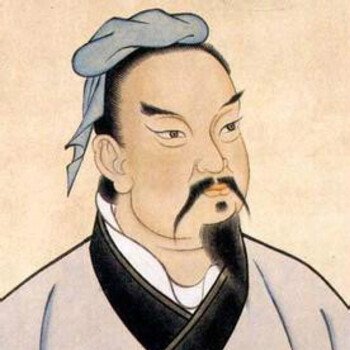
Quote Analysis
Most people fail at their goals for a simple reason: they turn planning into a performance. They announce changes too early, explain every step, and spend more energy on talking than doing. Sun Tzu offers the opposite approach—quiet preparation followed by unmistakable action. His famous line captures this strategy in one sharp image:
“Let your plans be dark and impenetrable as night, and when you move, fall like a thunderbolt.”
But what does that actually mean in real life, outside of war and strategy? And how can the “night and thunderbolt” mindset help you build habits, protect your focus, and act with more confidence when the moment comes?
What “Dark and Impenetrable as Night” Really Means
When Sun Tzu says your plans should be “dark and impenetrable as night,” he is not praising mystery for its own sake. He is teaching discipline in preparation. In strategy, information is power. If you reveal your intention too early, you give other people time to adjust, resist, copy, or quietly block you. “Impenetrable” simply means: others should not be able to predict your next move from your words.
Historically, this fits the logic of classical warfare: armies that broadcasted routes, timing, or weaknesses invited ambushes. But the same principle works in everyday life because social environments also react. If you announce “I’m leaving my job,” suddenly colleagues behave differently. If you announce “I’m starting a new project,” some people will support you, but others may question you, distract you, or pressure you to explain details you haven’t even tested.
Think of “night” as a practical checklist for preparation:
- Define the goal in one sentence (clear for you, not necessarily for everyone).
- Identify the first small step that proves you’re serious (a meeting, a draft, a routine).
- Remove friction in advance (tools ready, time blocked, distractions reduced).
- Keep the plan flexible—because early plans are fragile.
Philosophically, “night” is also about protecting attention. If you keep announcing your intentions, you start living in the future instead of building in the present. Quiet planning prevents ego from taking over. You don’t need applause for a plan. You need structure that survives reality.
Why Talking Too Much Can Weaken Your Plan
Many people think sharing a plan increases commitment. Sometimes it does—but often it creates the opposite effect: talk becomes a substitute for action. When you tell others what you’re going to do, you receive attention, approval, or advice. That feels productive, so your brain marks the goal as partially “achieved,” even though nothing has changed yet. This is why loud plans often end with weak follow-through.
There is also a strategic problem: once you speak, you invite reactions. Reactions create noise. Noise creates doubt. Doubt delays action. In Sun Tzu’s language, you are giving the “other side” time—whether that “side” is a competitor, your environment, or your own inner resistance.
Here are common ways over-explaining damages execution:
- You lose flexibility. If you publicly commit to a specific method, you may keep a bad plan just to look consistent.
- You attract premature criticism. People evaluate the idea before you’ve tested it, and that can kill momentum.
- You create social pressure. Instead of learning quietly, you start performing competence.
- You waste energy. Explaining and defending a plan takes time you could spend building.
A modern example is habit change. If someone announces, “I will wake up at 5 AM every day,” they often spend the next week talking about discipline… and then quit. A stronger approach is silent preparation: set the alarm, place the phone far away, prepare clothes, reduce evening screen time. Then the habit appears as a result, not as a promise.
The deeper lesson is simple: results speak louder than intentions. Sun Tzu is warning you that words can leak strength.
What “Fall Like a Thunderbolt” Looks Like in Real Life
The second half of the quote is the counterbalance. If “night” is controlled preparation, “thunderbolt” is clean, decisive execution. Sun Tzu does not want you to hide forever. He wants you to move at the right time with a force that feels sudden—because it is not slowed down by hesitation.
In historical strategy, a thunderbolt attack meant speed, surprise, and clarity. The goal was to act before the opponent could reorganize. In modern life, “thunderbolt” does not mean aggression. It means you stop negotiating with yourself once the moment arrives. You act in a way that is visible, measurable, and hard to undo.
A good way to understand it is through contrast:
- Weak movement: “I’ll try to start soon.”
- Thunderbolt movement: “I start today at 18:00, I do 20 minutes, and I repeat tomorrow.”
Notice the structure: specific time, specific action, repeatable unit. Decisiveness becomes practical, not emotional.
Examples:
- Work: Instead of endlessly refining an idea, you ship a first version, test it, and improve based on feedback.
- Health: You don’t debate motivation; you follow a prepared routine (clothes ready, plan written, minimal starting step).
- Boundaries: You stop giving long explanations and simply say, “I can’t do that,” then act accordingly.
Philosophically, “thunderbolt” is about concentrating energy. You saved power by not performing your plan. Now you release it through action. Sun Tzu’s message is a full cycle: conserve strength in silence, then apply it with precision.
Balancing Preparation and Action Without Getting Stuck
A common misunderstanding of Sun Tzu’s advice is to think it promotes secrecy all the time. It doesn’t. The quote describes a sequence: prepare quietly, then act decisively. The skill is knowing when planning is still useful and when it has turned into avoidance.
In historical terms, even the best generals did not plan forever. They gathered intelligence, positioned resources, and waited for conditions—but once the opening appeared, hesitation could destroy the advantage. In modern life, the same rule applies: planning is valuable until it stops producing better decisions. After that, it becomes an excuse to delay.
A practical “teacher’s rule” is to separate planning into two phases:
- Foundation planning: decisions that remove friction (time, tools, steps, constraints).
- Adaptive planning: small adjustments made after you start and learn from reality.
If you are still in phase one, planning is correct. If you already have the basics—time slot, first action, needed resources—and you keep “researching,” you are likely stuck. That is when the thunderbolt part should begin.
A helpful way to keep balance is to define a simple trigger: “When I have A, B, and C, I start.” For example: A = a 30-minute block, B = a written first step, C = materials ready. This turns strategy into behavior. Philosophically, this balance protects you from two traps: impulsiveness (acting without structure) and perfectionism (waiting for perfect certainty, which never arrives).
Modern Applications: Habits, Work, and Relationships
To apply this quote today, you translate the metaphors into behavior. “Night” becomes quiet preparation; “thunderbolt” becomes visible action. The key is that modern life is full of “opponents” that are not people—distraction, routine, ego, and fear of judgment. Sun Tzu’s advice is still relevant because it teaches you how to manage these forces.
Habits (self-discipline):
A habit fails most often at the start, because the start is uncomfortable. So “night” means you make starting easy:
- Choose a fixed time and reduce decision-making (“after coffee, 10 minutes”).
- Prepare the environment (clothes ready, app installed, notes open).
- Set a minimum goal you cannot refuse (2 minutes, 1 page, 5 push-ups).
Then “thunderbolt” is simply doing it at the scheduled moment—no debate, no negotiation.
Work (projects and goals):
In a workplace, oversharing plans can invite unnecessary interference. A smart approach is to show progress, not just intention. For example: instead of telling everyone “I’m building a new system,” you quietly prepare, then present a working draft. That is thunderbolt: a concrete result that shifts the conversation from opinions to reality.
Relationships (boundaries and trust):
“Night” can also mean you don’t announce every emotional decision in advance. If you want healthier boundaries, you don’t need speeches. You prepare your limit and your response, then act consistently. Thunderbolt here means clarity: “I won’t accept that,” followed by behavior that matches your words. Philosophically, this is maturity—less theater, more integrity.
The Philosophical Lesson: Controlling Energy and Attention
Under the military imagery, the quote teaches a deeper principle: attention is limited, and energy is precious. Sun Tzu is advising you to stop leaking both. When you constantly explain your plans, seek validation, or argue about your intentions, you are spending energy on appearance rather than execution. That is why the quote feels so modern—it describes a problem of the mind, not just a tactic of war.
Think of your energy like a battery. Every public announcement, every long justification, every debate about “what you will do” drains power. Quiet preparation protects the battery. It creates a mental space where you can build without being pulled into other people’s expectations.
Then comes the thunderbolt: concentrated action. Philosophically, this is the move from potential to actual. Many people live in potential: “I could do this, I might do that.” Sun Tzu is pushing you toward actuality: “I did it.” The thunderbolt is not anger. It is decisiveness—an inner agreement that, when the time comes, your actions are not open for negotiation.
Historically, disciplined armies valued economy of motion: no wasted marching, no wasted supplies, no wasted signals. In personal life, the same discipline becomes economy of attention: fewer promises, fewer explanations, fewer distractions—and more deliberate action. In simple teacher language: save your strength while preparing, then spend it where it changes reality.
You might be interested in…
- The Meaning Behind “Let Your Plans Be Dark and Impenetrable as Night” — Sun Tzu on Secrecy and Decisive Action
- Why “Supreme excellence consists in breaking the enemy’s resistance without fighting” Still Matters Today — Sun Tzu Explained
- The Meaning Behind “If You Know the Enemy and Know Yourself” – Sun Tzu’s Practical Formula for Winning
- Why Sun Tzu Warned That “There Is No Instance of a Country Having Benefited from Prolonged Warfare” — And Why It Still Applies Today
- Why “All Warfare Is Based on Deception” Still Wins — Sun Tzu on Perception, Strategy, and Information