
Quote Analysis
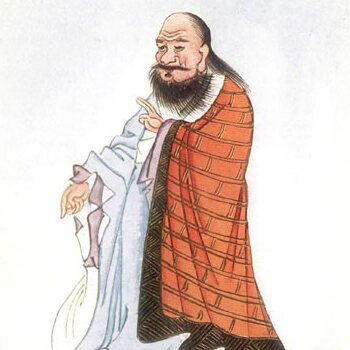
Most people get pretty good at reading others. We notice tone shifts, hidden agendas, and the subtle signs of insecurity or confidence. That skill can save us from bad deals, toxic friendships, and misleading first impressions. But there’s a harder question: can we read ourselves with the same honesty? Lao Tzu captures this contrast in one sharp line:
“He who knows others is wise; he who knows himself is enlightened.”
The quote isn’t dismissing social intelligence—it’s pointing out that inner clarity is the difference between merely understanding life and actually transforming it from the inside out.
The difference between outward knowledge and inward knowledge
When Lao Tzu contrasts knowing others with knowing yourself, he’s teaching a clean separation between two kinds of intelligence. Knowing others is external skill: you observe behavior, patterns, social roles, and motives. You can notice who is trying to impress, who avoids responsibility, who changes their story, and who stays consistent under pressure. This is valuable because it helps you navigate real life—work teams, friendships, negotiations, and relationships.
But knowing yourself is internal skill: you observe your own mind the way you observe other people. That includes your reactions, excuses, and hidden motives. This is harder because you’re not an outside judge—you are the person being judged. Historically, Daoist thinking often emphasizes returning to simplicity and clarity, not collecting more information. In that spirit, outward knowledge can become a tool for control, while inward knowledge becomes a tool for freedom.
Here’s a practical way to remember the difference:
- Outward knowledge asks: “What is this person doing, and why?”
- Inward knowledge asks: “What am I doing, and why do I keep doing it?”
- The first improves your social accuracy; the second improves your life direction.
A modern example: someone may be excellent at spotting manipulation in others, yet still be manipulated by their own fear of rejection. That is exactly the gap Lao Tzu points to.
Why self-knowledge is harder than reading other people
People often assume self-knowledge is automatic—“I live with myself, so I must know myself.” But daily life proves the opposite. You can live in a house for years and still never open certain rooms. In the same way, many people operate on autopilot: they react, defend, blame, and repeat patterns without clearly seeing what drives them.
The main difficulty is that the mind protects its image. When you analyze others, you can be blunt. When you analyze yourself, you tend to soften the verdict. You call fear “being careful,” pride “having standards,” avoidance “needing space,” and insecurity “being realistic.” These are not lies in a dramatic sense—they are comfortable interpretations.
Self-knowledge requires a skill that feels uncomfortable at first: separating what you feel from what you do because of that feeling. For example:
- Feeling jealous is human.
- Acting controlling because of jealousy is a choice.
- Justifying control as “love” is self-deception.
Philosophically, this is where “enlightened” makes sense. It doesn’t mean mystical perfection. It means you can see your inner mechanics clearly enough to stop being pushed around by them. Historically, many traditions (Daoism, Stoicism, later even modern psychology) agree on one point: the person you struggle with most is the one behind your own eyes. A modern example: someone can give perfect advice about boundaries, yet still say “yes” out of guilt because they haven’t faced their need for approval.
Autopilot vs. choice: the real freedom hidden in the quote
Lao Tzu’s quote isn’t just about “understanding.” It’s about freedom. Many people think freedom means having more options, more money, more control, or more influence. Daoist wisdom flips that idea: you become freer when you are less ruled by inner compulsions. In simple terms, the biggest prison is reacting the same way every time.
Autopilot looks like this: a trigger appears (criticism, rejection, silence, disrespect), and your reaction launches instantly (anger, sarcasm, withdrawal, people-pleasing). Later you explain it as “That’s just how I am.” But the teacher-like point is: “That’s not who you are; that’s what you’ve practiced.” Enlightenment here means you notice the trigger early enough to insert a pause—and inside that pause, you regain choice.
Consider a modern workplace example. A colleague questions your idea in a meeting.
- Autopilot response: you get defensive, speak faster, interrupt, or subtly attack them back.
- Self-aware response: you notice the heat in your chest, label it as threatened pride, and ask a clarifying question instead of fighting.
- Outcome: you protect the project and your credibility without unnecessary conflict.
Historically, Lao Tzu lived in a world where social status, reputation, and rigid roles could dominate a person’s life. His teaching offers a different kind of strength: not winning every moment, but not being dragged by every moment. That is why the quote still matters today—because modern life is full of triggers, and inner clarity is what turns reaction into direction.
Patterns in relationships: why we repeat the same mistakes
A simple test of self-knowledge is this: do you keep meeting the “same person” in different bodies? Many people say they want love, respect, and stability—but they repeatedly choose partners or friends who bring chaos, distance, or control. Lao Tzu’s point helps us understand why: reading other people can tell you what they are doing, but only self-knowledge explains what you are attracted to and why you stay.
Think like a careful teacher here: relationships don’t repeat by magic; they repeat through habits. Your mind tends to move toward what feels familiar, even when it is unhealthy. For example, someone who fears abandonment may tolerate disrespect because any relationship feels safer than being alone. Another person may avoid conflict so strongly that they never say what they need, then later feel bitter and “unseen.”
Here are common repeating patterns to look for:
- Choosing emotionally unavailable people because real closeness feels risky.
- Becoming the “rescuer” because being needed feels like being loved.
- Avoiding honest conversations, then blaming the relationship for “not working.”
- Staying too long because leaving feels like failure, not like wisdom.
Historically, Lao Tzu’s Daoist teaching values harmony and simplicity. In modern terms, harmony doesn’t mean “no conflict”; it means you stop creating inner conflict by betraying your own needs. When you see your pattern clearly, you don’t just analyze relationships—you change how you choose.
“The situation is the problem” vs. “My inner habit is involved”
When people lack self-knowledge, they often explain life with one sentence: “It happened because of the situation.” And sometimes the situation really is unfair. But a teacher would ask a sharper question: Why does the same type of situation keep producing the same reaction in you? That’s where Lao Tzu’s “enlightened” becomes practical. It’s not about blaming yourself. It’s about recognizing your inner contribution to the cycle.
Two people can face the same event—criticism, rejection, a delay, a rude comment—and respond completely differently. The difference is not intelligence. It’s inner awareness. Without it, your mind runs old scripts:
- “If someone disagrees, I must defend myself.”
- “If someone is distant, I must chase harder.”
- “If I make a mistake, I am worthless.”
These scripts don’t come from the present moment; they come from conditioned habits (ego, fear, pride, shame). Philosophically, Daoism warns against forcing reality. In modern language: when you fight what is, you create suffering. But Daoism is not passivity—it is clarity. You still act, but you act from calm perception rather than emotional reflex.
A modern example: you get ignored in a group chat. The “situation” is silence. But your habit might interpret silence as rejection, which triggers anger or over-explaining. Self-knowledge helps you separate facts from stories. Facts: “No reply yet.” Story: “They don’t respect me.” Once you see the story forming, you regain choice.
How to apply the quote today: simple practices that build inner clarity
If this quote is going to help someone in real life, it must turn into behavior. A teacher would not say “Just be enlightened.” Instead, you build the skill the way you build any skill: through small, repeatable practice. The goal is not to become emotionless. The goal is to understand your emotions before they drive your decisions.
Here are practical methods that match Lao Tzu’s idea without turning it into complicated theory:
- Name the trigger early. Ask, “What exactly set me off?” (Tone? Criticism? Being ignored?)
- Identify the first impulse. Ask, “What do I want to do right now?” (Attack, withdraw, please, prove, control.)
- Find the hidden fear or need. Ask, “What am I protecting?” (Pride, safety, acceptance, status.)
- Choose a smaller, wiser action. Replace the impulse with a calmer move (ask a question, pause, set a boundary, delay the reply).
This is where the historical layer matters. Lao Tzu lived in a world shaped by hierarchy, reputation, and social pressure. His wisdom offers an internal refuge: you stop being a puppet of external approval. In modern life, the pressure is constant—notifications, opinions, comparison, performance. Self-knowledge becomes the skill that prevents you from living like a reflex machine.
A modern example: instead of sending an angry message, you wait 20 minutes and write, “I felt dismissed earlier. Can we clarify what you meant?” That is not weakness. That is inward knowledge turning into outward strength.
You might be interested in…
- The Meaning Behind “The Highest Good Is Like Water” – What Lao Tzu Really Meant
- The Meaning Behind “In the Pursuit of Learning… In the Pursuit of Tao…” — Why Lao Tzu Says Progress Also Means Letting Go
- The Meaning Behind “Nothing in the World Is as Soft and Yielding as Water…” — Lao Tzu on Quiet Strength
- Why “He Who Knows Others Is Wise; He Who Knows Himself Is Enlightened” Still Matters — Lao Tzu’s Lesson on Self-Knowledge
- What Lao Tzu Really Meant by “The Tao that can be told is not the eternal Tao” — Language, Experience, and the Limits of Definition